
Resting in Bed by James McNeill Whistler
Chronic fatigue syndrome (CFS) is a medical condition characterized by persistent and ongoing fatigue, exhaustion, non-restorative sleep, and unexplained muscle and joint pain in an individual who hitherto has been an healthy and active person. The exact cause of CFS is not understood. About one million Americans have CFS and it occurs more often in women. While some clinicians view CFS as a central nervous system disorder, others debate over whether it is a strictly metabolic, infectious or post-infectious, cardiovascular, or psychiatric disorder. The name "chronic fatigue syndrome" itself is so controversial that patient advocacy groups are canvassing for a name change as they feel that the term “CFS” underestimates the seriousness of the condition. Whatever the nature of the disease, however, there is a general agreement that CFS poses genuine threat to the overall wellbeing of the individual.The onset of the disease is sudden and is generally accompanied by a flu-like fever. A majority of CFS cases have also been observed in patients who are chronically stressed and struck by an infection. The most common symptoms as declared by CDC Atlanta include:
- Severe fatigue for more than six consecutive months that is unrelated to exertion, not relieved by rest, and has not stemmed from other known medical conditions
- Significant reduction in activity levels due to the fatigue
- Impaired memory
- Failure to concentrate on a task
- Prolonged and unexplained exhaustion and malaise
- Poor quality/unrefreshing/non-restorative sleep
- Unexplained muscle pain (myalgia)
- Unexplained joint pain in multiple areas (arthralgia)
- Recurrent headaches, sore throat and tender lymph nodes
- Brain fog
- Difficulty maintaining balance
- Dizziness
- Allergies and/or sensitivity to food, odors, noise, chemicals, medications
- Digestive disturbances
- Mood swings and panic attacks
- Light sensitivity
- Patients were asked to be aware of their natural breathing for one minute
- Patients performed six isometric sitting asanas (shown in figure below)
- Patients practiced abdominal breathing for one minute
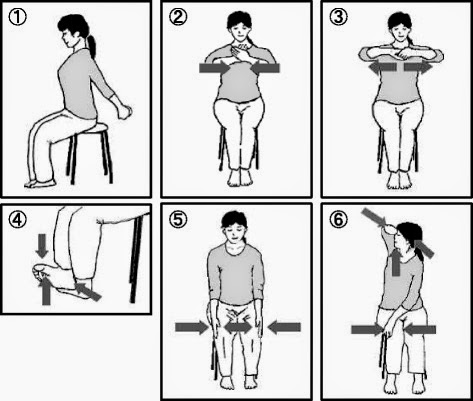 (For more details on the methods and isometric asana poses see Isometric yoga improves the fatigue and pain of patients with chronic fatigue syndrome who are resistant to conventional therapy: a randomized, controlled trial.) Eligible participants were randomized into two groups of 15 people to receive either an isometric yoga practice together with conventional pharmacotherapy or just conventional pharmacotherapy alone. The isometric yoga practice consisted of biweekly, 20-minute sessions with a yoga instructor and daily in-home sessions. The intervention period lasted for nearly 9 weeks. All subjects completed the intervention. The results from the 9 weeks program were fascinating. The fatigue score decreased significantly in the patients who did yoga. In addition to the improvement of fatigue, some patients also reported relief from pain. No serious adverse events were noted in the yoga group. Additionally, several of the yoga members reported that they felt warm and light after practicing isometric yoga. Thus, patients with CFS could benefit from isometric yoga as an add-on therapy. In addition to the above-mentioned research study, a Yoga Journal article Relief for Chronic Fatigue Through Yoga provides personal accounts of a couple of individuals who describe their harrowing health condition owing to CFS and their recovery primarily through a personalized and modified yoga practice. These stories are not only moving but empowering as well as they describe miraculous recoveries thanks to yoga. These incidents, together with what we have written before in this blog, reinforce the notion that yoga for CFS is therapeutic at all levels.Subscribe to Yoga for Healthy Aging by Email ° Follow Yoga for Healthy Aging on Facebook ° Join this site with Google Friend Connect