For many of us, Child’s Pose (Balasana) is the ultimate resting pose. I, myself, saw firsthand how even the uninitiated will take this position when rest is suggested. One summer day, when the whistle for adult swim sounded, my young nieces, 8 and 4, hunkered down side by side into classic Child’s pose, pulled beach towels over their turtle-like backs, and only re-emerged when they heard the “all-swim” 15 minutes later!
In addition to being a potential resting pose (not all people find this pose easy to assume or restful to sustain), Child’s pose takes your hips and knees into a deep folded position, and stretches the fronts of your ankles and feet. And many of you will find it a nice stretch for your lower back muscles.
I prescribe this pose for:
- Quieting your nervous system
- Resting your body
- Stretching your lower back, hips, knees and ankles
- Releasing the tightness between your shoulder blades and training yourself to move your shoulder blades away from your spine
- Counter-pose for backbends, forward bends, and twists
- Calming pose for anxiety
- Calming pose for insomnia, especially the supported version
- Possible relief from back pain, especially the supported version
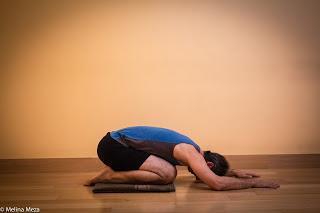
1. Classic Child’s Pose

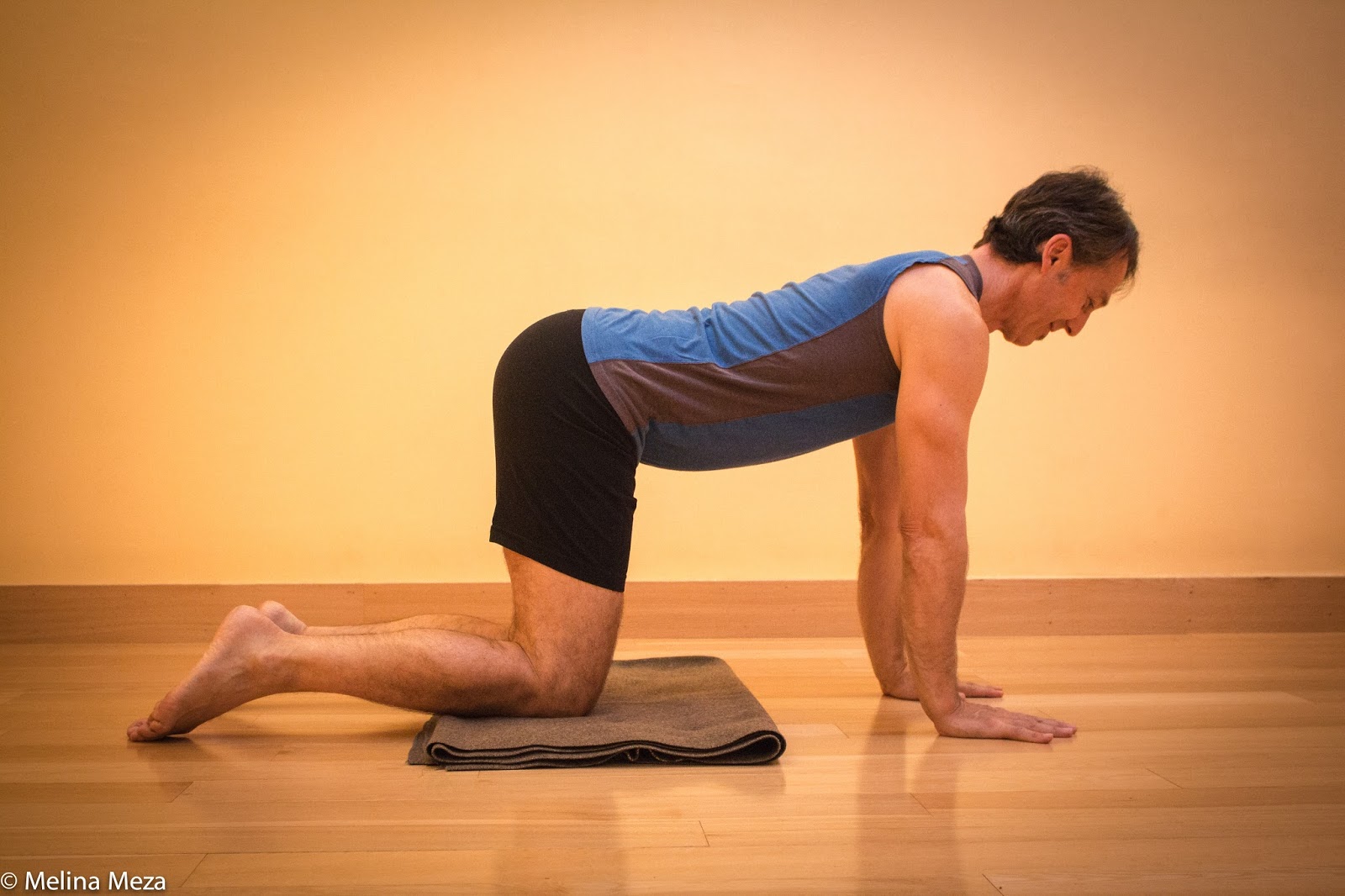
If you’re comfortable in the pose, stay for 2-5 minutes. However, if you feel intense stretching, start with 30-60 seconds and work you way up to longer holds. To come out of the pose, place your palms on the floor next to your knees and use your arms to help you roll up and sit back on your heels (if you knees allow) or come back into a hands and knees position.
You can vary the effects of the pose by changing your leg position. If you want to feel more stretch in your lower back, try keeping your thighs closer together. If you want less stretch your lower back, try widening your knees further apart, up to 2 feet or so,
Arms Forward Version
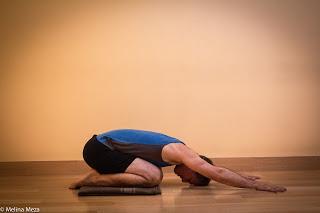
Come into the pose as in the classic version, but instead of taking your arms back, stretch your arms forward, as far forward as you can. With your arms parallel and elbows straight, press your hands into the floor. This initial arm position is much more active than the classic version and may not feel very restful to many of you.

For those with tight knees, arthritis pain, or general knee pain when deeply folding your knees, use the roll behind your knees. While you are in the hands and knees position, place the roll behind both knees (even if only one side is painful) while you are in the hands and knees position. Then slowly lower your hips back and down as in the classic version. When your thighs reach the support check to make sure your knees feel good. If so, proceed as with the classic version. If you have problems in both your ankles and knees, use both supports.Restorative Child's Pose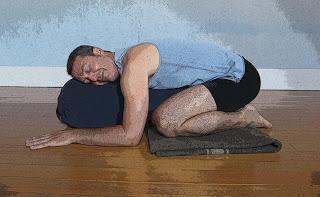
Start by positioning your bolster lengthwise on the mat in front of you. Then come into Child’s pose from your hands and knees as with the classic version, but as you lower your hips towards your heels, sit upright for a moment and widen your knees about two feet apart. Then, slide the end of your bolster lengthwise towards your hips, right up against your lower belly—do not slide it under your hips, just up to the front of you.
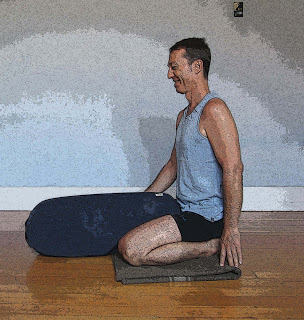
Stay in the pose for 2-3 minutes on each side at first, though you should, of course, come out of the pose if you experience any discomfort. With experience, you can work your way up to even longer holds. As you relax onto the support of the bolster, focus your attention on the sound of your breath. When you are ready to come up, use your hands and arms to slowly roll up to sitting.
Subscribe to Yoga for Healthy Aging by Email ° FollowYoga for Healthy Agingon Facebook ° Join this site withGoogle Friend Connect