


– contributed by Ludy T. Benjamin, Jr., Emeritus Member of the Cummings Center Advisory Board
This blog is prompted by an unusual stamp collection that is part of the archival collections of the Cummings Center for the History of Psychology, a collection of more than 330 United States and international postage stamps and souvenir sheets.
Every year the United States Postal Service (USPS) produces approximately 40 new stamp issues, although the number is sometimes twice that. These stamps are the “winners” in an annual competition involving more than 20,000 nominations to the Citizens’ Stamp Advisory Committee, a committee of 15 individuals selected from all walks of life. They have the responsibility of screening all of the recommendations for new stamps and narrowing the list that they submit to the Postmaster General, who ultimately makes the selections. Among the new stamp issues each year are a number of stamps that are called “commemorative” that honor some individual, organization, event, country, state, vocation, and so forth. The first commemorative stamp was issued in 1869 and honored the short-lived Pony Express mail service. Since that stamp was issued more than 150 years ago, United States stamps have honored numerous occupations, for example, actors, architects, dentists, engineers, librarians, medical doctors, nurses, poultry farmers, shipbuilders, steel workers, teachers, truck drivers, and workers in the wool industry. And that is only a partial list. And as the title of this blog suggests, psychology has not been among the professions honored with a stamp. However, what about an individual psychologist? Has there been a US stamp to honor a psychologist? The answer is yes and no.
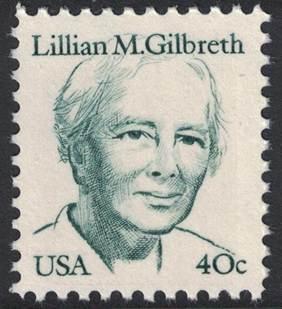
Lillian Moller Gilbreth (1878-1972) appeared on a 40-cent US stamp in 1984. Gilbreth earned her doctorate in psychology from Brown University in 1915 completing a dissertation in what today would be recognized as Industrial-Organizational Psychology. But she did not get her stamp as a psychologist. Her nomination was initiated by the National Academy of Engineering. She was the first woman elected to that prestigious group because of her work in engineering features in the home, particularly the kitchen, for example, shelves in refrigerator doors and the pedal trashcan. Her nomination was also supported by the American Psychological Association. Below is a preliminary design for Gilbreth’s stamp that was shown to the engineering and psychology communities.
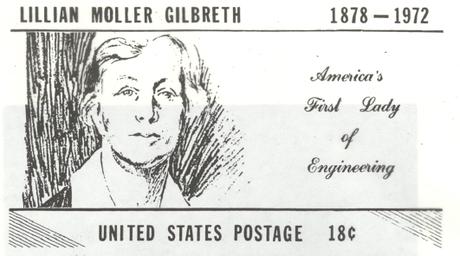
The American Psychological Association objected to the stamp design because it did not label Gilbreth as a psychologist. So when the stamp was issued, it made no mention of her fields, only her name and the monetary value of the stamp as shown below.
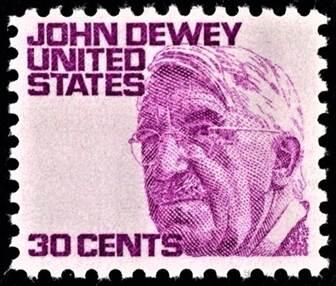
There are no other PhD psychologists on US stamps other than Gilbreth, but there are at least two individuals who might be labeled as psychologists because of their contributions to the field. One is John Dewey (1859-1952) who is better recognized for his substantial contributions to philosophy and education. Dewey was a founding member of the American Psychological Association and served as its eighth president in 1899. Further, his article on the reflex arc is considered one of the cornerstones of the school known as functional psychology. Dewey’s stamp appeared in 1968.
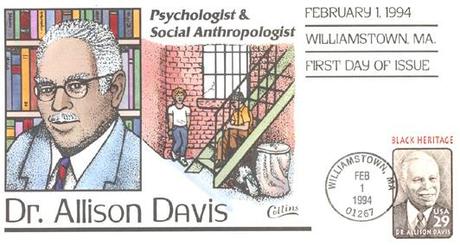
There is a third person who could be considered as a psychologist, although he was trained as an anthropologist. Allison Davis (1902-1983) published several important works on personality development and on intelligence and cultural differences. His stamp was issued in 1994 as part of the Black Heritage Series.
Thus by this account there are three US stamps that could be considered to be psychologists, only one of whom had a degree in the field, and none of them identified as psychologists on their respective stamps.
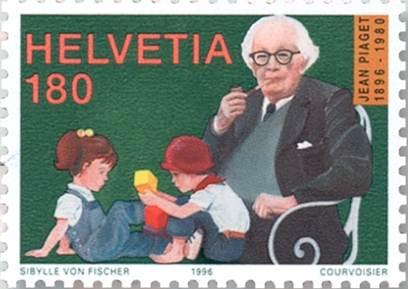
What about stamps from other countries? Switzerland issued a stamp in 1996 for Jean Piaget (1896-1980) on the one-hundreth anniversary of his birth.
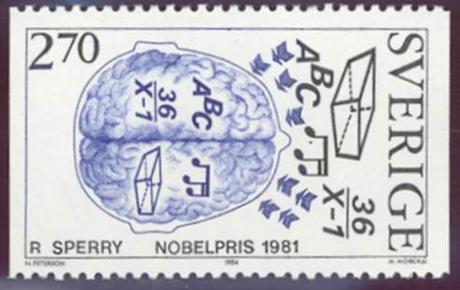
And American scientist Roger Sperry (1913-1994) was honored with a stamp in Sweden in 1984 commemorating his Nobel Prize in physiology for his split-brain research.
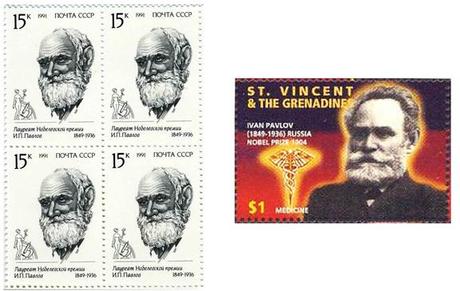
There are many individuals whose work has been important for the science and practice of psychology who have been honored with stamps in other countries. For example, Ivan Pavlov (1849-1936) can be found on stamps issued by Argentina, Chad, Cuba, Guinea-Bissau, Hungary, Mali, Romania, Sao Tome & Principe, the Soviet Union, St. Vincent & the Grenadines, and Sweden.
Other psychology contributors who appear on international postage stamps include Vladimir Bekhterev (motor reflexes), Georg von Bekesy (hearing), Jean-Martin Charcot (hypnosis, hysteria), Charles Darwin (comparative psychology, individual differences, evolution), Rene Descartes (mind-body dualism, mental processes), Auguste Forel (brain structure, sexology), Hermann von Helmholtz (hearing, color vision, speed of nerve conduction), David Hubel (vision), Carl Jung (psychiatry), Egas Moniz (mental illness, lobotomy), Maria Montessori (education), Johann Pestalozzi (education), Philippe Pinel (mental illness), Hermann Rorschach (clinical assessment), Hans Selye (stress), and others.
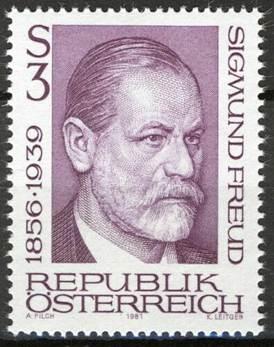
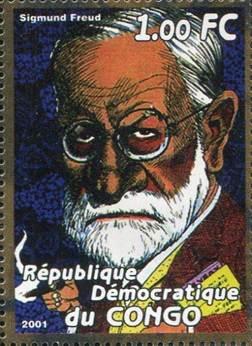
Not surprisingly Sigmund Freud (1856-1939) has appeared on a number of international stamps including issues from Austria, Belgium, Congo, Cuba, Czech Republic, Great Britain, Grenada, Guyana, Israel, Liberia, Mali, Marshall Islands, Mexico, Palau, St. Vincent & the Grenadines, and Uruguay.
Stamps also have been issued to bring awareness to the issues of mental illness, for example, Argentina, Canada, Finland, Ireland, Mexico, New Zealand, and the United Nations. Bills calling for a mental health stamp or a series of mental health stamps have been submitted at least a half-dozen times in the United States Congress but none of these bills ever made it out of Committee. The closest the US has come to recognizing that mental illness is a serious problem in the country was the issuance of a stamp for post-traumatic stress disorder (PTSD) in 2019.

In is uncertain why the USPS has been reluctant to acknowledge the contributions of psychologists to the quality of life in the United States or why there has been such resistance to bring greater awareness to the issues of mental illness and the importance of good mental health. There was a time, not so many years ago, when people found it difficult to talk about cancer or even say the word. It seems that mental illness occupies a similar place today. It is the illness that remains in our national closet. The stigma results in a significant cost to society, thus efforts to reduce that problem are profoundly important. It is unlikely that a psychology/mental health stamp will end the stigma, but stamps on this subject would help to bring the topic into the open. The majority of American families will deal with mental illness at some time. Their suffering needs to be acknowledged. Further, greater resources need to be available to these individuals through our health care systems as well as significant attention to preventative measures.
Note: all images contributed by the author







