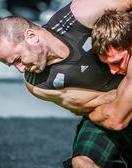
Building the Complete Rugby Athlete
Rugby demands everything. Before we get into that though – in the UK exercise program is spelt “programme”. I got told off for spelling it the American way/software way – “program” in Uni. Just FYI. Turns out micro-trauma helps you remember stuff.
Ok – carrying on…
You need explosive power to break tackles, and to make tackles, I guess. Raw strength to dominate scrums, and to look hard in the gym. Size to hold your ground. Speed to chase down breaks, and you know – run and stuff.
Most training programs give you one or two. We’re going after all of them – you’ll be a one man army. On a rugby pitch. Which might be awkward but still…
The Science of Rugby Strength
Plyometrics build reactive power. Box jumps. Depth drops. Bounding. Your nervous system learns to fire fast and hard.
![Rugby Workout Program .pdf [2025]](https://m5.paperblog.com/i/801/8015520/rugby-workout-program-pdf-2025-L-LpEKsm.jpeg "Rugby Workout Program .pdf [2025]")
Your ‘motor neurons’ learn to fire faster and/or more frequently – creating force in less time. Along with the muscle fibres, neurons also ‘learn’ to fire together, fast.
Your body has safety mechanisms called Golgi tendon organs that limit force production to prevent injury. Plyometric training gradually reduces this protective inhibition.
In addition, plyometrics work by:
– Increasing tendon stiffness – storing more elastic energy
– Type 11 muscle fibres are developed and grow
– Muscle architecture adapts – the angle at which muscle fibres attach to tendons.
These changes sound a bit weird, I know. Here’s some scientific references to prove I’m not just making stuff up –
https://pmc.ncbi.nlm.nih.gov/articles/PMC5555899/
https://pubmed.ncbi.nlm.nih.gov/35312884/
Olympic lifts translate that speed into loaded movement. The clean. The snatch. Pure triple extension. Nothing builds total-body power like throwing weight overhead. Hip extension power, translates to most sports. Somehow – all the natty athletes I know with outstanding power and explosiveness, do olympic lifting anyway.
Compound exercises pack on functional mass. Squats. Presses. Pulls. Big movements that force your body to grow stronger as a unit.
Resistance bands add accommodating tension. They get harder as you accelerate. Perfect for teaching your body to drive through contact. The stretch reflex is your body’s automatic response to being stretched quickly. Plyometrics enhance this reflex arc. When you land and immediately jump, your nervous system learns to respond faster.
Training Methods That Work
Complex training pairs heavy strength work with explosive plyometrics. Back squat followed immediately by box jumps. Your nervous system stays lit up. Power output goes through the roof.
The conjugated method rotates max effort, dynamic effort, and repetition work throughout the week. Monday you go heavy. Wednesday you move light weight fast. You never adapt. You never plateau.
Periodization structures everything across months. General preparation builds your base. Specific preparation sharpens your edge. Competition phase keeps you primed.
The Two-Day Foundation
This program gives you both days you need.
Day one focuses on lower body power and upper body strength. Explosive hips. Strong pressing. The foundation of contact sport dominance.
Day two flips it. Upper body power. Lower body strength. Balance across the entire system.
Each session includes Olympic lifts, plyometrics, compound movements, and band work. Complex training built in. Periodization ready.
Two days. Everything you need.
Start building the complete athlete.
Download the complete two-day program below. Adjust loads based on your training phase. Progress weekly. Dominate on the pitch.
RUGBY WORKOUT PROGRAM
2-Day Power, Strength & Size Split
DAY 1: LOWER POWER / UPPER STRENGTH
A. Olympic Lift – Power Development
Hang Power Clean
- 5 sets x 3 reps
- 75-85% 1RM
- 2-3 min rest
- Focus: explosive triple extension
B. Plyometric – Lower Body
Depth Drop to Box Jump
- 4 sets x 4 reps
- Drop from 18-24″ box
- Minimal ground contact time
- 2 min rest
C. Complex Training Circuit
Back Squat + Box Jump Complex
- 4 sets
- Back Squat: 5 reps @ 80% 1RM
- Box Jump: 5 reps (maximum height)
- Rest 10 seconds between exercises
- Rest 3 min between sets
D. Compound Upper Strength
1. Bench Press
- 4 sets x 6 reps @ 80-85% 1RM
- 2-3 min rest
2. Bent Over Barbell Row
- 4 sets x 8 reps
- 2 min rest
E. Band Work – Upper
Band Face Pulls + Band Press
- 3 sets x 15 reps each
- Superset with minimal rest
- Heavy band resistance
F. Accessory Strength
Dumbbell Incline Press
- 3 sets x 10 reps
- 90 sec rest
DAY 2: UPPER POWER / LOWER STRENGTH
A. Olympic Lift – Power Development
Push Press
- 5 sets x 3 reps
- 75-85% 1RM
- 2-3 min rest
- Focus: explosive drive from legs
B. Plyometric – Upper Body
Plyometric Push-Ups
- 4 sets x 6 reps
- Hands leave ground
- Maximum explosive intent
- 90 sec rest
C. Complex Training Circuit
Overhead Press + Medicine Ball Slam Complex
- 4 sets
- Overhead Press: 5 reps @ 75% 1RM
- Med Ball Slam: 8 reps (heavy ball)
- Rest 10 seconds between exercises
- Rest 3 min between sets
D. Compound Lower Strength
1. Front Squat
- 4 sets x 6 reps @ 80-85% 1RM
- 3 min rest
2. Romanian Deadlift
- 4 sets x 8 reps
- 2-3 min rest
E. Band Work – Lower
Band Resisted Broad Jumps
- 4 sets x 5 jumps
- Band around waist, partner holds
- Maximum distance
- 2 min rest
F. Accessory Strength
1. Walking Lunges
- 3 sets x 20 total steps
- Dumbbells or barbell
- 90 sec rest
2. Pull-Ups
- 3 sets x max reps
- Add weight if over 12 reps
PROGRAMMING NOTES
Periodization Structure
- Weeks 1-4: General Preparation (build volume)
- Weeks 5-8: Specific Preparation (increase intensity)
- Weeks 9-12: Competition Phase (reduce volume, maintain intensity)
Conjugated Method Application
- Max Effort: Olympic lifts and primary compounds (A & C)
- Dynamic Effort: Plyometrics and band work (B & E)
- Repetition Method: Accessory work (F)
Weekly Structure
- Day 1: Monday or Tuesday
- Day 2: Thursday or Friday
- 48-72 hours between sessions
- Rugby training/conditioning on non-lifting days
Load Progression
- Add 2.5-5kg to lifts weekly when all reps completed
- Increase plyometric volume by 1-2 reps per month
- Progress band resistance every 3-4 weeks
Complex Training Timing
- 10 seconds rest between strength and plyometric
- Allows nervous system to stay potentiated
- Don’t skip this – it’s critical for power transfer
Recovery Recommendations
- 8+ hours sleep
- High protein intake (2g per kg bodyweight)
- Aggressive mobility work
- Active recovery between sessions
Questions? Start conservative with loads. Master technique. Progress consistently. Rugby is won in the weight room and training field – preparation is everything.
rugby-workout-pdfDownload![Rugby Workout Program .pdf [2025]](https://m5.paperblog.com/i/801/8015520/rugby-workout-program-pdf-2025-L-EGifSH.jpeg "Rugby Workout Program .pdf [2025]")
Remember that a big part of rugby conditioning, is getting used to taking hits – in a safe and effective way. Much like Muay Thai fighters condition their shins, rugby players need to condition their body’s to the specific impacts of rugby too.
Rugby tackle bags and pads are ideal for this. Whilst some rugby club gyms might let you do some drilling with pads, you’ll probably need to make this part of your standard rugby training sessions.