Let’s talk about HYROX. You know, that thing where you pay money to run 8km while periodically stopping to do exercises that make you question your life choices. It’s fitness meets masochism meets your credit card crying softly in the corner.
I’m a bit bitter about HYROX. I would love to do it, but my hips are knackered from being terrible at MMA and landing in my crappy guard when trying to double leg people. My only real option as a 5ft 10 LHW.
HYROX is pretty great – it has community, a structure you can drop into, progression, all around fitness and competitions to give specific training targets.
My tone below is cynical, but just a tongue-in cheek rant really. Although, having said that, price might be a barrier to some people. Well, probably a lot of people.

But how much does this voluntary suffering actually cost? Buckle up, because we’re about to deep-dive into the economics of pain.
The Entry Fee: Your First Mistake
HYROX entry fees operate on what economists call “dynamic pricing,” but what I call “punishment for procrastination.” Early bird entries in the UK typically start around £85-95. Wait until the last minute? That’ll be £130-150, please.
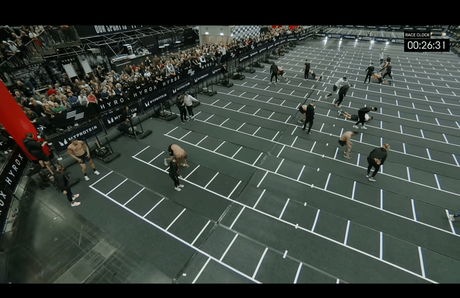
This pricing model is backed by behavioural economics research showing that scarcity increases perceived value (Cialdini, 2009). Translation: HYROX knows you’ll panic-register at 11pm after watching someone’s highlight reel on Instagram, and they’re going to charge you accordingly.
For doubles events, add another £20-30 per person because shared suffering apparently costs extra. The math suggests that friendship has a premium price point of approximately £25.
The Hidden Costs: Where Your Budget Goes to Die
Here’s where it gets spicy. The entry fee is just the beginning of your financial journey into regret.
Gym Membership Upgrade: £30-200/month
Your regular gym doesn’t have a SkiErg. Or a sled. Or rowing machines that aren’t perpetually broken. You’ll need access to HYROX-specific equipment, which means either:
- Joining a CrossFit box (£80-200/month) or
- Adding specialist gym access (£30-50/month extra) and/or
- Befriending someone with a well-equipped garage (priceless, but requires social skills)
Research shows that environmental context significantly impacts training effectiveness (Ekkekakis, 2009). Your brain knows the difference between a SkiErg and sadly waving your arms in the air while making whooshing noises.
The Gear Tax: £200-500
You’ll need:
- Proper running shoes that don’t disintegrate (£100-150)
- Moisture-wicking clothing because cotton is the devil (£50-100)
- A heart rate monitor to confirm you’re dying (£40-200)
- Compression socks that make you look like a try-hard (£20-40)
- Chalk for that farmer’s carry you’ll definitely crush (£10)
Studies indicate that appropriate footwear reduces injury risk by up to 39% (Malisoux et al., 2020). Unfortunately, these studies don’t mention that you’ll still look like a wounded gazelle at kilometer 6.
Nutritional Warfare: £50-100/month
Suddenly you’re buying:
- Protein powder (£25-40)
- Energy gels that taste like regret (£15-30)
- Electrolyte tablets (£10-20)
- Pre-workout that makes your face tingle (£20-35)
Research supports the efficacy of caffeine for endurance performance (Goldstein et al., 2010). However, no research exists on whether shouting “LET’S GO” at yourself in the mirror after consuming 300mg of caffeine actually helps. (It doesn’t.)

Travel & Accommodation: £100-300
Unless you’re blessed with a local event, you’re looking at:
- Petrol or train tickets (£40-100)
- Hotel room because racing at 8am means leaving at 4am (£60-120)
- Race-day breakfast that costs more than your entry fee (£15-30)
- Post-race beer(s) because you survived (£20-50)
The Annual Damage Report
Let’s do the terrifying math:
- Entry fee: £85-150
- Training facility (6 months): £180-480
- Gear: £200-500
- Nutrition (6 months): £300-600
- Travel: £100-300
Total first-year cost: £865-2,030
That’s right. Your “fun fitness challenge” costs approximately the same as a week in the Maldives. Or 173 takeaway pizzas. Or 289 pints of beer.
The Real Cost: Priceless (Unfortunately)
Here’s the kicker: none of this accounts for:
- Lost social opportunities (“Sorry, can’t come out, I have burpees”)
- Relationship strain (“You’re training AGAIN?”)
- The psychological cost of realizing you’re slower than someone dressed as a dinosaur
But according to self-determination theory (Ryan & Deci, 2000), autonomous motivation and competence-building activities increase life satisfaction. So maybe—just maybe—voluntarily bankrupting yourself for 60 minutes of agony is worth it?
Or maybe we’re all just unhinged.
Your wallet, your choice. If you have the money, it is a great investment – better than spending money on beer or anything none-healthy anyway.
They say, well scientists and that, that exercise and relationships are the best markers/ways to improve longevity, mental and physical health. So, HYROX gives you both. So go for it if you have a spare few quid.
Better than paying 10% of your wages to a sketchy church or something.
References:
- Cialdini, R. B. (2009). Influence: Science and Practice
- Ekkekakis, P. (2009). The dual-mode theory of affective responses to exercise
- Goldstein, E. R., et al. (2010). Caffeine and exercise performance
- Malisoux, L., et al. (2020). Footwear and injury risk in runners
- Ryan, R. M., & Deci, E. L. (2000). Self-determination theory