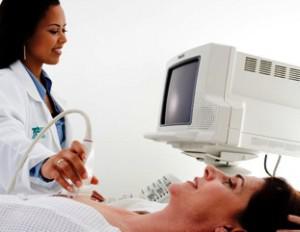
 In a recent study, researchers found that making ultrasound or MRI part of the annual mammography regimen boosts breast cancer detection in women with dense breasts, who are at greater breast cancer risk. The downside… it also increases false positives.
 In a recent study, researchers found that making ultrasound or MRI part of the annual mammography regimen boosts breast cancer detection in women with dense breasts, who are at greater breast cancer risk. The downside… it also increases false positives.
The study, funded by the Avon Foundation and grants from the National Cancer Institute, can be found in the April 4th edition of Journal of the American Medical Association:
Berg WA, et al “Detection of breast cancer with addition of annual screening ultrasound or a single screening MRI to mammography in women with elevated breast cancer risk” JAMA 2012; 307: 1394-1404.
For some time now, researchers have been studying why having dense breast tissue put a woman a greater risk for breast cancer. While the relationship between breast density and physiology is still not at all clear, this tissue characteristic does directly affect the likelihood of being able to detect a cancer with mammography. Simply put…dense breasts are harder to read using mammography.
For this reason, it is recommended that women with dense breasts have an ultrasound or an MRI as a part of their annual screening.
According to the study, Wendie A. Berg, MD, PhD, of Magee-Womens Hospital in Pittsburgh, and colleagues found that after the initial screening looking for prevalent cancers, incidence screening with ultrasound found an additional 3.7 cancers per 1,000 screens,
Supplemental MRI screening after three rounds of annual ultrasound and mammography detected another 14.7 cancers per 1,000 screens.
The number of screens needed to detect one cancer in this largely intermediate-risk group was 127 for mammography alone, 234 for supplemental ultrasound, and 68 for MRI after a negative mammogram and ultrasound.
“Despite its higher sensitivity, the addition of screening MRI rather than ultrasound to mammography in broader populations of women at intermediate risk with dense breasts may not be appropriate,” Berg’s group wrote, “particularly when the current high false-positive rates, cost, and tolerance problems for the MRI procedure are considered.”
Researchers acknowledged that false positives were a problem with ultrasound as a supplemental screening strategy. However, ultrasound and MRI both were less likely to lead to unnecessary recall or biopsy in women with a personal history of breast cancer.
The researchers concluded, “For high-risk women unable to undergo MRI, and for intermediate-risk women with dense breasts, including those with a personal history of breast cancer, this study supports the use of supplemental screening with ultrasound in addition to mammography,”