


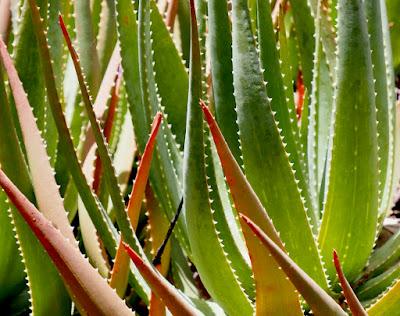
PATTERN: A naturally-occurring or random arrangement of shapes, colors etc., which have a regular or decorative effect (source); for example, aloe leaves.
Often when I'm immersed in plant photography I wonder: Why am I drawn to patterns? And why are they more beautiful and fascinating through a lens? Have you had this experience?
Attraction to patterns is said to be part of the human condition and I find the argument convincing. Patterns can reveal cause and effect, and understanding cause and effect can contribute to survival. In other words, we've evolved to spot such things. Perceived beauty makes them even more conspicuous.
Now the second question. Why are patterns more engrossing and more beautiful through a lens? For that I don't have an answer, not even a guess.
Here are some patterns my camera and I recently captured.
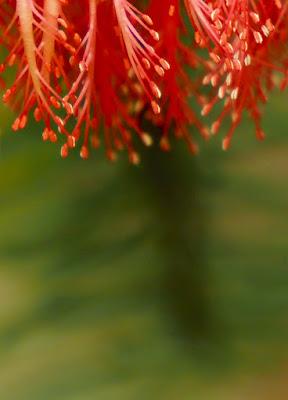
One-sided Bottlebrush (Calothamnus quadrifidus), southwest Australia.
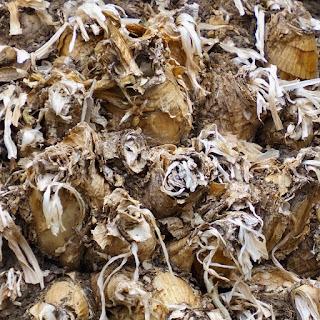
Naked Lady (Amaryllis belladona), Cape of South Africa.
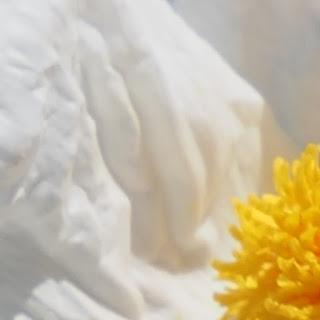
Matilija Poppy (Romneya coulteri), California Coast (Alta and Baja).
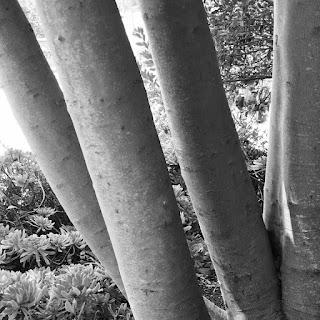
Bay Laurel (Laurus nobilis), Mediterranean Basin.
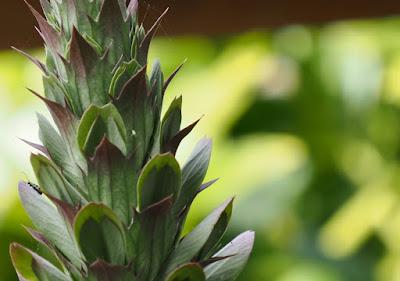
Bear's Breeches (Acanthus mollis), Mediterranean Basin.
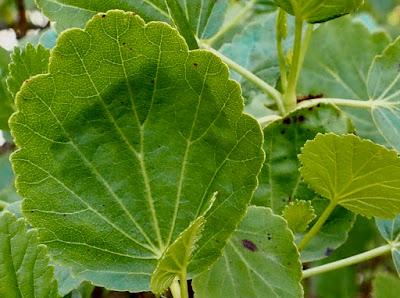
Natal Bottlebrush (Greya radlkoferi), Cape of South Africa.
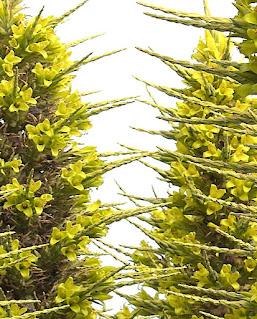
Chagual (Puya chilensis), Chilean Central Coast (Marktee1).
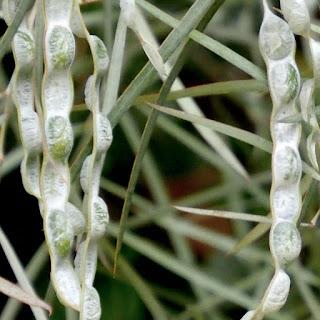
Winter Wattle (Acacia iteaphylla), southwest Australia.
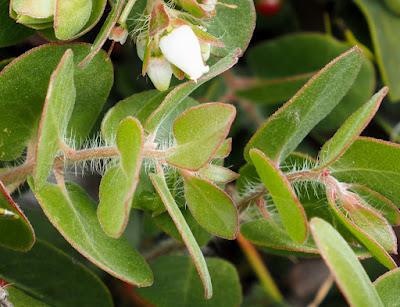
Manzanita (Arctostaphylos sp.), Central California Coast (1).
The locations in the photo captions reveal another pattern. All of these plants grow between 30º and 45º latitude north and south, on the west or southwest sides of continents, and where summers are dry and winters are wet and mild. These regions share similar vegetation and plant adaptations, and their biodiversity is rich.This pattern is a phytogeographer's dream! It can be pondered endlessly and mysteries remain. For example, the regions share few if any species (2).
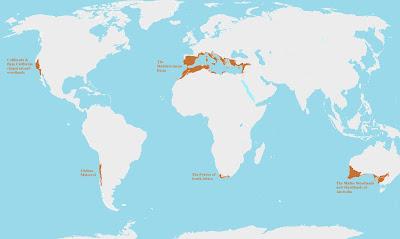
Mediterranean Biomes; original source: Reddit user Simple_Pension_1330.
These are the world's Mediterranean Biomes. Contrary to what you might be thinking, I've been to only one—the Central California Coast. But plants from the others grow in botanical gardens there. Most of these photos were taken during a visit to the San Luis Obispo Botanical Garden (I had to go to the Web for a Central Chilean plant).Now, some less artsy portraits of my subjects.
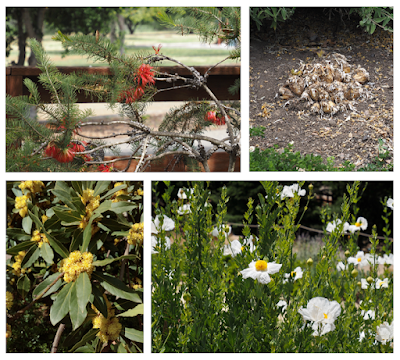
Clockwise from upper left: One-sided Bottlebrush, Naked Lady, Matilija Poppy, Bay Laurel (Βικιπαιδιστής).
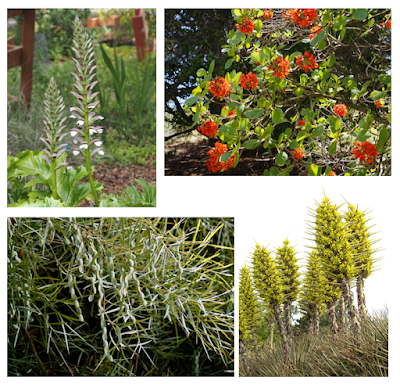
Clockwise from upper left: Bear's Breeches, Natal Bottlebrush, Chagual (Marktee1), Winter Wattle.
Last but definitely not least, the unknown Manzanita grows in abundance along the trail to Point Sal—a required hike on our visits to the Central Coast.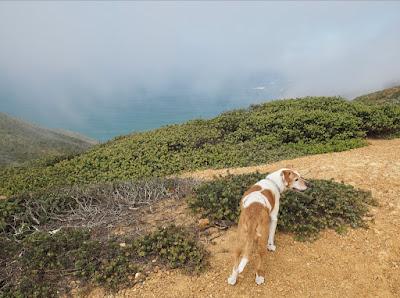
Notes
(1) On the order of 100 different manzanitas (Arctostaphylos spp.) inhabit the California Floristic Province (source).
(2) Among the five biomes, there's an exception to the no-shared-plants rule. Some plant families and even a few genera occur both on the California Coast and in the Mediterranean Basin, possibly due to a shared ancient flora. More here.







