PLACES OF INTEREST
Jandia Peninsula
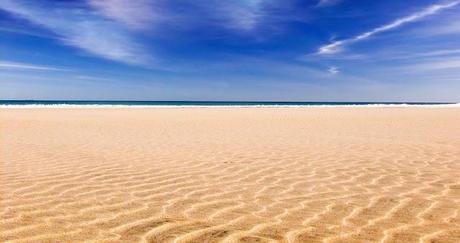
 The south of Fuerteventura is governed by the presence of the impressive natural landscape offered by Jandia Peninsula Natural Park, a leading point where multitude of landscapes can be found, highlighting the Arco de Cofete. The wide variety of spaces, and high ecological value and landscape has led the Canarias Government to declare it a Natural Park.
More than 2600 hectares make the municipality of Pájara a must to visit, suitable for an encounter between man and nature. A pure blend of colours, smells, feelings and relaxation that direct contact with nature provokes anyone with the sensitivity to admire a true feast for the senses, reason of pride of the islanders.
Places to visit:
The south of Fuerteventura is governed by the presence of the impressive natural landscape offered by Jandia Peninsula Natural Park, a leading point where multitude of landscapes can be found, highlighting the Arco de Cofete. The wide variety of spaces, and high ecological value and landscape has led the Canarias Government to declare it a Natural Park.
More than 2600 hectares make the municipality of Pájara a must to visit, suitable for an encounter between man and nature. A pure blend of colours, smells, feelings and relaxation that direct contact with nature provokes anyone with the sensitivity to admire a true feast for the senses, reason of pride of the islanders.
Places to visit:
- Morro Jable (fishing port)
- Punta de Jandia Lighthouse
- Arco de Cofete
- Sand dunes
- Corralejo fishing port
Lobos Island Located in the north of Fuerteventura, a Narutal Park declared in 1982, the Lobos island look at the world with the pride of being one of the last unspoilt natural sites in Europe. Just a few hours of major European cities, tranquillity of the beaches, the eternal Spring gives 365 days an exceptional climate and loneliness deserted island, make this island at one forced step for those who want to delve into a memorable experience. Places to visit:
- La Caleta beach
- Boats from the port of Corralejo: Catamaran trip "Celia Cruz" go 9:45, return 14:15, 17:00
Betancuria
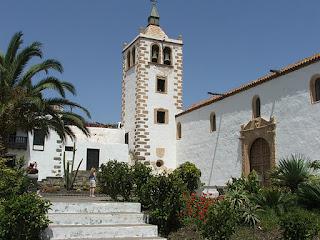
Pájara Church of Our Lady of Regla. Water well in front of the church, along with the remains of a windmill. The wells have traditionally been used to extract water, using donkeys and camels as draft animals. Many traditional style homes, which can be seen on a walk through the streets. La Oliva The exponent par excellence of the civil architecture of the town, and most of the island, the building known as the House of the Colonels, built in the second half of the XVI century by the Bethencourt Cabrera family. The major additions and alterations were made in the XVIII century. The church dedicated to Our Lady of Candelaria. It has three naves with chapels. The nave is supported by arches on Tuscan columns on square base. Mudejar and popular style in the late XVII century presents the peculiar forms of the region and the Renaissance in supports and cover. The latter is a very simplified classicism, dating from the early XVIII century. The tower, dark stone, is not only belfry but watchtower.
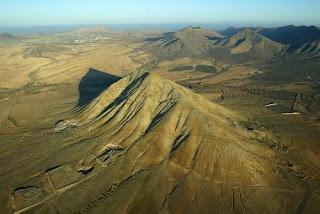
Tindaya Mountain
- Antigua (church and windmill)
- El Cotillo (fishing village)
- Ajuy
- Bafio (roasted goat)
- Majorero cheese