Andrew D Wilson



 Description
MY BLOGS
-
Notes from Two Scientific Psychologists
http://psychsciencenotes.blogspot.co.uk/
Andrew D Wilson & Sabrina Golonka are two psychologists who are interested in developing a more coherent, naturalised approach to the scientific study of human behaviour. Andrew studies the perceptual control of action, with a special interest in learning. Sabrina studies similarity and categorisation. We're both interested in exploring non-representational theories in psychology, including dynamical systems and ecological psychology.
LATEST ARTICLES ( 230 )
-
The Field is Full, Just Not of Affordances - A Reply to Rietveld & Kiverstein
I recently posted about relational accounts of affordances and how one way to summarise my objections to them is that they cannot support mechanistic models of... Read more
Posted on 08 November 2016 LANGUAGES, PHILOSOPHY, PSYCHOLOGY, SCIENCE -
Nonlinear Covariation Analysis (Müller & Sternad, 2003)
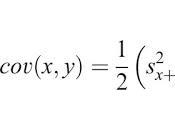
I have been working my way through some analyses that fall under the idea of the motor abundance hypothesis (Latash, 2012) - the idea that motor control does no... Read more
Posted on 28 October 2016 LANGUAGES, PHILOSOPHY, PSYCHOLOGY, SCIENCE -
Optimal Feedback Control and Its Relation to Uncontrolled Manifold Analysis
Motor control theories must propose solutions to the degrees of freedom problem, which is the fact that the movement system has more ways to move than are ever... Read more
Posted on 13 October 2016 LANGUAGES, PHILOSOPHY, PSYCHOLOGY, SCIENCE -
What Can You Do With Uncontrolled Manifold Analysis?
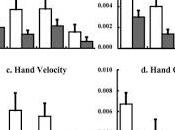
There is generally more than one way to perform a task (the ‘bliss of motor abundance’) and so it’s possible for a movement to incur a little noise that... Read more
Posted on 11 October 2016 LANGUAGES, PHILOSOPHY, PSYCHOLOGY, SCIENCE -
Uncontrolled Manifold Analysis
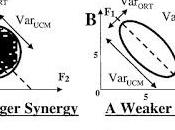
Human movement is hard to study, because there are many ways to perform even simple tasks and given the opportunity, different people will take different routes. Read more
Posted on 15 September 2016 LANGUAGES, PHILOSOPHY, PSYCHOLOGY, SCIENCE -
The Bliss of Motor Abundance
The fundamental question in psychology boils down to "why did that person do that thing they just did?". Welcome to my new favourite example.Figure 1. Read more
Posted on 07 September 2016 LANGUAGES, PHILOSOPHY, PSYCHOLOGY, SCIENCE -
The Affordances of Prehistoric Objects

I have a new paper in press at Scientific Reports (Wilson, Zhu, Barham, Stanistreet Bingham, 2016; see also the slides from my EWEP14 talk) and I am so excite... Read more
Posted on 10 August 2016 LANGUAGES, PHILOSOPHY, PSYCHOLOGY, SCIENCE -
Relational Theories of Affordances Are Functional, Not Mechanistic (A Purple...
Everyone and their dog has a theory about how to interpret Gibson's famously vague definition of affordances;The affordances of the environment are what it... Read more
Posted on 25 July 2016 LANGUAGES, PHILOSOPHY, PSYCHOLOGY, SCIENCE -
Framing the Debate
In 2014 we published a book chapter with Eric Charles in which we argued that the most important thing psychology and neuroscience needed from people like us wa... Read more
Posted on 21 July 2016 LANGUAGES, PHILOSOPHY, PSYCHOLOGY, SCIENCE -
Reply to Hamlyn: In Detail
This is a detailed reply to the critique Jim Hamlyn wrote critiquing our Ecological Representation preprint (and related blog post). Read more
Posted on 19 July 2016 LANGUAGES, PHILOSOPHY, PSYCHOLOGY, SCIENCE -
Reply to Graziosi: In Detail
This post is a detailed reply to Sergio Graziosi's useful critique of our Ecological Representation pre-print. As such, it's specific to his particular... Read more
Posted on 18 July 2016 LANGUAGES, PHILOSOPHY, PSYCHOLOGY, SCIENCE -
Mechanisms for Cognitive and Behavioural Science (#MechanismWeek 5)

This week we have reviewed what a mechanism is, various ways to model mechanisms, and talked about the kinds of functional and dynamical models cognitive scienc... Read more
Posted on 24 June 2016 LANGUAGES, PHILOSOPHY, PSYCHOLOGY, SCIENCE -
Ecological Mechanisms and Models of Mechanisms (#MechanismWeek 4)
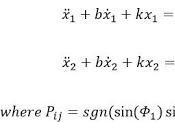
Mechanistic models are great, but so far cognitive science doesn't have any. We have functional models (of, for example, memory or categorisation) and... Read more
Posted on 23 June 2016 LANGUAGES, PHILOSOPHY, PSYCHOLOGY, SCIENCE -
Do Dynamic Models Explain? (#MechanismWeek 3)

So far we have learned what a mechanism is, two ways of modelling mechanisms (functional and mechanistic) and we've identified that cognitive science is... Read more
Posted on 22 June 2016 LANGUAGES, PHILOSOPHY, PSYCHOLOGY, SCIENCE -
Cognitive Models Are Not Mechanistic Models (#MechanismWeek 2)
So far we have talked about what mechanisms are and what sort of model counts as properly mechanistic. The next question is to have a look in more detail at... Read more
Posted on 21 June 2016 LANGUAGES, PHILOSOPHY, PSYCHOLOGY, SCIENCE -
Mechanisms and Models of Mechanisms (#MechanismWeek 1)

In this first #MechanismWeek post, I will define a mechanism and briefly describe the kind of models of mechanisms you can build. I begin with various kinds of... Read more
Posted on 20 June 2016 LANGUAGES, PHILOSOPHY, PSYCHOLOGY, SCIENCE -
Ecological Representations
Funny story. One day, I got a text from Sabrina that said "Holy crap. I think ecological information is a representation." "Uh oh", I thought - "Twitter is gonn... Read more
Posted on 16 June 2016 LANGUAGES, PHILOSOPHY, PSYCHOLOGY, SCIENCE -
#MechanismWeek (a Week of Posts Commencing June 20th 2016)
Cognitive science is, in principle, the search to understand the mechanisms that cause our behaviour to look the way that it does. Read more
Posted on 14 June 2016 LANGUAGES, PHILOSOPHY, PSYCHOLOGY, SCIENCE -
The Shrunken Finger Illusion

Ed Yong has a great write-up of an interesting little study in Current Biology (Ekroll, Sayim, Vander Hallen Wagemans, 2016) that caught my eye. Read more
Posted on 11 May 2016 LANGUAGES, PHILOSOPHY, PSYCHOLOGY, SCIENCE -
Information Use is Shaped by Bodily Dynamics

I've just discovered a treasure trove of 30 talks recorded at the 2015 International Conference on Perception and Action (the main US ecological psychology... Read more
Posted on 27 April 2016 LANGUAGES, PHILOSOPHY, PSYCHOLOGY, SCIENCE
THE %(site_name)s COMMUNITY

-
 umkhaloodie
3864140 pt -
Ch
3396455 pt -
 jesusmsanchezl
2453003 pt -
weddingblog2011
2205852 pt

