Andrew D Wilson



 Description
MY BLOGS
-
Notes from Two Scientific Psychologists
http://psychsciencenotes.blogspot.co.uk/
Andrew D Wilson & Sabrina Golonka are two psychologists who are interested in developing a more coherent, naturalised approach to the scientific study of human behaviour. Andrew studies the perceptual control of action, with a special interest in learning. Sabrina studies similarity and categorisation. We're both interested in exploring non-representational theories in psychology, including dynamical systems and ecological psychology.
LATEST ARTICLES ( 230 )
-
Brains Learn to Perceive, Not Predict, the World
The current trendy way to think about brains is as predictive machines. Bayesian methods, free energy, generative models, and all the other things in Andy... Read more
Posted on 19 April 2016 LANGUAGES, PHILOSOPHY, PSYCHOLOGY, SCIENCE -
Peer Review: Solemn Duty Or Merely Extra Work?
The other day on Twitter I saw Rolf Zwaan tweeting about Collabra's policy of rewarding reviewers with credit that can be traded in for credit for organisationa... Read more
Posted on 14 April 2016 LANGUAGES, PHILOSOPHY, PSYCHOLOGY, SCIENCE -
The Art of the New Collaboration
I love working with other people. It keeps me connected to a wide range of topics and drives me to push my work in ways I would never other think to do. Read more
Posted on 09 April 2016 LANGUAGES, PHILOSOPHY, PSYCHOLOGY, SCIENCE -
The High Price of Open Access
We've been chatting about open access journals, and how surprisingly expensive it is to publish in them. Obviously there are costs involved in publishing, but... Read more
Posted on 16 March 2016 LANGUAGES, PHILOSOPHY, PSYCHOLOGY, SCIENCE -
Affordance-based Control (Fajen 2005, 2007)
The most commonly studied tasks in the ecological approach involve the perceptual control of actions such as interception and steering. Read more
Posted on 07 March 2016 LANGUAGES, PHILOSOPHY, PSYCHOLOGY, SCIENCE -
How Worried Are You By The Symbol Grounding Problem?

Imagine you're a mental representation. You are a computational symbol system, and your job is to contain knowledge that is about the world and that can help... Read more
Posted on 21 February 2016 LANGUAGES, PHILOSOPHY, PSYCHOLOGY, SCIENCE -
On "The Poverty of Embodied Cognition" (Goldinger Et Al, in Press)
A new paper in Psychonomic Bulletin and Review (Goldinger, Papesh, Barnhart, Hansen Hout, 2015) has taken a swing at the field of embodied cognition,... Read more
Posted on 05 February 2016 LANGUAGES, PHILOSOPHY, PSYCHOLOGY, SCIENCE -
Information is Typically Dense and Continuous (A Purple Peril)

Optic flow is everywhere, all the time (same with other energy arrays, like the acoustic array). We depend on this fact deeply. Read more
Posted on 26 January 2016 LANGUAGES, PHILOSOPHY, PSYCHOLOGY, SCIENCE -
A Quick Review and Analysis of Perceptual Control Theory
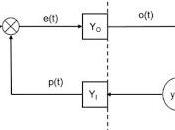
Perceptual Control Theory (PCT; Powers, 1973) is a theory that proposes behaviour is about the control of perception. We act so as to keep some perceived part o... Read more
Posted on 21 January 2016 LANGUAGES, PHILOSOPHY, PSYCHOLOGY, SCIENCE -
Tasks from the First Person Perspective (A Purple Peril)

The great snare of the psychologist is the confusion of his own standpoint with that of the mental fact about which he is making his report. I shall hereafter... Read more
Posted on 06 January 2016 LANGUAGES, PHILOSOPHY, PSYCHOLOGY, SCIENCE -
The Ecological Approach to Sporting Performance
Last week I took part in a Google Hangout with Mark Upton and Al Smith, who run the sports coaching blog 'My Fastest Mile' and who are generally all about... Read more
Posted on 14 December 2015 LANGUAGES, PHILOSOPHY, PSYCHOLOGY, SCIENCE -
Thoughts on Ding Et Al (2015) "Cortical Tracking of Hierarchical Linguistic...
I happened to be reading Cummins (2000) paper “’How does it work?’ vs. ‘What are the laws?’ Two conceptions of psychological explanation”, when my Twitter feed... Read more
Posted on 09 December 2015 LANGUAGES, PHILOSOPHY, PSYCHOLOGY, SCIENCE -
Quantifying the Affordances for Throwing for Distance and Accuracy

I have a new paper in press at JEP:HPP (Wilson, Weightman, Bingham Zhu, in press; supplemental material). It is the end result of five years work across two... Read more
Posted on 09 December 2015 LANGUAGES, PHILOSOPHY, PSYCHOLOGY, SCIENCE -
Oh Crap. Re-thinking Van Gelder (A Purple Peril)

I have this problem where I like pretty much everything William Bechtel writes except when it pertains to cognitive science. It's annoying because, even when I... Read more
Posted on 04 December 2015 LANGUAGES, PHILOSOPHY, PSYCHOLOGY, SCIENCE -
Thinking About Representations in Relation to Mechanisms

As Chemero (2011) observed, there are two ways to think about debates in science. We can either debate about the actual facts of the matter in the world or we... Read more
Posted on 02 December 2015 LANGUAGES, PHILOSOPHY, PSYCHOLOGY, SCIENCE -
Dynamic Mechanistic Explanations in Radical Embodied Cognitive Science
I'm on my way back from an enactivist/embodiment conference in Warsaw. I gave a talk (slides) in which I argued that in order to make theories of... Read more
Posted on 18 October 2015 LANGUAGES, PHILOSOPHY, PSYCHOLOGY, SCIENCE -
The Interface Theory of Perception - The View from Ecological Psychology
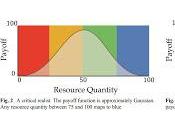
Psychonomic Bulletin Review has released, with much fanfare and a hashtag, an article called 'The Interface Theory of Perception' (Hoffman, Singh Prakash,... Read more
Posted on 28 September 2015 LANGUAGES, PHILOSOPHY, PSYCHOLOGY, SCIENCE -
From Specification to Convention (A Purple Peril)
I previously laid out how specification works and why it's important to the ecological approach. Read that first, because I build on it a lot here. Read more
Posted on 21 August 2015 LANGUAGES, PHILOSOPHY, PSYCHOLOGY, SCIENCE -
Brains Don't Have to Be Computers (A Purple Peril)

A common response to the claim that we are not information processors is that this simply cannot be true, because it is self-evidently the case that brains are... Read more
Posted on 07 July 2015 LANGUAGES, PHILOSOPHY, PSYCHOLOGY, SCIENCE -
What Would It Take to Refute Radical Embodied Cognition?
People often send us papers and data via Twitter that they believe rule out a radical, non-representational theory of cognition. Read more
Posted on 30 June 2015 LANGUAGES, PHILOSOPHY, PSYCHOLOGY, SCIENCE
THE %(site_name)s COMMUNITY

-
 umkhaloodie
3864140 pt -
Ch
3396455 pt -
 jesusmsanchezl
2453003 pt -
weddingblog2011
2205852 pt

