


Finding time for fitness can be a challenge in today’s fast-paced world. Balancing work, family, and personal commitments often leaves little room for traditional gym sessions. However, home workouts offer a flexible alternative that lets you exercise on your own schedule.
Whether you’re an early riser or a night owl, you can carve out time for exercise whenever it works best for you. Daily home fitness routines can transform your health without requiring significant time investments or expensive equipment. This article will provide practical, time-efficient workout solutions designed for individuals with packed schedules.
Key Takeaways
- Flexible home workout routines that fit into your busy schedule.
- Effective exercises that require minimal time and equipment.
- Strategies for maintaining consistency in your fitness routine.
- Benefits of short, consistent workout sessions, including increased energy and improved mood.
- How to overcome common barriers to fitness, such as commute time and gym anxiety.
Why Home Workouts Are Perfect for Busy Lifestyles
In today’s fast-paced world, finding time for fitness can be a challenge, but home workouts offer a solution that fits into even the busiest of schedules. As “The greatest wealth is health” – a quote often attributed to Virgil, underscores the importance of prioritizing our well-being.
Home workouts allow you to customize your routine. Whether you prefer yoga, strength training, cardio, or a mix of all three, you can design a program that suits your fitness level and goals. For more ideas on home fitness exercises, you can visit https://webhealthguru.com/home-fitness-exercises/.
The Time-Saving Advantage
One of the most significant benefits of home workouts is the time-saving aspect. By eliminating the need to commute to a gym, you can save a considerable amount of time during the week. This allows you to allocate more time to other important aspects of your life.
Cost-Effectiveness of Home Fitness
Home workouts are also cost-effective. Without the need for gym memberships or expensive equipment, you can maintain a rigorous fitness regimen without breaking the bank. This makes fitness more accessible to everyone, regardless of budget constraints.
Flexibility to Fit Your Schedule
The flexibility that home workouts offer is unparalleled. You can exercise at any time of day that suits you, whether you’re an early riser or prefer to work out later in the evening. This flexibility means you can fit in a workout whenever your schedule permits, making it easier to stick to your fitness goals. Moreover, home workouts can be adapted to fit around unpredictable schedules, allowing for exercise whenever a window of opportunity appears. You can customize the length of your workouts based on available time, from quick 5-minute sessions to longer workouts when you have more time.
Essential Components of Daily Home Fitness for Busy People
Effective daily home fitness for busy people hinges on a few critical components that ensure a well-rounded and sustainable routine.
Proper Warm-Up Techniques
A proper warm-up is essential to prepare the body for exercise, reducing the risk of injury and improving performance. It should include light cardio and dynamic stretching to get the blood flowing and muscles ready. A good warm-up can be as simple as 5-10 minutes of jogging in place or jumping jacks, followed by some dynamic stretches like leg swings and arm circles.
Balancing Cardio and Strength Training
Balancing cardio and strength training is crucial for a well-rounded fitness routine. Cardio exercises, such as running or cycling, improve heart health and burn calories, while strength training, like weightlifting or bodyweight exercises, builds muscle and boosts metabolism. Aiming for a mix of both in your daily routine can help achieve overall fitness. For example, incorporating HIIT (High-Intensity Interval Training) workouts can be an efficient way to combine cardio and strength training.
Importance of Flexibility and Recovery
Flexibility and recovery are often overlooked but are vital components of a sustainable fitness routine. Incorporating exercises like yoga poses, such as downward dog or cobra, can improve flexibility. Additionally, finishing your routine with a bit of stretching and core work, like crunches and leg raises, can aid in recovery and leave you feeling centered. Even 2-3 minutes of strategic stretching can make a significant difference in how your body feels after a workout.
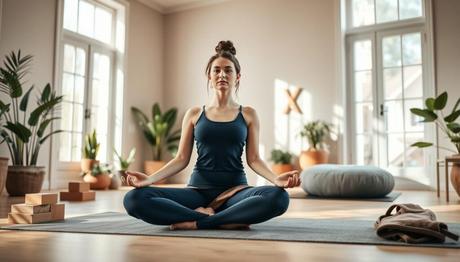
As noted by fitness experts, “Proper recovery is not just about avoiding injury; it’s about improving overall workout efficiency.” By prioritizing flexibility and recovery, busy individuals can maintain a consistent fitness routine without burnout.
Quick and Effective 10-Minute Workout Routines
With increasingly hectic lifestyles, the need for fast, effective workouts has never been more pressing. Incorporating a workout routine into your daily schedule can boost energy, enhance productivity, and improve overall well-being.
Morning Energy Boost Routine
Starting your day with a 10-minute exercise routine can be incredibly invigorating. A simple yet effective yoga sequence, such as a series of sun salutations, can help increase blood flow and wakefulness. This morning routine prepares your body for the day ahead, making it easier to tackle morning tasks.
Lunchtime Revitalizer Workout
A mid-day workout can be a great way to refresh and recharge. A quick 10-minute routine involving bodyweight exercises like squats, lunges, or push-ups can be done almost anywhere, even at the office. This break not only boosts energy but also improves focus for the rest of the day.
Evening Stress-Relief Exercises
The evening is an ideal time to unwind with a gentle 10-minute stretching routine. Incorporating elements of yoga, such as Downward-Facing Dog, can help stretch and relax the body. This exercise routine is designed to release tension and prepare the mind and body for a restful night’s sleep.
Here’s an example of a simple evening routine you can follow:
- Gentle stretching to loosen up tight muscles
- Mindful breathing exercises to calm the mind
- Progressive muscle relaxation to release physical tension
By incorporating these quick and effective routines into your daily schedule, you can maintain a healthy and active lifestyle, even on the busiest of days.
HIIT Workouts: Maximum Results in Minimum Time

In today’s fast-paced world, HIIT workouts have emerged as a time-efficient way to stay fit. High-Intensity Interval Training (HIIT) involves short bursts of intense exercise followed by brief periods of rest. This method has been shown to be effective for improving cardiovascular health, increasing speed, and enhancing muscular endurance.
The Science Behind HIIT Efficiency
HIIT workouts are efficient because they push your body to its maximum capacity in short intervals, typically ranging from 20 seconds to 1 minute, followed by rest periods. This cycle is repeated for the duration of the workout, usually around 15-20 minutes. The science behind HIIT lies in its ability to elevate your heart rate and metabolism, leading to increased caloric burn both during and after exercise.
7-Minute HIIT Circuit for Beginners
For those new to HIIT, starting with a 7-minute circuit is advisable. This can include exercises like burpees, jump squats, and mountain climbers, done in 30 seconds of exercise followed by 10 seconds of rest. As you get more comfortable, you can increase the duration and intensity.
15-Minute Full-Body HIIT Challenge
The 15-minute full-body HIIT challenge involves a series of exercises targeting different muscle groups. Using dumbbells, you can perform a circuit that includes drop squats, deadlifts, front lunges, and bent over rows, among others. Each exercise is done for 45 seconds with 15 seconds of rest in between. This workout is scalable by adjusting the weight used or modifying the exercises to suit your fitness level.
To make the most of HIIT workouts, it’s crucial to prioritize form over speed and to pace yourself according to your fitness level. With consistency, HIIT can be a cornerstone of your fitness routine, leading to significant improvements in a short amount of time.
No-Equipment Strength Training for Busy Professionals
You don’t need a gym to get a great strength training workout, even with a busy schedule. Effective strength training can be achieved through bodyweight exercises that can be done anywhere, anytime.
Upper Body Bodyweight Exercises
Upper body strength can be built with simple exercises like push-ups and dips using a chair or bench. For a more challenging workout, try diamond push-ups or decline push-ups using a chair. These exercises target the side muscles of your upper body, improving overall strength.
- Push-ups: 3 sets of 10 reps
- Dips (using a chair): 3 sets of 10 reps
Lower Body Strengthening Moves
Lower body strength is crucial for overall mobility and stability. Squats, lunges, and calf raises are effective exercises that require no equipment. For added challenge, try single-leg squats or side lunges. These exercises will help improve your balance and strength.
- Squats: 3 sets of 15 reps
- Lunges: 3 sets of 10 reps per leg
Core-Strengthening Routine
A strong core is essential for good posture, reduced back pain, and better overall functional movement. Try a routine that includes “Core clock” mountain climbers, holding a plank for 30 seconds, and “Core clock” plank to pikes. Perform these exercises on the floor, using socks under your palms to slide across the floor for added challenge. For a comprehensive core workout, include exercises that target the side muscles, such as side plank.
- “Core clock” mountain climbers: 3 sets
- Plank to pikes: 3 sets
- Ab rollouts: 3 sets
Creating a Sustainable Home Fitness Routine
For people with demanding lifestyles, creating a sustainable home fitness routine is key to maintaining overall well-being. It’s about making fitness a habit that fits into your busy day.
Setting Realistic Goals for Busy Schedules
To create a sustainable routine, start by setting realistic goals that fit your busy schedule. Aim to work out a certain number of days per week, rather than trying to exercise every day. For example, you might start with three days a week and gradually increase the frequency as your schedule allows.
Tracking Progress Without Obsessing
It’s essential to track your progress without becoming too fixated on the outcome. Use a fitness journal or mobile app to monitor your workouts and celebrate your achievements. This will help you stay motivated and see the progress you’re making, even if it’s not always linear. You can also visit https://webhealthguru.com/how-to-create-a-healthy-morning-routine/ for more tips on creating a healthy routine.
Overcoming Common Obstacles and Excuses
Busy people often face obstacles when trying to maintain a workout routine. To overcome these challenges, identify potential barriers and develop contingency plans. For instance, if you know you’ll be traveling on certain days, research bodyweight exercises you can do in your hotel room or invest in a portable fitness kit. By being prepared, you can stay on track even when life gets in the way, and make the most of your time.
Conclusion: Making Daily Home Fitness a Lifestyle Priority
Embracing daily home fitness can be a transformative step towards a healthier lifestyle, even for the busiest individuals. By incorporating simple exercises and workout routines into our daily schedule, we can experience significant improvements in our overall wellbeing. Consistency is key; even minimal time investments in home workouts can yield substantial health returns. It’s about creating sustainable habits that support our overall fitness and adapting to life’s changing demands.
Start with small, manageable changes, such as trying one of the effective workout routines presented in this article. Remember, fitness is a journey, not a destination. By making health a non-negotiable priority and mixing and matching different routines to suit our individual schedules and preferences, we can achieve a healthier, happier lifestyle. For more fitness tips and workout ideas, explore the resources available to help you on your fitness journey.
FAQ
What are the best exercises to do at home without any equipment?
You can do bodyweight exercises like push-ups, squats, lunges, and planks. These exercises work multiple muscle groups and can be modified to suit your fitness level.
How long should a workout routine be to be effective?
Even a short 10-minute workout can be effective if done correctly. HIIT workouts, for example, can be done in as little as 7 minutes and still provide great benefits.
Can I do strength training exercises without going to the gym?
Absolutely! You can do bodyweight exercises like arm circles, leg raises, and wall squats that work on strengthening your muscles without any equipment.
How often should I do workouts at home?
For busy people, aiming for at least 3-4 days a week is a good starting point. You can adjust the frequency based on your schedule and fitness goals.
What is the best way to warm up before a workout?
A good warm-up should include light cardio such as jumping jacks or jogging in place, followed by dynamic stretching to prepare your muscles for the workout.
Can I do yoga as a form of exercise at home?
Yes, yoga is a great way to improve flexibility, balance, and strength. You can find many yoga routines online that cater to different fitness levels and goals.
How can I track my progress without going to the gym?
You can track your progress by taking body measurements, monitoring your workout routine, and using a fitness tracker or mobile app to log your activities.
The post Daily Home Fitness for Busy People on the Go first appeared on Webhealthguru.







