


Causes, Treatment Options
- 19 October, 22
 Insomnia
Acute Insomnia: Symptoms, Causes, Treatment Options
Insomnia
Acute Insomnia: Symptoms, Causes, Treatment Options
Insomnia is a prevalent sleep disorder characterized by difficulties in falling asleep or staying asleep for an entire night. The condition may also cause someone to wake up early and not be able to fall asleep again. It is common for many adults to have short-term acute insomnia for days or weeks.
Insomnia affects approximately 35% of adults; however, in some regions, the rate is higher at 50-60%. In the United States, about 9.5% of people experience short-term, also known as transient or acute, insomnia. One out of every five short-term insomnia cases graduates to chronic insomnia. To prevent such outcomes, one can seek professional help. But before we talk about available treatment options, let’s learn more about the symptoms and causes of acute insomnia.
Do you have trouble falling asleep or staying asleep? Contact a MEDvidi doctor to know if you have insomnia.
Book An AppointmentTypes of Insomnia Disorder
Insomnia types are classified by duration and include:
- Transient, episodic, short-term, or acute insomnia. The disorder lasts for a few days to a month.
- Chronic insomnia lasts for more than three months and can go on for years.
- Primary insomnia is a sleep disorder that develops without an underlying health condition.
- Comorbid insomnia coexists with another physical or psychiatric medical condition.
What Is Acute Insomnia?
Acute insomnia is a short-term sleep disorder that can result from the person experiencing a stressful event, having poor sleep habits, and other factors. Though the condition is short-lived, it still negatively impacts a person’s day-to-day life. Approximately 25% of Americans experience acute insomnia annually.
Acute Insomnia Symptoms
Signs of acute insomnia include:
- Difficulty falling asleep
- Inability to stay asleep for an entire night
- Waking up tired and unrested
- Excessive daytime drowsiness
- Fatigue and lethargy
- Anxiety, irritability, and depression
- Poor concentration, focus, and memory
- An increase in accidents or errors
- Worrying about sleep
See a doctor to get a diagnosis and personalized treatment for insomnia.
Start With A Free AssessmentWhat Can Cause insomnia?
Below are some common acute insomnia causes:
- Mental health disorders
Approximately 40% of people with insomnia have a mental health disorder. These usually include depression and anxiety disorders. They are likely to disrupt sleeping patterns as they cause mental hyperarousal and intrusive thoughts. - Neurological problems
Any brain problem, such as neurodevelopmental and neurodegenerative disorders, elevates the risk of insomnia. Alzheimer’s dementia, attention-deficit hyperactivity disorder (ADHD), and Autism Spectrum Disorder (ASD) disrupt the circadian rhythm of sleep-wake cycles. Neurological problems cause mental confusion that affects the quality of sleep. - Stress
Overthinking, worry, and concerns about various life issues keep the mind active. The brain’s failure to shut down leads to an inability to fall asleep. Stressful and traumatic experiences like the death of a loved one, loss of employment, or marital conflicts can cause acute insomnia. - Medication
Insomnia can be a sign of side effects of prescription medication. Some anti-asthma drugs, antidepressants, stimulants, and blood pressure medicines interfere with sleep patterns. Sometimes insomnia is a symptom of medication withdrawal. - Underlying medical condition
Health conditions such as cancer, chronic pain, asthma, diabetes, and gastroesophageal reflux disease (GERD) can cause insomnia. Pain makes sleeping difficult and increases stress, exacerbating the problem further. Physical illnesses that affect the nervous and respiratory systems lead to transient or chronic insomnia.
See a therapist to know what could be the cause(s) of your insomnia.
See A Doctor Online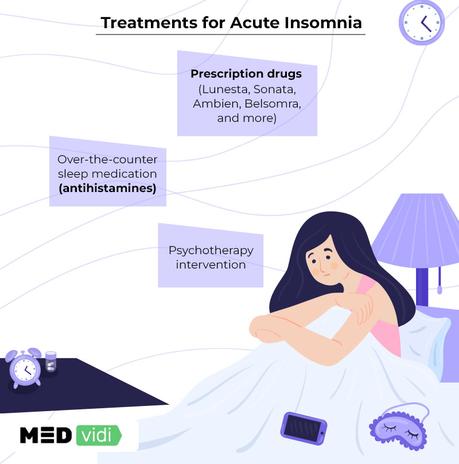
Acute Insomnia Vs. Chronic Insomnia
Below, let’s review the differences between acute and chronic insomnia:
Acute insomniaChronic insomnia
DurationA brief period of a few days to about a month but less than three monthsAbout three months and can extend to years
CausesTemporary and short-lived stressors like an important event or poor sleeping habitsPersistent life challenges such as a mental health disorder or traumatic occurrences, among other major life events.
Treatment courseShort-term and focuses on dealing with the root cause and adjusting the sleep cycle back to normal.Long-term and also tackles any comorbid mental and physical conditions.
Acute Insomnia Treatment and Management
Since acute insomnia is a short-term sleep disorder; it is possible to effectively treat and manage it. Some measures to treat the disease include:
- Prescription drugs
A person with acute insomnia should consult a doctor for treatment. The health practitioner may prescribe any of the following medications for acute and chronic insomnia:- Eszopiclone (Lunesta)
- Temazepam (Restoril)
- Ramelteon (Rozerem)
- Zaleplon (Sonata)
- Zolpidem (Ambien,
- Edluar, Intermezzo,
- Zolpimist)
- Orexin (Belsomra)
- Over-the-counter sleep medication
Nonprescription sleep aids include antihistamines that cause drowsiness. However, the medication is not recommended for regular use. Overuse can cause side effects like dizziness, excessive daytime sleepiness, and confusion, among other challenges. - Psychotherapy intervention
Cognitive-behavioral therapy and behavioral approach can help a person manage the life stressors that cause the temporary sleep disorder. The patient and therapist develop coping techniques like meditation and relaxation skills to alleviate stressors and improve sleep patterns.
Conclusion
Acute insomnia is a prevalent condition that affects many adults globally every year. Fortunately, it is a treatable and manageable sleep disorder. It is advisable to see a doctor who will help you acquire skills to manage temporary stressors and causative factors to prevent a transition of the condition to severe insomnia.

Real help for Insomnia.
Beat your symptoms with our expert advice.



- Acute insomnia
- Acute insomnia treatment
- Chronic insomnia
- Chronic Insomnia Causes
- Chronic Insomnia Treatment
- how to treat insomnia
- Insomnia
- Insomnia causes
- Insomnia medication
- Insomnia treatment
- Types of insomnia
- What can cause insomnia







