


Last Updated on by Jeremy
Disclaimers: Living the Dream uses demographic data, email opt-ins, display advertising, and affiliate links to operate this site. Please review our Terms and Conditions for more information. Listed prices and attraction details may have changed since our visit and initial publication.
Korean food culture is seriously no joke. You may know about kimchi, barbecue, and bibimbap, but this country's cuisine is as varied as it is vast.
During our visit to the country, we made it our mission to try a new item in almost every meal- and accomplishing this goal was quite easy. We are not exaggerating when we say you could eat out for two weeks without having the same thing twice other than banchan (included sides). We cannot make that claim in many countries!
To help you get an idea of what you should try when visiting this delicious country, this guide was born.
This one is set up to discuss the dishes themselves, but at the end of each section we give one or two restaurant recommendations where you can find a stellar iteration!
Korean Barbecue
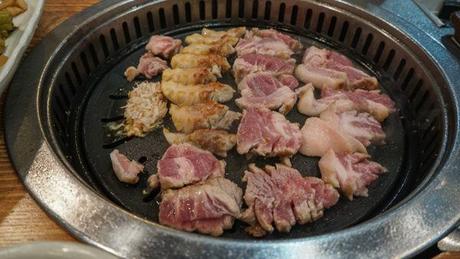
Korean barbecue is not the kind of barbecue you'd expect from most other places around the world. Here, meat (typically pork neck or belly) is cooked on a custom griddle over hot coals or a custom gas-fired grill. It often starts as one large piece and is cut into smaller bits by your server as it cooks (although you're more than welcome to do this yourself if you know what you're doing).
By the time the meat is done, it is already in bite-sized pieces that can be combined with the assortment of banchan that is served along with it. This often includes salt, tiny shrimp (also salty), a spicy sauce, perilla leaves, kimchi, fermented vegetables, spicy peppers, and more. This ends up being a choose-your-own-adventure kind of meal where you may take one bite of pork neck with the spicy sauce and a perilla leaf, and then the next with just shrimp, or perhaps one with a bite of something spicy, and so on.
In fact, by our fifth barbecue experience we were almost exclusively ordering pork neck (hangjeongsal), placing a piece in a perilla leaf, and topping with a spicy sauce and a fermented vegetable. It is literally our perfect bite.
If you find yourself on Jeju Island, a barbecue experience here is a must to try the famous Jeju black pork. This comes from a smaller pig that is known for its black hair and dense fat marbling.
Great Restaurant to Try: 맛찬들왕소금구이 서면점 in Busan and Donsadon Byeolgwan in Jeju
Japchae
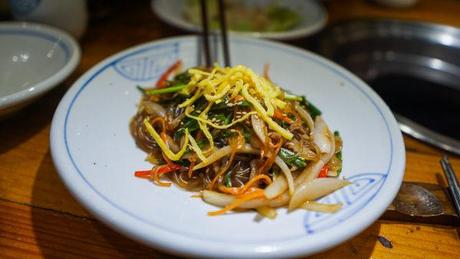
Korea's most well-known noodle dish is most likely Japchae- a sweet potato based glass noodle that is served with a mix of vegetables and a sweet soy sauce. What we love about this one is that the noodles are incredibly light and are a good vehicle for added flavors of the sweet potato and sauce to go with the vegetable mix. Another great dish to add on as a side when you see it!
Gimbap
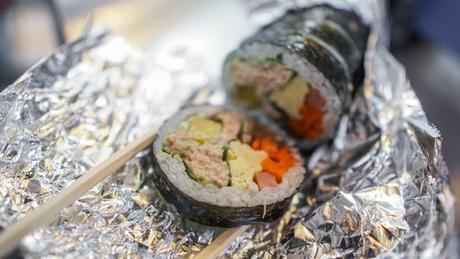
Gimbap is a popular street food in Korea that is, essentially, sushi (large sushi at that). We found many of these from vendors at breakfast time and made for a great snack on the go with options including fish, vegetables, kimchi, and more. Great for when you need to load up on something fast and cheap!
Abalone
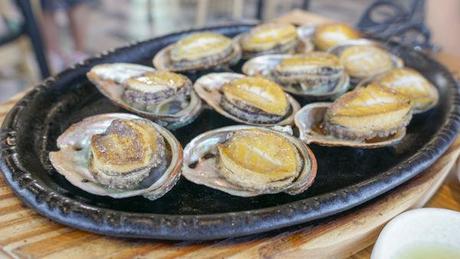
Jeju Island is known far and wide for its seafood, and you can get a number of delicious dishes when eating out. But one stands out as being something rather unique to the island- abalone. This shellfish is highly sought after for its large meat and beautiful pearlescent shells.
In fact, prior to visiting Jeju we had never tried this one because it is simply far too expensive for our budget (not to mention, quite rare).
So, what is abalone like? The flavor of these is very reminiscent of a mussel, but the size and texture is more like a scallop. This one is most certainly a splurge due to its price, but is something you'll never forget after trying!
Great Restaurant to Try: 명진전복 on Jeju
Bulgogi
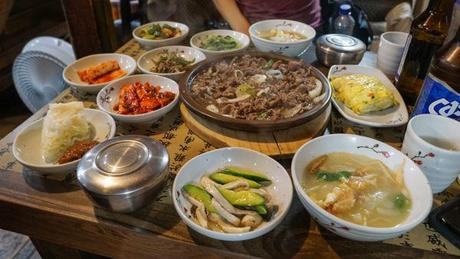
While beef is fairly rare in South Korea, one of the most popular dishes to enjoy it in is bulgogi. This one is thinly sliced pieces of beef in a sweetened soy marinade that is served with vegetables and a spread of banchan. This one can be cooked on a griddle similar to Korean or be cooked in a kitchen and served in a bowl with its drippings (as pictured). In any case, you get a thin cut, greasy piece of meat with a subtle sweetness that we absolutely love.
Shame it is so expensive!
A variant you may also want to look out for is Daeji Bulgogi- a comparable dish made of pork and served with a spicier (not sweet) red sauce.
Great Restaurant to Try: 인사동 한가네 불고기주막 in Seoul
Hwangnam Bread
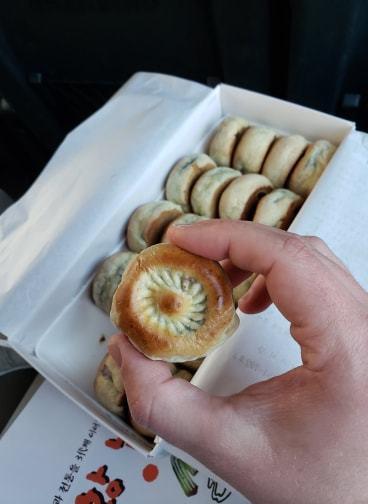
Hwangnam Bread is a specialty of Gyeongju, just about 90 minutes north of Busan. This bread is stuffed with red bean paste and can be found in many stores and bakeries around the city. While this one is completely savory, it makes for a hearty treat or breakfast and is the perfect kind of food to order for the road. In fact, the bakery we visited only sold them in a 20-count box (with a price to match), which means we enjoyed them for many days!
Great Restaurant to Try: Hwangnam Bakery in Gyeongju
Soju
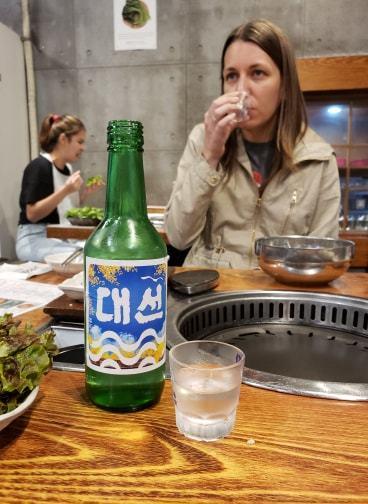
The most popular spirit in South Korea is, without a doubt, soju. This rice-based spirit is often served in smaller bottles and diluted to an approachable 16-20%, making it easy to consume larger volumes than you should. While most of the soju you will likely find comes from one of the larger producers in the country, this one goes great with barbecue and other meat-forward dishes!
Looking to book your next trip? Check out the following services we use!







