


Mirin is an essential condiment used in Japanese cuisine. It is a kind of rice wine similar to sake, but with lower alcohol content and higher sugar content.
The sugar content is a complex carbohydrate that is naturally formed via the fermentation process and not from refined sugar.
The alcohol content is lowered even further or evaporates completely when the liquid is heated and you use it in your dishes.
We are becoming more and more familiar with Japanese cuisine. However, there are ingredients that we know little about and mirin is a good example of this.
Mirin is the sweet sister of sake. A rice wine with a lower percentage of alcohol and a higher percentage of sugar than that of sake.
The alcohol percentage varies, but mirin is usually below 10 percent and sake around 15 percent.
* If you like Asian food, I’ve made some great video’s with recipes & ingredient explanation on Youtube you’d probably enjoy:
Subscribe on Youtube

Using mirin in your dishes
During cooking, the alcohol evaporates from the sauce, leaving only its sweet taste.
Mirin is, incidentally, only intended for cooking (not for drinking) and the texture is viscous and it has the color of amber.
Due to its sweet taste, mirin combines well with more salty sauces such as soy sauce. Together they form the basis for a traditional teriyaki sauce for example.
Mirin combines well with both meat and fish but also goes well with vegetables or tofu.
Pay attention to the quantity you use though! A little bit can be enough because of the somewhat outspoken taste.
Mirin is very suitable as a basis for marinades and dressings. For a teriyaki sauce, but also as a marinade with salmon or sea bass.
Thanks to the high percentage of sugar, any sauce you make with it will leave a nice glossy layer.
Some of the best recipes that use mirin are:
- Delicious sauce for yakitori
- Guide to Sukiyaki steak | recipe, cutting technique and flavors
- Learn to make this Ten Don “Tempura Donburi” recipe
Where can you buy mirin?
Would you like to get started with this Japanese sauce yourself?
Of course, and you can! The sauce is easy to get at most Asian markets and even most grocery stores sell it right on the shelf with the soy and teriyaki sauce.
I like ordering my Asian groceries online though, and my favorite brand of mirin is this one:
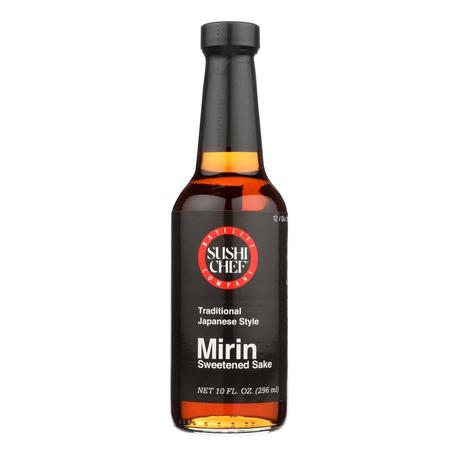
Three types of mirin
There are three general types of mirin:
- The first is hon mirin (lit. true mirin), which contains alcohol.
- Then there is mirin seasoning (or aji-mirin), which is not real mirin in the sense that it contains alcohol but is specially made to use in cooking
- The third one is sake-mirin
Hon mirin (本みりん)
This type of authentic mirin contains 14% alcohol and is the only one that contains no salt.
Hon mirin can be stored in a cool place for up to three months, but don’t store it in the fridge or the sugar may crystalize.
It’s made by mixing:
- steamed rice
- koji (mold)
- and shochu
You get the mirin by fermenting these together for 40 up to around 60 days. The enzymes in the koji will start to break up the starch and proteins of the rice thus releasing amino and organic acids.
Sake mirin
This type of mirin is made with sake, not shochu and there’s also usually some salt in it. It is said the salt is added to be able to sell it in grocery stores so it wouldn’t be seen as an alcoholic beverage.
Most of the mirin you’ll see will be sake mirin.
Mirin seasoning
The last one is mirin seasoning, which is actually not really mirin at all. It contains around 8% alcohol and has a lot of high-fructose corn syrup in it.





