Andrew D Wilson



 Description
MY BLOGS
-
Notes from Two Scientific Psychologists
http://psychsciencenotes.blogspot.co.uk/
Andrew D Wilson & Sabrina Golonka are two psychologists who are interested in developing a more coherent, naturalised approach to the scientific study of human behaviour. Andrew studies the perceptual control of action, with a special interest in learning. Sabrina studies similarity and categorisation. We're both interested in exploring non-representational theories in psychology, including dynamical systems and ecological psychology.
LATEST ARTICLES ( 227 )
-
Replication Will Not Save Psychology

"Replication is our only hope." "No. There is another"Psychology is big into replication these days. A lot of people think that a major problem with the field i... Read more
Posted on 07 November 2013 LANGUAGES, PHILOSOPHY, PSYCHOLOGY, SCIENCE -
Embodiment and Design; the Affordances of Pedestrian Crossings
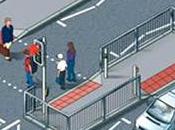
I'm a sucker for good design. I'm interested in things that work well because they are designed with the right task in mind. Take the greatest potato masher of... Read more
Posted on 11 October 2013 LANGUAGES, PHILOSOPHY, PSYCHOLOGY, SCIENCE -
Social Priming: Of Course It Only Kind of Works

Social priming is the field of research about how thinking about or interacting with something (like warm coffee, or old age) can affect later, vaguely related... Read more
Posted on 20 September 2013 LANGUAGES, PHILOSOPHY, PSYCHOLOGY, SCIENCE -
Perceiving Causes; Why Knowledge Doesn't Trump Perception

You're an organism, wandering round the world. Some stuff happens; then, other stuff happens. How do we know whether the first stuff caused the second stuff to... Read more
Posted on 06 September 2013 LANGUAGES, PHILOSOPHY, PSYCHOLOGY, SCIENCE -
Why Don't Giraffes Fall Over More Often?

One of the major reasons psychologists think we have mental representations is to overcome delays in the nervous system. Information has to come from sensors... Read more
Posted on 09 August 2013 LANGUAGES, PHILOSOPHY, PSYCHOLOGY, SCIENCE -
Is Embodied Cognition a "no Brainer"?
Brains, HUH, yeah, what are they good for?When we say "there are no mental representations", people often hear 'the brain doesn't do anything'. Read more
Posted on 02 August 2013 LANGUAGES, PHILOSOPHY, PSYCHOLOGY, SCIENCE -
Ecological Indirect Perception
I want to follow on from Sabrina's important posts about information, and why psychology should be about information for the forseeable future. Read more
Posted on 18 July 2013 LANGUAGES, PHILOSOPHY, PSYCHOLOGY, SCIENCE -
A New Direction for Psychology
I have my doubts about psychology. Anyone who's read this blog before knows that Andrew and I are fairly opinionated about what we think is right and wrong... Read more
Posted on 09 July 2013 LANGUAGES, PHILOSOPHY, PSYCHOLOGY, SCIENCE -
Grounded Vs. Embodied Cognition: a (hopefully Uncontentious) Note on Terminology
Our Frontiers paper made the case that embodied cognition is, by definition, a fairly radical affair. We argue ...if perception-action couplings and resources... Read more
Posted on 01 July 2013 LANGUAGES, PHILOSOPHY, PSYCHOLOGY, SCIENCE -
Misperceiving the Affordances in Anorexia Nervosa

Alice had a few problems with doors tooIt's always hard to evaluate the impact of your research, although funding bodies are increasingly asking that we do so. Read more
Posted on 06 June 2013 LANGUAGES, PHILOSOPHY, PSYCHOLOGY, SCIENCE -
The Embodied Cognition of Tesco's Gendered Toys

Tesco got in trouble on the internet last week for having toy chemistry sets labelled as being for boys, not girls in their online store. Read more
Posted on 17 May 2013 LANGUAGES, PHILOSOPHY, PSYCHOLOGY, SCIENCE -
The Information Available in Pictures

I've become fascinated with the problem of pictures and how they relate to the things they are pictures of. One reason is the regular use of pictures of... Read more
Posted on 26 April 2013 LANGUAGES, PHILOSOPHY, PSYCHOLOGY, SCIENCE -
Embodied Cognition in Practice - Some Thoughts and an Open Invitation
Since our Frontiers paper on embodied cognition came out, Sabrina and I have been giving talks and fielding questions in emails about what we're trying to... Read more
Posted on 18 April 2013 LANGUAGES, PHILOSOPHY, PSYCHOLOGY, SCIENCE -
The Woman Who Sees the World Upside Down

I came across an utterly fascinating case study on Twitter the other day (via Mo Costandi; see this video too): Rare brain condition leaves woman seeing world... Read more
Posted on 20 March 2013 PSYCHOLOGY, SCIENCE -
A Taxonomy of Information
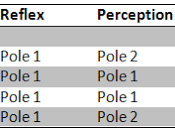
Over the past several months I've been thinking about how perception falls within a hierarchy of types of information use. This was spurred by my ideas about... Read more
Posted on 12 March 2013 SCIENCE -
The Affordances of Objects and Pictures of Those Objects

People interested in how perception and action affect cognition have begun talking about affordances. This should be great news; the ecological approach suggest... Read more
Posted on 28 February 2013 LANGUAGES, PHILOSOPHY, PSYCHOLOGY, SCIENCE -
'Embodied Cognition Is Not What You Think It Is' - the Paper!

Whoops, we did it again - a paper based on the blog! This time we are in press at Frontiers in Psychology, in a Research Topic on embodied cognition, with a... Read more
Posted on 12 February 2013 LANGUAGES, PHILOSOPHY, PSYCHOLOGY, SCIENCE -
Learning the Affordances for Maximum Distance Throwing
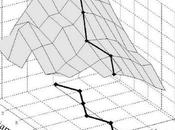
Over the last couple of posts, I have reviewed data that shows people can perceive which object they can, in fact, throw the farthest ahead of time by hefting... Read more
Posted on 08 February 2013 SCIENCE -
Newton International Fellowships 2013
If you from anywhere other than the UK and are looking for a post-doc opportunity in the UK, and are trained in perception, action, language or embodied... Read more
Posted on 01 February 2013 LANGUAGES, PHILOSOPHY, PSYCHOLOGY, SCIENCE -
Is Hefting to Perceive the Affordance for Throwing a Smart Perceptual Mechanism?
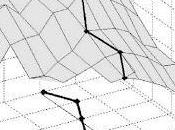
In the last post, I reviewed Geoff's first paper looking at whether people can perceive the affordance for throwing an object to a maximum distance and a first... Read more
Posted on 24 January 2013 LANGUAGES, PHILOSOPHY, PSYCHOLOGY, SCIENCE
THE %(site_name)s COMMUNITY

-
 umkhaloodie
3864140 pt -
Ch
3396455 pt -
 jesusmsanchezl
2453003 pt -
weddingblog2011
2205852 pt

