


I remember well the first time I encountered a book with uncut pages. It was in Edinburgh and the book was mine on inter-library loan. This presented a dilemma: should I, a mere post-graduate student, cut the pages of a book older than me? The librarian told me it was fine to do so. I wasn’t sure how to go about it. I’ve never trusted myself with scissors and this seemed like such a permanent act I was about to commit. I settled on a butter knife, figuring a sharp knife might cut into the meat of the page. It worked fairly well. I later bought a book with uncut pages. I didn’t do so well on it, but I need to read what was inside (and it wasn’t a cheap book).
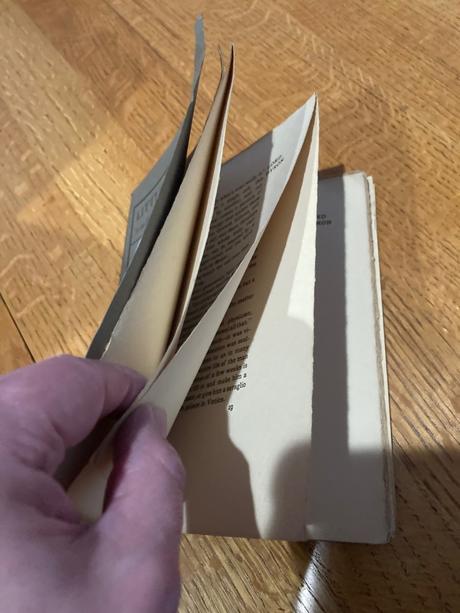
This is more common in Europe than it is in the United States. I recently bought an out of print book for my research. The pages were uncut. Now we have the internet which can be useful from time to time. The proper technique, it turns out, is to use an index card with a saw-like motion. It works extremely well. Fighting paper with paper. And I love these old books. The heavy paper. The actual, clear imprint of where the type hit the page. This was an object being crafted, not electrons cycling around a screen. When it was done you were left with something that felt permanent. Something that wouldn’t disappear when an online vendor went out of business. These old books also give you an idea of how they were made. Offset books (those made on a traditional printing press) are printed on paper that is then folded and bound together. Most modern presses also trim the edges, but you can, on rare occasions, still see where metal met paper.
Substantial. These books feel substantial. Don’t get me wrong—I enjoy the trim, clean look of the modern book, but part of me misses the solidity of old fashioned books. As much as I enjoy visiting new bookstores, I also like used bookstores. There used to be several around here, but I think the pandemic killed them off. You can browse their inventory online, but it’s not the same experience as that dusty, musty smell of books aging well. Now that mass-market paperbacks are being discontinued, they have their own place of pride as being the books that brought reading to the masses. Now people stare at screens and call it reading. I, for one, will be keeping my index cards handy for the next book with uncut pages that comes my way.







