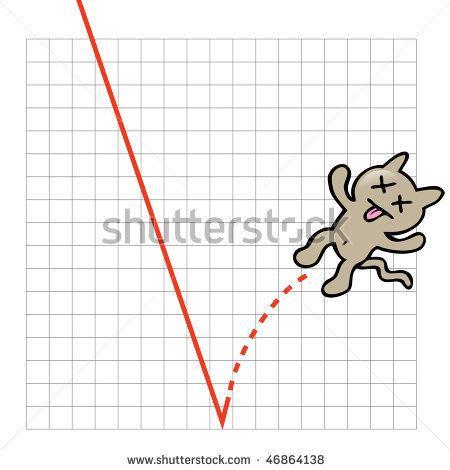
$1,129,860,000! That’s how much money was made shorting 376,620 NYMEX contracts at $103 yesterday, as we planned! Congratulations to those of you who got your share playing along with us and, to the manipulators who got stuck with the bill – screw you bastards, we have your number and we’re going to ring it now! I called a cash-out at the $100 line in Member Chat as 2.9% was more of a drop than we expected in one day and we will re-load on the bounce as we cross back below the $100.50 line – as discussed in this morning’s Member Chat - assuming the Dollar has bottomed out at 74.35.
This isn’t complicated people – what’s the 2.5% line off of $103? $100.425. That’s where we’ll look for oil to consolidate but below that line we’ll be comfortable with our shorts again, looking for those next legs down to $98.88 (down 4%) and then $97.85, where we will once again look for a 20% retrace to $98.88 and then a nice short there when it fails. So come on – you can play along at home – don’t miss out on making the next $1.129Bn!
Also in Member Chat last night, I reviewed 8 short put ideas (bullish) that can net us over $3,000 in 15 days if we get a bounce and hold our "Must Hold" levels. This is the nice thing about hedging – we make money on the way up OR on the way down and, when we are trading in a range – like we hopefully will this summer – then we make money both ways on a regular basis! Let the market manipulators play their little games – we can see them coming a mile away…
Also in Member Chat this morning, we caught the downturn on the Dollar as Angela Merkel made comments just ahead of the EU open to support the unified currency. While noting that the root of the current problem is not "with the euro as such", Merkel said in a speech in Singapore that the Euro is a "stable currency, compared with the Dollar."

He said that if a bailed-out country isn’t delivering on its fiscal-adjustment program, then a "second stage" could be required, which could possibly involve "giving euro-area authorities a much deeper and authoritative say in the formation of the county’s economic policies if these go harmfully astray." He also suggested that euro-zone authorities could have "the right to veto some national economic-policy decisions" under such a regime. In particular, a veto could apply for "major fiscal spending items and elements essential for the country’s competitiveness."
The idea of turning the EU into a Bankster’s Paradise (where you lose sovereignty to your creditors) slapped the Dollar down to it’s lows of the day and boosted the EU markets and US futures and gave us our re-shorting opportunity on oil, which just hit $1000 again (thank you very much!) and we stop out there and wait for the bounce and the next cross. See – not complicated and that’s another $188,301,000 – not bad for 8:10 in the morning!
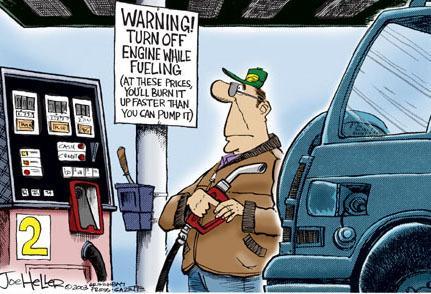
You can’t be all bull or all bear in this market or you will just get crushed but, the way we bounce around, there is lots of money to be made playing both sides! We’re quick to take bearish profits on oil this morning as we usually get a run-up into inventories (11:00) and we’d love to see a nice pump back to $101 or higher as that will set us up for another nice short if there is little or no draw in gasoline, which would back up our theory that demand was destroyed into the holiday by $4 gas at the pumps. This inventory runs through 5/27 (Friday) so it should catch anyone who filled up for a big trip and is likely to be the "best" demand number the bulls can hope for.
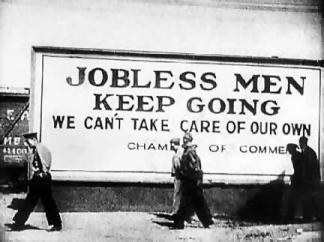
Unfortunately, our Retailers seem unable to convert these slave wages into sales – economorons are baffled as to what can be going wrong (have you heard ANYONE in the MSM suggest that paying workers more money might be good for the economy?) and we have disappointing Same-Store Sales numbers from BONT, DEST, DDS, FRED, GPS, HOTT, JCP, LTD, SSI, SMRT, TGT, TJX with beats (so far) coming from BJ, BKE, COST, JWN, M, RAD, ROST and SKS – this continues our general theme of high-end retail and discounters doing well as our nation divides further into the haves and the have-nots (see charts on yesterday’s post).
Woops, it’s 8:45 and Bernanke was too slow on the draw and has been outgunned by the BOE’s Paul Fisher, who says he could see increasing the bank’s money printing operation should the U.K. economy experience a "sudden downturn." Following the comments, a BoE spokeswoman was trotted out to say the views expressed were Fisher’s own, not the bank’s but the sounbyte is out there and the mission is accomplished.
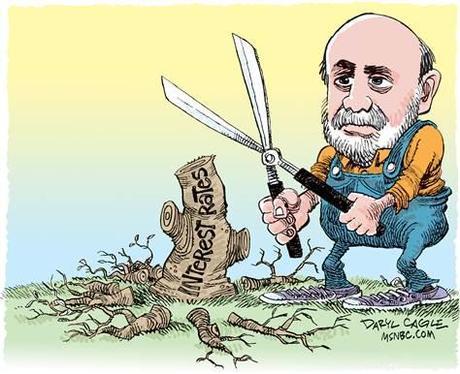
Fed officials have largely held to that line. In comments last week, St. Louis Fed president James Bullard said the Fed was entering a period in which Fed policy will be on pause—meaning it won’t be trying to push interest rates either higher or lower. Charles Evans, president of the Chicago Fed and a strong advocate of past programs, said earlier last month that what the Fed had done already was "sufficient." In comments Wednesday, Cleveland Fed president Sandra Pianalto said the Fed’s current stance was appropriate and added the recovery was likely to continue, even though growth "may be frustratingly slow at times."
A boost from Congress, through additional deficit spending, looks equally unlikely. Republicans have crafted an agenda based on spending cuts and would likely be reluctant to embrace new efforts to stimulate growth through fiscal policy. New tax cuts would also face a tough reception, given Washington’s currentfocus on reducing the long-run deficit. The Obama administration wants more infrastructure spending in the near term. In addition to education and research and development programs already proposed by Mr. Obama, there are "policies that have the potential to impact job creation now but also have the ability to increase our competitiveness," said Brian Deese, deputy director of the National Economic Council. Unfortunately, Congress has consistently blocked all efforts by the Administration to accomplish these goals – so we drift aimlessly until the next crisis forces action.
Evolution Securities notes that it typically takes nearly 5 years for a country’s credit rating to fall from A2 to Caa1. Greece has managed to do it in 526 days. "Statistically, the faster the rating goes down, the more likely the issuer is to default," says an analyst with the firm. That did not stop an auction for $5.7Bn worth of Spanish bonds from being 3 times oversubscribed this morning – with confidence boosted by Trichet and Merkel’s earlier (and very timely) comments.
Talks between Greece and the Troika on a new fiscal reform agreement are set to wrap tomorrow. The plan will include tax hikes and privatizations of a number of state-owned assets. Most interesting to see will be the allowance for unprecedented (short of defeat in a war) external supervision of Greek government actions.
The most dangerous bit of data we have left today will be Factory Orders at 10:00. We know Durable Goods fell off considerably and, if Factory Orders turned down to match (-1% already expected after being up 3.4% in March), it’s going to be a confidence killer.
So let’s remain careful out there – a 0.5% bounce is weak at best….