


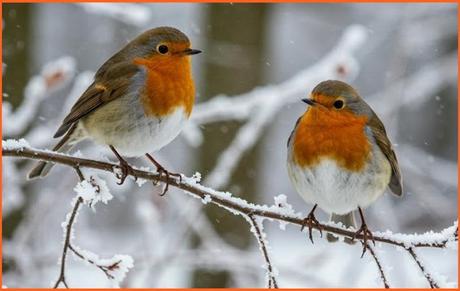
Erithacus rubecula, Britain's unofficial national bird
We've enjoyed a riot of robin blogs this week, affectionate and informative portrayals of this iconic little bird. I'm not going to cover that ground again (seek them out on the website). Instead, this is a personal testament.Robins really are the friendliest of birds, not tame, but brave, inquisitive and trusting. I've known several down the years and in different gardens. They have become almost companionable, especially when I've been turning soil.
In Bethnal Green in the early 1980s there was a robin would come and stand on the handle of my spade which I left stuck in the ground as I drank a cup of coffee during a gardening break. If I sat still and talked to him quietly, he'd dart down, having spotted a worm or grub, then return to the handle of the spade to enjoy it. I would always throw him a few biscuit crumbs for afters.
When I moved out of London to the Shire of Herts, with larger, greener gardens, robins seemed more numerous. I've been told they're fiercely territorial but I never saw any battles of the 'redbreasts'. Instead they would appear whenever I was working in the garden. It's been suggested that they regard human beings as foraging animals in much the same way that wild boar are. Robins have been observed following wild boar to take advantage of anything that might be turned up. The advantage we have over wild boar, as far as the robins are concerned, is that we are both more widespread (especially in urban areas) and more likely to positively offer tidbits to them.
My Hertfordshire robins would come right down onto the patches of garden I was digging and would take worms off my hand if I proffered them. My cat regularly accompanied me on gardening duty, would just lie and watch, under strict instructions to leave the robins be, and robins and cat co-existed quite peaceably, although she would chase other birds. I've read other instances of this being the case.
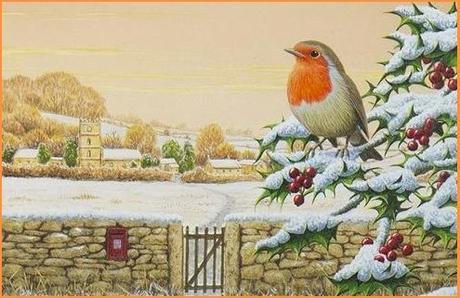
Victorian Christmas card "pin-up"
Where I live now, I don't tend to get robins in my garden as there's not really an expanse of exposed soil, meaning my garden is not of much use to robins. (I get blackbirds, dunnocks, great tits, long-tailed tits and wrens mostly.)However, when we go walking in the woods of Blackpool's Stanley Park, we usually take a bag of mealworms or seeds with us and quite often the robins will come down and eat out of our hands. I'm told that this level of trust exhibited by British robins is not generally found in Europe. The difference appears to be that centuries of hunting of small birds on the continent has left them constitutionally wary of human beings. We in this country have been rewarded for our kindlier attitude to our little native birds.
This latest from the imaginarium fast-forwards through the winter months to the flush of a new spring. (I'm not sure about the somewhat jokey title.)
Reliant Robin he's flaming in the new-leafed treeproudly puffed up and bright eyedwith fresh-hatched babies to feed
in some nest in an old pot or shedshould be foraging for juicy grubsto take back to his speckled brood
but he's content to watch and waithappy for me to do the spadeworkthis beautiful spring garden morning

Thanks for reading. Merry Festives, everyone. See you in '26. ;-)
Email ThisBlogThis!Share to XShare to Facebook







