Want to deliver benefits to the environment and your bottom line? Make environmental sustainability part of the package.
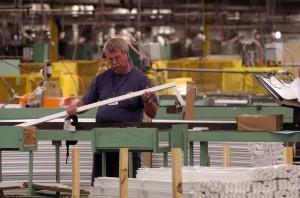
The case for smarter packaging and how OshKosh Corporation transformed its approach by getting outside the box.
When it comes to minimizing environmental impact across the product lifecycle, sustainable packaging represents a new frontier – one that offers opportunities to reduce waste, costs and carbon impact. As a result, it’s an area that’s front and center on many corporate agendas.
Why? Because packaging doesn’t just consume resources. It’s the single largest generator of waste in the United States. Comprising a third of all trash, packaging waste costs local governments billions in disposal costs. As a result, sustainability is expected to replace cost as a leading challenge for the packaging industry over the next 10 years, according to the 2012 Survey of Future Packaging Trends.
What is sustainable packaging?
Sustainable packaging is designed to be safe, effective and beneficial. It meets market criteria for performance and cost and is sourced, manufactured, transported and recycled using renewable energy. Ideally, it’s made of renewable or recycled source materials engineered for efficiency and can be recovered or recycled for use in biological or industrial cradle-to-cradle cycles.
As consumers demonstrate a preference for responsible packaging, manufacturers and retailers alike are rolling out innovative packaging reduction initiatives. The aim? To reduce packaging weight and volume, package products more efficiently and reduce packaging waste. Of course there are both challenges and benefits. The challenge: striking the right balance between packaging solutions that are eco-friendly and solutions that fulfill their primary purpose: protecting goods in transit. The payoff? Environmental, efficiency and economic benefits.
Four ways Oshkosh Corporation transformed its packaging operation
OshKosh Corporation, a leading designer/builder of specialty trucks (think fire trucks, emergency and military vehicles), truck bodies and access equipment, recently re-engineered its packaging operations. Here are four key changes that are delivering significant efficiency, environmental and economic benefits:
1. A smarter approach to kitting
In the past, kitted items (parts packaged together for sale and delivery) were shipped without factoring in shipping conditions, delivery locations or item fragility. Today, after careful review, lightweight non-fragile items are packed in shipping containers more in line with their size.
2. More efficient shipping containers
Oshkosh replaced large, heavy, natural wood containers with weather-resistant, corrugated, double-walled fiberboard containers to reduce shipping weights. In so doing, the company reduced the weight of one order by 450 tons and shipping container costs by 97% for a single project. The new package also lowers carbon emissions.
3. Maximizing volume to improve cube efficiency
By redesigning another aspect of the supply chain – the ways trucks are loaded by reconfiguring pallet loads – Oshkosh was able to maximize cargo volumes and get more cube on each truck. The result: fewer truckloads ship the same amount of product, reducing transportation costs while improving environmental performance.
4. More efficient, eco-friendly cushioning materials
Instead of using costly and environmentally unfriendly airpack pillows as a cushioning material/void filler for outbound products, Oshkosh replaced the plastic film material with a recycled craft paper product. The new packing material, which comes in several weights, fills voids and cushions items better, for less money. Oshkosh expects to save more than $250,000 a year from this change alone, while diverting large amounts of materials from landfills.
In addition to the changes already in place, OshKosh routinely assesses its customers’ packaging needs, looking for opportunities to eliminate waste, whether it’s excess packaging, time wasted de-trashing, unnecessary landfill materials or wasted operator efforts.
What initiatives are you taking at your organization to save money and reduce your carbon impact?
Written by Paul Hoover, Group Logistics Manager, Ryder Supply Chain Solutions
Mr. Hoover is a Group Logistics Manager II with Ryder’s Automotive, Aerospace, and Industrial Vertical. He is a logistics and operations professional with 15+ years of experience in warehousing, packaging, transportation management, business development, implementations, product development and account relationship management. Throughout his career Mr. Hoover has implemented and operated numerous solutions for customers across a variety of industry segments.