


In my teenage years I wrote a short play or two. I haven’t done it since. I’ve read plenty over the years but my fiction takes the form of short stories and novels—narrative fiction. Playwriting, and scriptwriting, take a special talent. One time-honored way to doing this is to utilize source material. One of the points that I make in Sleepy Hollow as American Myth is that movies, in particular Tim Burton’s Sleepy Hollow, inspired a number of other movies and even novels, both narrative and graphic. Others saw the potential this short story could have. I spend some time in the book going over the various adaptations and the innovations they make. The point is that “The Legend of Sleepy Hollow” has become an American myth. Anyone who examines its long history can see the impact that it has had on the American imagination. And on Halloween.
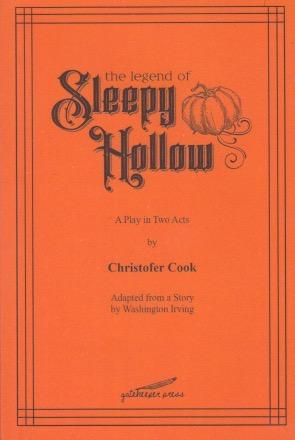
Christofer Cook’s The Legend of Sleepy Hollow is a two-act play, adapted from Washington Irving’s story. Some of it is taken directly from the story, but as most of those who have adapted the story know, it requires some help to become a performance. Cook’s play is an interesting take on the story. I’m not sure what other sources Cook may have seen and/or read, but there are some elements here found elsewhere that have become part of the tale. For example, a duel between Brom Bones and Ichabod Crane. I’ve seen that in other treatments, and it seems logical enough, given the circumstances. Irving, however, it is not. Perhaps the most surprising shift Cook makes is that the famous horse chase takes place with both Ichabod and the horseman (named Hermann Von Starkenfaust) on foot.
Had I known of Cook’s adaptation before submitting my manuscript, I would’ve been glad to have included it in my book. Many movies have their own scripts that they use to bring the tale to life on stage and screen. This only underscores my point—myths are endlessly adaptable and capable of serious transformation. Some elements of the story we now assume to be part of the original were added many years after the story was written and its author had died. Yet we all tend to expect these things. Nobody has the final word when it comes to what happens to Ichabod Crane. Washington Irving assured that in his story. Those who come after bend, twist, and stretch the tale in new and fascinating directions. This little play is one such and would be, I suspect, great fun to see.







