


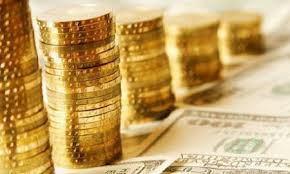
What’ll you have? Gold or paper? Liberty or fascism?
As everyone may know, we’ve used currencies other than gold or silver throughout history. Sometimes we used jugs of corn liquor as “money”; sometimes buckskins; and sometimes pieces of paper. Most of these currencies worked well-enough–except for paper.
The reason is that you can “spin” paper currencies out of thin air, but you can’t “spin” tangible products (like jugs of liquor, buckskins or gold and silver) out of thin air. All of the tangible currencies–including barter systems–have to be produced by actual work. Given that the world’s bankers have no intention or capacity for doing real work, they view all tangible currencies as anathema. They want a paper (or digital) currency that they can “spin out of thin air” with nothing more than their signature.
A tangible currency is ultimately produced by the work of the people and ultimately controlled by the people. Thus, the tangible currency tends to favor decentralized political power. A fiat currency is ultimately produced–and controlled–by central bankers and/or the general government and thus favors centralized power. The tangible currency does not guarantee, but is at least conducive to liberty. The fiat currency is almost always a guarantee of big government, fascism and loss of liberty.
The danger in any “artificial” monetary system–one made of fiat currencies–is that the people who spin the fiat currency “out of thin air” are inevitably tempted to “spin” a little on the side for themselves and/or for special (rich) interests. Once they start spinning fiat currency for themselves, the system begins to degrade and will ultimately collapse under the weight of banking fraud.
I doubt that the world has seen more than a handful of men in all of history who have sufficient spirituality, morality or ethics to resist the temptation of “spinning money” for his own use where there is no actual “money” and he didn’t earn a dime. I suspect that the LORD’s Prayer might be a little more relevant if we changed one phrase from “and lead us not into temptation” to “and lead us not into fiat currency”.
In the end, the decision to have a tangible currency or a fiat currency will determine whether you will have a free country or a police state.
The danger in fiat currency is seen in the definition of “fiat”:
“1. An arbitrary order or decree. 2. Authorization or sanction: government fiat. [Medieval Latin, from Latin, let it be done, third person sing. present subjunctive of fier, to become, to be done; see bheu- in Indo-European roots.]“
If, by definition, a “fiat currency” is one made by “arbitrary order or decree,” some one person or entity will have to issue that “order or decree”. Whoever issues those “orders or decrees” will be able to buy the loyalty, obedience and property of everyone else. Ultimately, the man who issues fiat currency will rule; the men who do not issue fiat currency will be ruled.
We’re taught that the ultimate power of earthly sovereignty is the power to legislate (make laws). I doubt that’s true. I suspect the ultimate power of earthly sovereignty is to “make” money. Baron Rothschild apparently recognized this truth when he said, “Give me control of a nation’s money and I care not who makes the laws.” Rothschild knew that by controlling the supply of money, he would be above the law; he would be the true king.
When the people “make” a tangible money (such as jugs of liquor, buckskins, gold and silver), the people are the sovereign<strong>s</strong>. When only the government and/or central banks “make” the fiat currency, the government/central-banks are the sovereigns and the people are <strong>subjects</strong>.







