


Book review by George Simmers: I was hooked by the first chapter of Matthew Silverman. It shows us the editor of a provincial weekly paper on press night:
The rotary press was still printing off the weekly edition of the Messenger, and the vitality in its whirling rollers and rods was too much for the machine to hold. The energy escaped in a roaring madness of noise about the printing room and vibrated with quickly lessening force through the offices and works. While the paper spun through the maze of machinery, the whole building hummed the song the press bellowed, and to Matthew in his room the faint noise and the persistent pulse were as much part of him as the beating of his own heart.
But then I’m always a sucker for the romance of the newspaper business.
The Swanbridge Messenger is a family business, the ownership and editorship handed down through the generations. Matthew wants his older son George to follow in his footsteps, but George wants to join the church. A crisis, but it’s solved in the way all crises are in this genial book – with goodwill on all sides. It’s the younger son, Alexander, who joins the paper.
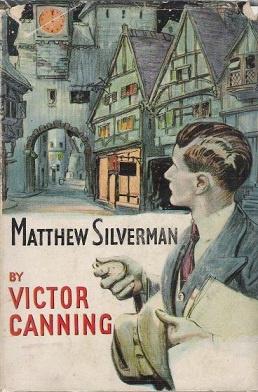 First edition cover
Victor Canning has a good sense of the tone of local newspapers of the period. When a celebrated novelist is visiting Swanbridge, he asks a young job applicant to write a review of his latest book:again. It was a sound piece of work. Matthew approves of the review:
The article, to him, seemed to supply all that was necessary in a review. It told the reader something about the story, but not enough to make the reading of the book a supererogation; it quoted a pleasant passage and left a desire for more, and it was quietly complimentary without being condescending. And the boy, he noticed, had had the good sense to work in a reference to the coming meeting.
When reading novels for this group, I often look up contemporary newspaper reviews on the British Library archive. This description hits exactly the tone of the typical local paper review.
The Swanbridge Messenger stands for a tradition, and the novel imagines many challenges to that tradition. If one accepts Rosa Maria Bracco’s characterisation of the middlebrow novel as one in which the status quo is challenged and complications ensue, but in the end the status quo (slightly modified) is firmly restored, I would be tempted to call this the most middlebrow novel I have ever read. Almost every chapter of the book follows this reasuring pattern: George does not want to join the firm? Never mind, his younger brother does. Tthe younger brother gets involved in revolutionary poitics? Never mind, he makes a fool of himself and gives them up. The paper is losing sales because it is old-fashioned? Never mind, Matthew takes his son’s advice and livens it up, but ot too much.
This is one of those books in which almost all the characters are well-meaning, and a favorite adjective they use about one another is ‘nice’ (‘Alison liked her right away. With some people, she knew, you had to wait for a while until you discovered whether they were nice. She felt at once that Miss Peters was nice…’)
Only one character is not nice – Austin Swing, the visiting romantic novelist who is described as writing in ‘verbose and glittering phrases which had endeared Mr. Swing to a large and susceptible feminine public’. The more intelligent (and male) characters see through him straight away, but some of the women fall for him (‘Mrs. Silverman decided at once that he was a “nice” man.’) and Matthew’s teenage daughter falls for him. Swing is used to this and is even bored of it:
Sometimes he got tired of being Austin Swing. To have your hosts’ daughters falling in love with you was like a recurrent fever … though sometimes the delirium of fever brought pleasure.
When Matthew discovers the man taking liberties with his daughter he boots him out of the house – but not until after breakfast – the appearances of decency must be observed.
Swing’s romantic writing appeals to the readers’ passions, whereas the Messenger appeals to their common sense. He therefore represents the irresponsible middlebrow, and in this is like the London daily papers who trade in sensation. Early in the novel, when Matthew expains that ‘the function of a daily newspaper, to bring you something fresh each day.” his son cheekily replies “And a country newspaper to confirm what everybody already knows!”
It is meant as an insult, but is true and important. When Alexander is being given his tuition in journalism, he finds what it means. A local fire excites people in the vicinity, but fizzles out before doing any damage; the trainee journalist only writes a brief paragraph about it. His experienced father demands a longer article:
‘[T]he facts in this case are that every person in that street who saw the fire-engine rush up will be looking forward to reading this account. They’ve been talking about it for the last two days; the thing’s been growing in their minds until it seems possible to them that it was a lucky thing the whole town wasn’t set on fire. We can’t insult and disappoint them by putting in a squitty little paragraph like this. Our report must make a comfortable parallel to their imagination. That’s where a provincial newspaper differs from a daily. The daily announces news, and by its report sets the extremes of imagination, but a provincial weekly only confirms what is generally already known, and its report has to measure up to what has already been imagined or guessed.’
All ends happily when George finds himself dissatisfied with the church, and wants to return to journalism. He and his father are in agreement that a well-run newspaper can do as much for people as a sermon.
The book could be labelled complacent. Next month we are going to be looking at fiction from 1938 and 1939 that look forward to war. In this book of 1937 Hitler and Mussolini get mentions, but only as jokes, not as threats to England. The novel presents us with a happy, productive community, where problems may arise, but are settled responsibly. The word to describe the book would be ‘nice’.
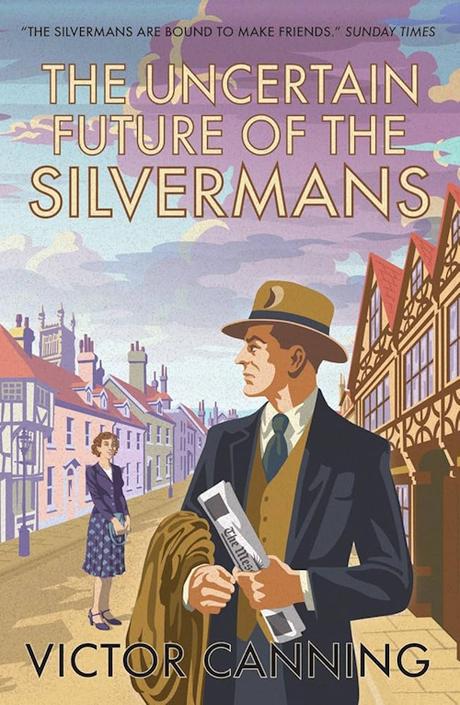
A recent paperback reprint of this book changes its title from Matthew Silverman to the much clunkier The Uncertain Future of the Silvermans. Why? I hope they’ve not changes anything else.







