


It was a coincidence worthy of a story written by a mystic. Arthur Machen became famous for his novella The Great God Pan. Descended from a clergy family, his interests were in supernatural stories, but Pan was considered extreme in his day, which, of course, made it famous. I have the Oxford World Classics series volume of Machen’s stories and I had only a few minutes, not enough to read Pan. Flipping through the table of contents, I noticed that the story “Monstrance” was brief. I decided to read that one. It’s about a German major-sergeant Karl Heinz, during World War One. As he is trying, with several others, to set up a machine-gun emplacement unnoticed by the English, a vision he has been seeing leads him to cry out and die. Through the discovery of his diary, it is learned that he’d committed a war atrocity at a church and the procession with the monstrance became a vision haunting, and ultimately killing him on the battlefield.
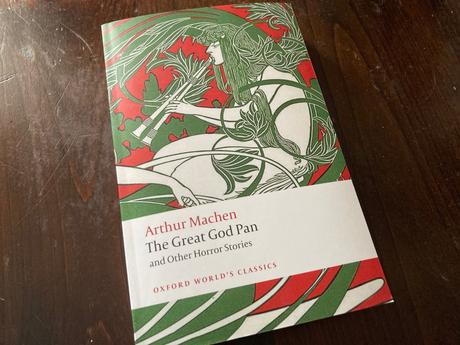
The coincidence grew even more appropriate when, reading about Machen, I learned that his probably second most famous story was “The Bowmen,” which also happened to be short, and which in the Oxford World Classics edition, is printed right before “Monstrance.” Of course I had to read it also. The reason I chose “Monstrance” in the first place wasn’t because of its famous neighbor, but because of the religious symbol of the monstrance and because it is brief. Since I still didn’t have time for The Great God Pan, I was led to his second most well-known story by looking for something short and landing on the story immediately following it.
“The Bowmen” is also a war story in which a miracle occurs. It led to the rumor that the event, which involves angels fighting for the British forces, actually happened. It is, however, fiction. As a result, “The Bowmen” became the second most popular Machen story. I wouldn’t have read it—at least not any time soon—had it not been for its placement before “Monstrance,” even though the two stories are somewhat similar. It’s easily imagined that God is fighting on your side, and it should be remembered that often the enemy believes the same thing. That most futile of human activities, war, certainly spawns stories as so many lives are meaninglessly lost. There is, however, a mystical element to these tales, in keeping with Machen’s outlook on life. Not bad for having about 20 minutes to fill.







