


Mixed confusedly, thrown together without order, shaken up, jolted, mixed together, been agitated, floundered. i.e. in a Jumble.
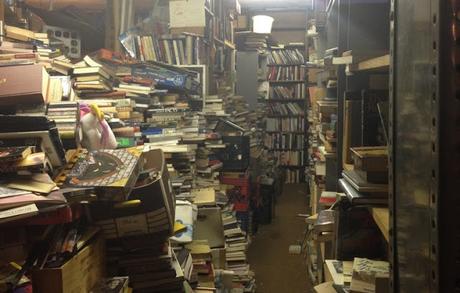
bookshop chaos
Which is just about acceptable in one of them but the other is a danger. You have to go one way round and turn sideways to get along the passages, always with the threat of something falling on your head.I’m not sure about the next bit but they both have no rhyme or reason in what you may find. You get Enid Blyton next to piles of the Geographical Magazine which I have sometimes found intriguing. But not if you want to search for a particular subject or author.Which has got me thinking about how the others and indeed libraries actually do organize their books. I’ve heard about the Dewey system but what is it?The following is from an article by Janine Ungvarsky and published by EBSCO in 2022:‘Dewey Decimal Classification (DDC)
The Dewey Decimal Classification (DDC) is a way of organizing books in a library so that related topics are shelved together. The system identifies each book by its subject in such a way that adding a book to a grouping does not require renumbering books. It is the most widely used library-organizational system in the world and is constantly evolving as content is added.
Origins
The Dewey Decimal Classification (DDC) system was invented in 1873 by Melville Dewey (1851-1931), then a student assistant at the Amherst College library in Massachusetts. Dewey, who later became a founder of the American Library Journal and the organizer of the first conference for librarians, published his classification system in 1876.
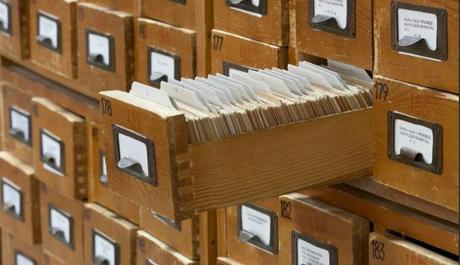
order
Prior to this, a library numbered each book in its collection according to its location on the shelves. A book always had the same number in a library but not necessarily in other libraries, and books on related topics were not usually shelved together. This system made it possible for patrons to locate individual books, but they had to look up each book individually in a master file. The system also made it more difficult for patrons to find books on related subjects.Dewey revamped this system, numbering books in relation to each other in a way that put books of like topics together. Other libraries adopted his system, creating the first standardized means of locating books in any library.Structure of the DDCUnder the DDC, books are first grouped into general categories, or classes, and given a three-digit Arabic number based on the overall subject matter.
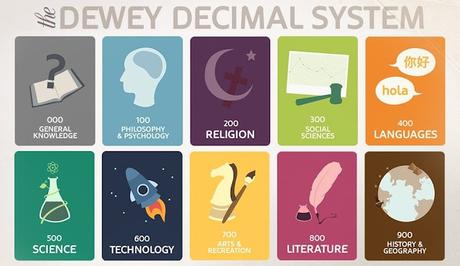
These are the ten broad categories for classification:
000—is the most general and includes reference works such as encyclopedias and periodicals. It also includes computer science topics, something that did not exist when Dewey created the system.
100—is dedicated to works of philosophy and psychology, occultism, and parapsychology.
200—includes works related to religion.
300—includes all social sciences, such as anthropology, sociology, political science, law, economics, education, communication, and customs.
400—is dedicated to language, specific languages, and linguistics.
500—covers natural sciences and mathematic topics.
600—includes all technology.
700—is dedicated to the arts (fine and decorative arts, music, and performing arts) as well as sports and games.
800—is dedicated to literature and includes prose, poetry, and drama.
900—encompasses history and geography.
The first numeral in the three-digit number defines a book's general classification. The second numeral indicates a division of that classification, and the third further classifies the book within its division. For example, the 900 classification is for books about history and geography, while the 910 classification is for books about geography and travel. Books starting with 920 are about biography and genealogy, and books starting with 930 are about the history of the ancient world. The third number further classifies a book—a book with the number 931 is about the history of ancient China and a book with the number 932 is about ancient Egypt.
Dewey's system added decimal points to provide more refined classification. In this instance, the decimal point is more like the period in a sentence than a mathematical device; it signals a pause in reading or copying the number. The portion of the number to the right of the decimal point can have as many digits as necessary to allow for a detailed classification of the book's subject matter. For example, a book about caring for dogs is classified as 636.7, with the first "6" representing the broad class of technology, the "3" representing agriculture and related technology, the second "6" serving as the notation for animal husbandry, and the "7" after the decimal point indicating that the book is about dog care. Additional numbers after the decimal point could be added to define different facets of dog care.’
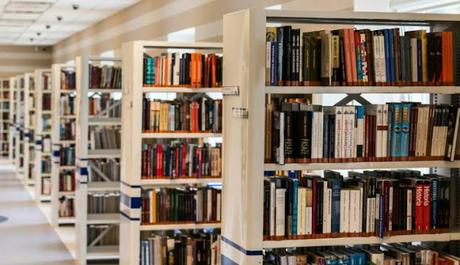
DDC organised library shelves
Well, I found that fascinating.I thought I’d have a go at a short effort (not haiku) jumbling the definitions of Jumble:Jumbled JumbleAgitate, shake without order
throw confusedly, jolt,
flounder together
Thanks for reading, Terry Q.
Email ThisBlogThis!Share to XShare to Facebook







