Last checked June 2026
Ethiopia isn’t a straightforward yes or no when it comes to travel safety right now.
I’ve traveled to Ethiopia three times and it’s one of the most fascinating and rewarding countries I’ve visited.
But that doesn’t mean I’d recommend booking a big first trip without looking closely at the route, the timing, and the latest official advice.
The real question isn’t just “is Ethiopia safe?”
Conditions vary significantly between regions, and the answer depends on where you want to go, how you plan to move around, and how flexible your itinerary is.
You also need to consider whether your planned trip would still make sense if one region becomes difficult to visit.
That’s what this article is designed to help with. Not by pretending there’s a simple yes or no answer, but by looking at the practical factors you should consider before booking.
Need help planning your next trip? Hire me as your Personal Travel Planner!
Quick Answer
For most first-time travellers, especially if you’re hoping to follow the classic northern route, I’d wait.
A shorter, more limited trip may still be possible. But only if you’re comfortable keeping plans loose and cutting parts of your route if needed.
If you’ve only got a short window and want certainty, Ethiopia probably isn’t the right trip to book right now.
Remember, Ethiopia isn’t one single safety picture. Your trip will depend heavily on where you go and how you travel.
The classic northern route is the biggest issue right now. Many of Ethiopia’s most famous attractions (Lalibela, Gondar, Bahir Dar, Lake Tana, the Blue Nile Falls) are not reliably safe to visit at the moment.
Even where travel may still be possible, delays, disruption and sudden changes are part of the equation, so flexibility matters almost as much as the route itself.
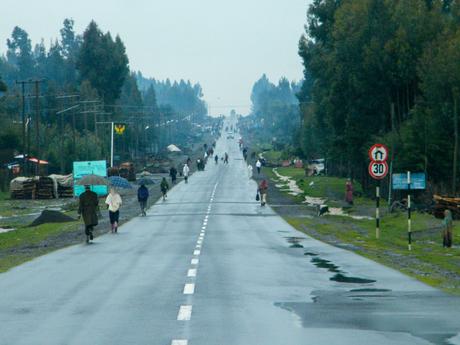
Not a Simple Yes or No Question
When people ask if Ethiopia is safe, they’re usually thinking about the country as a whole.
The thing is, Ethiopia has always been a destination where conditions can vary dramatically between regions.
Security, infrastructure, transport links and the overall travel experience differ from one part of the country to another.
I’ve traveled extensively throughout Ethiopia, including entering overland from Kenya and crossing into both Somaliland and Sudan.
Some parts of the country feel remarkably straightforward to visit, while others require much more planning and flexibility.
A key question isn’t simply whether Ethiopia is safe, but whether the specific trip you have in mind is practical and realistic at the time you want to travel.
A short stay in Addis Ababa is very different from traveling overland between multiple regions.
If your itinerary depends on moving between several regions on fixed dates, that’s where things can get shaky fast.
Where You’re Going Matters
Most people asking this question already have a rough version of the trip in their head, even if they haven’t mapped it out properly yet.
The answer depends almost entirely on where you’re planning to go.
The Classic Northern Route
A classic Ethiopia itinerary often includes Addis Ababa, Bahir Dar and Lake Tana, Gondar, the Simien Mountains, Lalibela, and sometimes Axum or Danakil.
I traveled a version of this route myself, and some of my strongest memories of Ethiopia come from these places.
But it’s also a route that crosses several regions (including Amhara and Tigray) where the UK and other governments currently advise against all travel.
For that reason, I don’t think it’s sensible to include these destinations in your itinerary right now.
For many travellers, that’s a deal-breaker.
If you’re happy to focus on other parts of the country, great.
But if these famous sights are a major reason for your trip, I’d seriously consider postponing your visit until conditions improve.
Addis and Harar
Addis Ababa always felt more like a base than a destination to me.
I enjoyed exploring the Merkato, the National Museum, and Bole. But after a few days, I was ready to move on and see more of the country.
If you’re planning a short city break, Addis is currently one of the safer parts of Ethiopia to visit. Harar, one of my favorite cities in the country, is also considered safe at the time of writing.
I took the long-distance coach between Addis Ababa and Harar when I visited.
Today, however, that route carries significant security risks, including impromptu roadblocks and sporadic violence in some areas.
You can still build a trip around visiting both cities, but I’d strongly recommend flying between them rather than traveling overland.

Harar doesn’t have an airport itself. The closest one is Dire Dawa.
Why Flexibility Matters
Ethiopia has never been a place where everything runs exactly to schedule.
I dealt with long travel days, delays, and the general need to adapt plans on the go even without today’s added uncertainty.
That’s why flexibility is key.
If you’re set on a fixed route with no room to change, Ethiopia becomes a much harder trip to justify.
What the Risks Actually Are
The main risks right now are specific: where you can realistically go, how you move between places, and how quickly things can change.
Regional Instability
When I traveled through Ethiopia, each region already felt distinct, with its own pace, atmosphere and challenges.
That variation matters more now, because conditions aren’t consistent across the country and can shift quickly.
A route that looks fine when you first plan it can become complicated or unworkable depending on what’s happening locally.
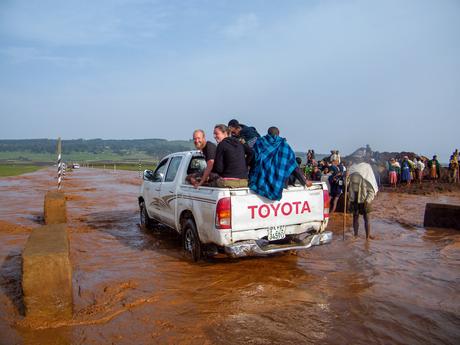
Transport and Overland Risk
Getting around Ethiopia can be unpredictable, even in normal conditions.
That unpredictability becomes an even bigger issue when you’re traveling between regions.
I’ve taken long-distance buses in Ethiopia that ranged from surprisingly decent to genuinely awful, and things didn’t always run to plan.
If your itinerary depends on multiple overland journeys connecting smoothly, you’re much more exposed to delays, route changes and cancellations.
You also need to think carefully about the route itself. Some major roads pass through areas where the security situation can change quickly.
This means journeys that seem straightforward on paper can be much more complicated in practice.
Where possible, avoid traveling through volatile areas. And if you do need to travel by road, stick to daylight hours.
Most governments advise against overnight road travel in Ethiopia due to the increased security risks after dark.
Urban Crime
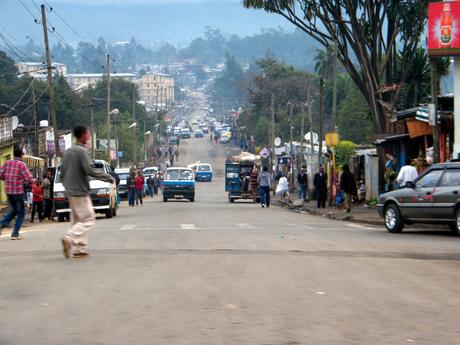
In Addis, I found getting around relatively straightforward and I didn’t feel unsafe at any point.
I explored the city on foot during the day, and had a couple of nights out in Bole and didn’t have any issues.
But you should still keep your wits about you.
Like most big cities, there’s a risk of theft, especially around busy areas and transport hubs. At night, it’s best to take taxis to get around.
Driving Safety
Ethiopian roads vary enormously. Some are smooth and immaculately paved.
Others are not.

Driving can be erratic, and it’s common to encounter potholes, people, and animals in the road.
Be especially vigilant around villages and built-up areas. Children often run into the road with little warning, so it’s important to stay alert at all times.
Take it slow, particularly on winding mountain roads. And if you’re visiting during the rainy season, be prepared for flooding and extra delays.
Simple Versus Complex Trips
The difference between a manageable trip and a stressful one usually comes down to how complex your plans are.
A simple, contained trip with minimal movement is one thing.
A multi-stop itinerary across several regions, with fixed dates and long travel days in between, is something else entirely.
Should You Visit Ethiopia Right Now?
Not everyone is looking for the same kind of trip.
If I were planning my first trip to Ethiopia now, I’d wait.
This incredible country has a huge amount to offer. But many of its most famous attractions are not currently safe to visit.
If you’re comfortable adjusting your plans, narrowing your route, and keeping a close eye on conditions, a more limited trip may still be possible.
But if what you really want is the classic Ethiopia experience, including many of the country’s most iconic sights, I’d save it for a time when you can do it properly.