For many people, a $100 3D printer sounds almost too good to be true. The idea of turning digital models into real objects at home is exciting, especially when the entry price is lower than a pair of premium headphones. But beginners often wonder whether a printer this cheap is a smart way to start, or whether it will lead to frustration, failed prints, and wasted filament.
TLDR: A $100 3D printer can be good for beginners, but only if expectations are realistic. It is best for learning the basics, experimenting with simple prints, and understanding how 3D printing works without spending much money. However, it may require more setup, tuning, patience, and troubleshooting than a more expensive beginner-friendly model.
What Can You Really Expect From a $100 3D Printer?
A $100 3D printer is usually an entry-level machine designed to do the essentials: heat plastic filament, move a print head, and build objects layer by layer. It will not feel like a polished appliance. Instead, it is closer to a hobby machine that asks the user to learn how it works.
At this price, you should expect compromises. The frame may be smaller or less rigid, the print bed may require manual leveling, the controls may feel basic, and the printer may come partially assembled. Some models in this price range are compact printers made for small objects, while others are discounted older designs that need more attention.
That does not automatically make them bad. In fact, if your goal is to learn the mechanics of 3D printing, a cheap printer can teach you a lot. You will quickly understand bed leveling, nozzle height, filament loading, temperature settings, slicing software, supports, adhesion, and print failures. The question is whether you want that learning experience immediately or whether you want something easier and more automated.
Image not found in postmeta
Why a $100 Printer Can Be Great for Beginners
The biggest advantage is obvious: low cost. For someone who is curious but unsure whether 3D printing will become a long-term hobby, spending around $100 feels much safer than investing $300, $500, or more. You can test the waters without committing a large budget.
Another benefit is that cheap printers often force you to understand the fundamentals. That may sound like a downside, but it can be valuable. Beginners who start with a very automated machine may get good prints quickly, but they may not understand what to do when something goes wrong. With a budget printer, you learn through direct experience.
- You learn bed leveling: Getting the nozzle the right distance from the print bed is one of the most important 3D printing skills.
- You learn temperature control: Different filaments and environments require different hot end and bed temperatures.
- You learn troubleshooting: Stringing, warping, under-extrusion, layer shifting, and poor adhesion become practical lessons.
- You learn slicing basics: Layer height, infill, supports, speed, and wall thickness all affect print quality.
For makers, students, and tinkerers, this hands-on learning can be genuinely fun. A $100 3D printer can feel like a small engineering project, not just a device you plug in and use.
The Downsides Beginners Should Know
While a $100 printer may be exciting, it is important to be honest about the limitations. The first major issue is reliability. Budget printers are often less consistent than more expensive models. One print may turn out well, while the next fails because the bed shifted slightly, the filament tangled, or the nozzle clogged.
Another common issue is manual calibration. Many better beginner printers include automatic bed leveling, improved sensors, or more refined firmware. A cheap printer may require you to level the bed by hand using knobs and paper. This is not impossible, but it can be frustrating for someone who expected instant results.
Build volume may also be limited. Some $100 printers are small, which means you can print miniatures, simple toys, brackets, keychains, decorations, and small replacement parts, but not large cosplay props or big functional parts in one piece.
You may also encounter lower-quality components. Wobbly frames, basic extruders, weak cooling fans, noisy stepper motors, and inconsistent power supplies may affect the user experience. Replacement parts can sometimes improve performance, but upgrading a $100 printer too much can defeat the point of buying cheap in the first place.
Print Quality: Is It Actually Good?
Surprisingly, a $100 3D printer can produce decent prints when properly tuned. Many beginners are shocked by how good a simple PLA print can look on an inexpensive machine. With the right settings, a clean nozzle, dry filament, and a level bed, you can create attractive models and useful objects.
However, print quality may not be consistent out of the box. You may need to adjust slicer settings, slow down the print speed, tighten belts, check the frame, and experiment with temperatures. If you are willing to do that, results can be very satisfying.
For most beginners, the best material to use is PLA filament. It melts at relatively low temperatures, does not require an enclosed printer, has low warping, and is widely available. More advanced materials like ABS, ASA, nylon, or flexible TPU may be difficult on a budget machine, especially if it lacks an enclosure or direct drive extruder.
Image not found in postmeta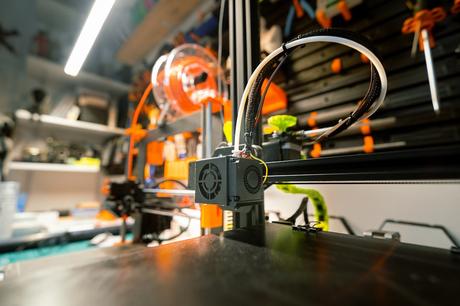
Who Should Consider a $100 3D Printer?
A $100 3D printer is best for beginners who are curious, patient, and comfortable with basic problem-solving. If you enjoy assembling things, adjusting settings, watching tutorials, and learning by trial and error, a budget printer can be a rewarding starting point.
It is also a good option for students, classrooms on a limited budget, hobbyists, or parents who want to introduce older children to making and engineering concepts. It can be used to print small educational models, custom game pieces, household clips, simple tools, and creative prototypes.
You may be a good match for a $100 printer if:
- You want to spend as little as possible at first.
- You do not mind failed prints while learning.
- You are interested in how the machine works.
- You plan to print mostly small PLA objects.
- You are willing to watch setup guides and read troubleshooting tips.
Who Should Avoid a $100 3D Printer?
Not every beginner should choose the cheapest option. If you want a smooth, simple, nearly plug-and-play experience, a $100 printer may disappoint you. Some people are interested in the final printed object, not the process. For them, a more expensive beginner printer with automation and better quality control may be worth the extra money.
You should probably avoid a $100 printer if:
- You need reliable prints for work or business.
- You do not want to spend time tuning or troubleshooting.
- You expect perfect print quality immediately.
- You want to print large objects.
- You plan to use advanced materials right away.
In other words, a $100 printer is not necessarily a bad beginner printer, but it is not always the easiest beginner printer.
Hidden Costs to Keep in Mind
The printer itself may cost $100, but the total starting cost can be higher. You will need filament, and a standard spool of PLA often costs around $15 to $25. You may also want basic tools such as flush cutters, a scraper, extra nozzles, glue stick or bed adhesive, and possibly a better build surface.
Some cheap printers include a tiny sample of filament, but it is rarely enough for more than a few test prints. If you are budgeting realistically, plan for at least one full spool of PLA from the beginning.
There may also be upgrade temptations. A better extruder, improved springs, quieter fans, upgraded firmware, glass bed, or auto-leveling sensor can improve the printer, but these additions add cost. If upgrades push the total close to the price of a better printer, it may be smarter to start with the better printer instead.
What Features Matter Most in a Cheap Beginner Printer?
If you are shopping for a $100 3D printer, focus on practical features rather than flashy claims. First, check the build volume. Make sure the printer can produce objects of a useful size for your needs.
Second, look for a heated bed. A heated bed helps PLA stick better and makes the printer more versatile. Third, consider community support. A cheap printer with many users, tutorials, replacement parts, and slicer profiles is much easier to learn than an unknown model with little documentation.
Also pay attention to safety. Look for thermal runaway protection, a stable power supply, and clear instructions. Even budget printers use high temperatures, so they should be treated seriously. Never leave a 3D printer running unattended for long periods, especially when you are still learning its behavior.
Image not found in postmeta
Beginner Tips for Getting Good Results
If you decide to buy a $100 3D printer, your first goal should not be printing a giant dragon or a complex mechanical assembly. Start simple. Print a calibration cube, a small benchy boat, or a basic keychain. These models help you see how well the printer is calibrated.
- Level the bed carefully: Poor bed leveling is one of the most common causes of failed prints.
- Use PLA first: It is the easiest material for beginners and works well on most low-cost printers.
- Slow things down: Lower print speeds can improve quality, especially on less rigid machines.
- Keep filament dry: Moisture can cause popping, stringing, and weak prints.
- Change one setting at a time: This helps you understand what actually improves or worsens results.
Most importantly, expect failure as part of the process. Every experienced 3D printing user has a collection of failed prints, spaghetti-like messes, and mystery problems. The difference is that experienced users learn how to diagnose them.
So, Is a $100 3D Printer Worth It?
A $100 3D printer is worth it if you view it as an affordable learning platform. It can introduce you to the world of additive manufacturing, help you understand the basics, and produce plenty of fun or useful objects. For the price, that is impressive.
However, it is not the best choice for everyone. If your budget allows and you want fewer headaches, a printer in the $200 to $300 range may offer a much better beginner experience, with improved stability, better documentation, larger build volume, and helpful features like automatic bed leveling.
The best way to think about it is this: a $100 printer is like buying a basic starter guitar. It can absolutely teach you how to play, but it may need tuning, patience, and realistic expectations. A more expensive instrument may feel better, but it is not required to begin.
Final Verdict
Yes, a $100 3D printer can be good for beginners, but it is best for beginners who want to learn, experiment, and tinker. It is not ideal for someone who wants effortless, perfect prints from day one. If you are patient, curious, and excited by the process, a budget printer can be a surprisingly capable first step into 3D printing.
If you choose carefully, start with PLA, learn the basics, and accept that some prints will fail, a $100 3D printer can be more than just a cheap gadget. It can be the beginning of a creative and technical hobby that grows with you over time.