


Recently I reviewed a novel I hated, The Land in Winter, picked by one of my book groups. Our next one, Susan Choi’s Flashlight, was far better. That contrast really struck me while reading it.
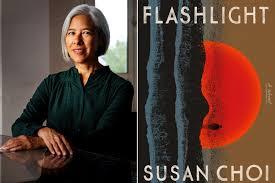
Its characters (unlike Land’s) were real people, with whom one could get involved. Not ordinary people, very much not. But interesting.
(Warning: big spoilers ahead.)
We first meet Louisa, ten, sent by her school to a psychologist; her father, Serk, has died suddenly. He was tall, handsome, born in Japan, of Korean parents. (My group had previously read another novel, Pachinko, centered on the fraught situation of Koreans in Japan, their former colonial master.) After the Korean War, the family moves to North Korea. Why the North, not South? Both were then dictatorships, but the South was unwelcoming, while the North actively lured such people.
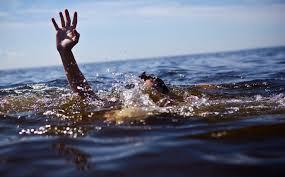
Serk, twentyish, opposes this move and refuses to go. He instead gets himself to America and becomes a college teacher. Marries Anne; fathers Louisa. His school induces him to do a gig in Japan. There, one night, walking with Louisa on a beach, Serk falls off a jetty. He can’t swim, and drowns, his body never found.
Focus shifts to Anne and Louisa — and Tobias, Anne’s son from a teenaged seduction, whom she’d given up, but reconnects with in his teens. Tobias too is a very non-conventional character. Anne has been afflicted by some chronic debilitating disorder (eventually diagnosed as MS). She has no energy for her relationship with Louisa, cold and distant.
Louisa is preternaturally smart, but her school years are kind of a mess. She’s a slut. During college she travels to Paris, and that goes all wrong.
Often, reading fiction, when a new character appears, I can immediately smell romance coming; just from how the writing is done, it’s almost subliminal. Here, Louisa crosses paths with a man who at first seems the antithesis of that. Well, they marry. But divorce; she marries again.
Then, more than halfway through, this suddenly becomes a very different book.

Surprise: Serk is alive. Not wholly a surprise, because the circumstances of his death had been a bit mysterious. What really happened was father and daughter grabbed off that Japanese beach by a North Korean kidnap squad, with a boat. Louisa, who’d been chloroformed, was tall for her age; when the kidnappers realized she’s just a kid, they tossed her overboard. (Serk somehow didn’t know this.) She managed to swim to shore and was found there almost dead. Then blotted out all memory of the harrowing episode.
Serk was taken to North Korea. Its regime has had a whole program of kidnapping people, for various purposes, including to make films for the Kims. In Serk’s case it was apparently to train regime agents to infiltrate Japan or South Korea as spies, fitting in with those populations. It took a long time before those countries realized these were not random disappearances. But even then, not much official fuss was made.
I wondered: why not just hire people, pay them enough? (Counterfeiting money is a major North Korean industry.) But there’s a mentality so steeped in vileness it’s incapable of doing anything on the up-and-up. (Look at Trump.)
The rest of the book is mainly Serk’s story. Rejected for spy training, he was just thrown into a prison camp. Which is really a descriptor for North Korea as a whole.
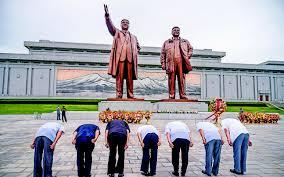
I once thought its people, for all their outward leader worship, must inwardly hate the reality of the “socialist paradise,” given its bleakness compared with prosperous next-door South Korea. And they’d tear Mr. Kim to pieces if they could. But I’ve come to perceive a different dynamic. Humans have a great capacity for adapting themselves to circumstances, however extreme. Recall Viktor Frankl’s Man’s Search for Meaning. And brainwashing actually works. Recall too the final line of 1984 — Winston truly loves Big Brother. And look at Trump cultists.
Serk somehow survives a couple of decades in the camp. Finally manages to escape and reach China. They’d send back any Koreans they catch. But Serk, just about on his last legs, is found by people who help him. More years pass, and long story short, he finally winds up in a South Korean hospital — where Louisa comes.

During his captivity, Serk had seemed obsessed about Louisa, believing she’d been taken too. But now he’s the wreckage of a man, seems at first unable even to recognize her. Then he does, dimly. Louisa explains what happened, her own memories re-emerging. Serk even asks about Anne. She’s fine, Luisa says. A lie. Anne has died. Soon Serk does too; his final breath is the book’s last sentence.
A totally engaging book. Unlike Land in Winter.







