


wellhealthorganic.com:if-you-are-troubled-by-snoring-then-know-home-remedies-to-deal-with-snoring: Snoring can be disruptive to sleep and cause discomfort for both the snorer and their partner. Fortunately, there are several effective home remedies to reduce snoring naturally. First, maintaining a healthy weight and exercising regularly can help minimize snoring. Sleeping on your side instead of your back can also make a difference.
Elevating the head of your bed or using extra pillows can aid in opening up the airways. Avoiding alcohol and sedatives before bedtime can reduce snoring, as they relax the throat muscles. Finally, using nasal strips, nasal sprays, or a humidifier can help keep the airways clear.
Home remedies and lifestyle changes for snoring
Cases of snoring caused by benign factors, such as sleep position, can often be treated with simple home remedies. Certain lifestyle changes can also help treat snoring.
1. Sleep on your side

Sleeping on your back sometimes causes your tongue to move to the back of your throat, which partly blocks airflow through your throat. Sleeping on your side may be all you need to do to allow air to flow easily and reduce or stop your snoring.
2. Get enough sleep
Make sure you get the 7–9 hours of sleep that adults need each night, per joint recommendations from the American Academy of Sleep Medicine and Sleep Research Society. Sleep deprivation may increase your risk of snoring. This is because it can cause your throat muscles to relax, making you more susceptible to airway obstruction. Snoring can also increase your risk of sleep deprivation since it leads to interrupted sleep.
3. Raise the head of your bed
Elevating the head of your bed by a few inches may help reduce snoring by keeping your airways open. You can use products such as bed risers or pillows to get a little extra height.
4. Use nasal strips or a nasal dilator
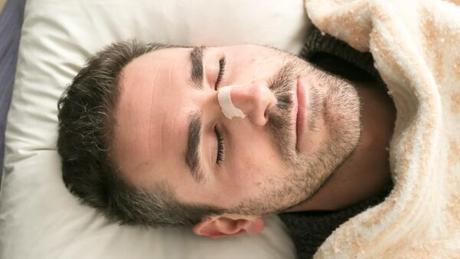
Stick-on nasal strips can be placed on the bridge of your nose to help increase the space in the nasal passage. This can make your breathing more effective and reduce or eliminate your snoring. You could also try an external nasal dilator, which is a stiffened adhesive strip that’s applied on top of the nose across the nostrils. This can decrease airflow resistance, making it easier to breathe. Internal nasal dilators, which you place inside of your nose, are also available.
5. Limit or avoid alcohol before bed

Try not to consume alcohol for at least 3 hours leading up to your bedtime. Alcohol can relax the throat muscles, causing snoring. Alcohol can also disrupt your sleep in other ways. For example, alcohol consumption is associated with shorter amounts of REM sleep, according to a 2020 studyTrusted Source. REM sleep is important partly because memory formation and dreaming occur during this stage.
6. Avoid taking sedatives before bed

If you take sedatives, talk with your doctor to see what your options are. Stopping sedative use before bed may ease your snoring. Like alcohol, sedatives can also cause muscles such as your throat muscles to relax.
7. Try to stop smoking, if you smoke

Smoking is a habit that can worsen your snoring. One possible reason for this is that smoking may increase your risk of OSA or worsen the condition, according to a 2014 studyTrusted Source. More conclusive research is needed. Talk with a doctor about therapies — such as gum or patches — that can help you quit.
8. Maintain a moderate weight
If you have overweight, weight loss will help reduce the amount of tissue in the throat. Excess tissue might be causing your snoring. You can lose weight by reducing your overall caloric intake by eating smaller portions and more nutrient-rich foods. Try to get regular exercise daily. You may also consider reaching out to a doctor or a nutritionist for help.
The post Effective Home Remedies for Snoring: Natural Ways to Reduce Snoring first appeared on NewsArmer.






