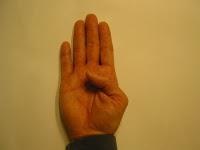
 Catch long enough and you are sure to take a few foul balls off various unprotected areas of the body. The proper catching stance coupled with wearing the equipment right will limit a catcher's vulnerability but it certainly will never eliminate it completely.
 One of the biggest dangers a catcher faces is a ball that hits his throwing hand. Although both arms as well as the upper part of the leg are also exposed, the hand is much more vulnerable to injury because of how the hand is constructed. There are many small, fragile bones that make up the hand and fingers. When a fast traveling baseball meets the hand, the hand is never the winner. As I said earlier, a catcher will never be able to eliminate the danger completely but there are two techniques that can limit the damage should contact be made.
 Make a fist. Make a loose fist with the thumb tucked in. The looseness of the fist is very important. Think of the type of fist one would use to knock on a door. This is important because if a baseball were to hit a loose fist, the fingers will "give" slightly on impact. If the fist was a tight one, the fingers would not "give" and would face the full force of the ball. A bone would be more likely to be broken. Tucking the thumb inside prevents the ball from hitting the tip of the thumb as well.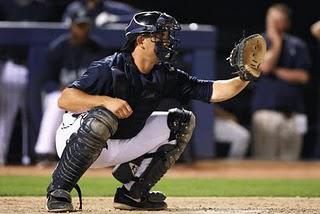
This is the area to avoid. Behind the ankle is
usually the location of choice.
Catching is a great position. All the action is in front of you and you're involved on every pitch. It certainly is not easy on the body though and players who catch need to take every precaution they can to keep exposed areas safe.