


Published: April 18, 2026 | Last Updated on: April 19, 2026 | by Hema
If you’ve grown up seeing adorable babies with a tiny black dot on their cheek or a soft line of kajal around their eyes, you know how deeply this tradition runs in many families. For some, it’s about enhancing those big, beautiful eyes. For others, it’s tied to cultural beliefs about protection from the evil eye. The moment a newborn arrives, advice starts pouring in from every direction — and somewhere in between diaper changes and sleepless nights, a new parent quietly wonders, can I apply kajal to babies?
Jump To hide Where Did This Custom Come From? Harmful Ingredients in Modern Store-Bought Kajal Can I Apply Kajal to Babies? Frequently Asked Questions Is homemade kajal safe for babies? Can I apply kajal to babies? What age is okay to apply kajal to babies? Does kajal make a baby’s eyes bigger or brighter? Can kajal cause eye infections in babies? Buy Healthy Nutritious Baby, Toddler food made by our own Doctor Mom !It’s a simple question, yet it carries layers of tradition, emotion, and concern. Modern parenting often blends inherited customs with current health awareness, and when it comes to a baby’s delicate eyes and sensitive skin, even small practices deserve thoughtful consideration. Before deciding what feels right, it helps to take a closer look at where this custom comes from, what kajal actually contains, and how it may affect a baby’s developing system.
Where Did This Custom Come From?

The tradition of applying kajal to babies has deep cultural roots in South Asia and parts of the Middle East. Historically, kajal (also known as kohl) was made at home using soot collected from oil lamps mixed with natural oils or ghee. It was believed to cool the eyes, enhance their appearance, and protect children from the “evil eye” or negative energy.
⭐ Download FREE Recipe Ebooks for Babies & Toddlers

In earlier times, when commercial cosmetics did not exist, families prepared kajal themselves using simple, household ingredients. The ritual often became part of newborn care ceremonies, passed down from grandmothers to mothers. Over generations, what began as a cultural and protective belief gradually became a beauty practice associated with infants.
Harmful Ingredients in Modern Store-Bought Kajal

Today’s commercially available kajal products are very different from traditional homemade versions. Many contain additives and chemical components designed to improve texture, color intensity, and shelf life. Some potentially concerning ingredients may include:
- Lead compounds – Certain kajal or kohl products have been found to contain high levels of lead, which can be harmful, especially to babies.
- Preservatives and synthetic stabilizers – These help extend product life but may irritate sensitive skin.
- Artificial dyes and pigments– Added to create deep black color but may cause allergic reactions.
- Fragrance chemicals – Even mild fragrances can trigger irritation in a baby’s delicate eye area.
- Parabens or other chemical preservatives– Sometimes used to prevent microbial growth.
A baby’s skin and eyes are far more sensitive than an adult’s, making them more vulnerable to irritation, infections, or chemical exposure.
Can I Apply Kajal to Babies?
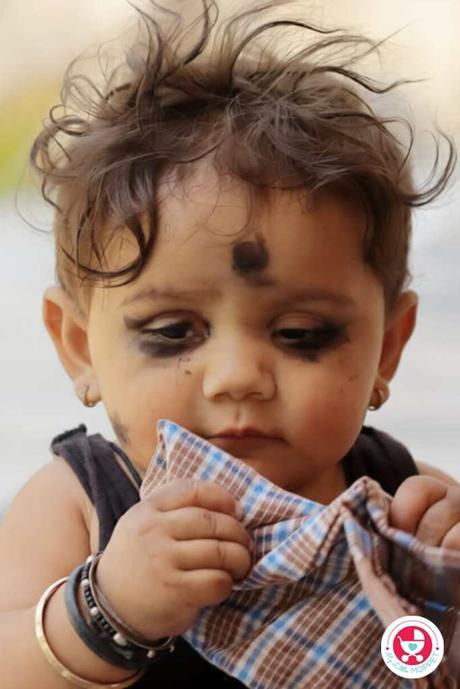
From a medical standpoint, kajal is not a necessary part of infant care. Pediatric experts generally advise avoiding any cosmetic products around a newborn’s eyes, especially in the first year of life when tear ducts and immune defenses are still developing.
If parents still choose to consider kajal later, it is important to wait until the child is older and to consult a pediatrician beforehand. Hygiene, ingredient safety, and the child’s skin sensitivity should always be evaluated before introducing any cosmetic product.
What Is the Best Alternative to Store-Bought Kajal?
If the intention behind applying kajal is cultural symbolism, such as protection from the evil eye, many families now opt for safer alternatives. These include:
- Placing a tiny black dot behind the ear or on the foot instead of near the eyes.
- Using protective charms or threads as part of tradition.
- Simply embracing the belief symbolically without applying any product to the baby’s skin.
- For parents who prefer to maintain the ritual element, avoiding the eye area entirely significantly reduces risk. Ultimately, keeping the baby’s eyes clean and product-free is considered the safest approach.
- If you wish to use natural homemade kajal, wait at least until 3 years when tear ducts are fully developed and the child doesn’t rub eyes constantly. And have a word with your pediatrician before trying it.
Balancing tradition with modern safety awareness can feel challenging, especially when practices are deeply rooted in family culture. Taking time to understand the origins, ingredients, and health considerations helps parents make informed decisions that prioritize their baby’s well-being.
Here’s what major pediatric health organizations say about applying kajal or similar cosmetics to babies,
According to the Indian Academy of Pediatrics (IAP), nothing should be applied to a baby’s eyes not kajal, not kohl, no cosmetic substances because this can increase the risk of infection and eye injury. IAP specifically recommends that baby eye care should involve gentle cleaning only (using a soft cotton swab with warm water), and that application of kajal or kohl may lead to infection or injury.
While the American Academy of Pediatrics (AAP) doesn’t have a rule specifically about “kajal” (because it’s not commonly used in US pediatric practice), their general guidance on child product safety makes clear that cosmetics especially those containing heavy metals or unregulated substances like kohl, surma, or kajal should be avoided for infants. The AAP warns that products marketed for adults or untested cosmetics can contain lead or other harmful chemicals that are not safe for young children’s delicate skin and eyes.In fact, U.S based safety guidance for families explicitly lists imported eye cosmetics like kohl and kajal among products that may contain toxic metals and should not be used on young children.

Ultimately, whether or not to apply kajal to your baby comes down to balancing cultural traditions with safety concerns. Even if you choose to follow this practice after 2 to 3 years of age, opt for natural, safe ingredients and consult your pediatrician before trying it on babies. Prioritize your little one’s health while honoring meaningful customs in ways that work for your family.

Frequently Asked Questions
Is homemade kajal safe for babies?
Not fully safe, soot and oils can still carry impurities or block tear ducts.
Can I apply kajal to babies?
Pediatricians advise against it, even homemade kajal can irritate eyes or cause infection.
What age is okay to apply kajal to babies?
There’s no medically safe age, most doctors suggest avoiding it, especially under 2–3 years.
Does kajal make a baby’s eyes bigger or brighter?
No, that’s a myth. Eye size and color are genetic and kajal has no effect. It can only highlight the features.
Can kajal cause eye infections in babies?
Yes, unsterile kajal or fingers can introduce bacteria leading to conjunctivitis.
Buy Healthy Nutritious Baby, Toddler food made by our own Doctor Mom !
Shop now!You may also like
 Homemade Kajal Recipe
![Roasted Gram Rice Porridge for Babies [Homemade fiber rich porridge] is loaded with the nutrients and helps in the development of the baby. This porridge is energy rich and filling for the tiny tummies.](https://m5.paperblog.com/i/807/8072969/can-i-apply-kajal-to-babies-L-CNmtQM.jpeg "Roasted Gram Rice Porridge for Babies [Fiber Rich Recipe for Babies]") Roasted Gram Rice Porridge for Babies [Fiber Rich…
Roasted Gram Rice Porridge for Babies [Fiber Rich…![Raab Recipe for Babies [Immune Boosting Drink for Babies and Toddlers] is a tummy filling as well as highly nutritious recipe. Raab is the best food to be served during cold.](https://m5.paperblog.com/i/807/8072969/can-i-apply-kajal-to-babies-L-G97MAE.jpeg "Raab Recipe for Babies [Immune Boosting Drink for Babies and Toddlers]") Raab Recipe for Babies [Immune Boosting Drink for…
Raab Recipe for Babies [Immune Boosting Drink for… Easy Khichdi Recipes For Babies - Free Ebook of…
 3 Bottle Gourd Recipes for Babies (Healthy Lauki…
![Are you looking for a nutritious way to get your baby started on a healthy diet? Try Steamed Dosa for Babies [How to make Dosa Batter for Babies]!](https://m5.paperblog.com/i/807/8072969/can-i-apply-kajal-to-babies-L-jGBBy5.jpeg "Steamed Dosa for Babies [How to make Dosa Batter for Babies]") Steamed Dosa for Babies [How to make Dosa Batter for Babies]
Steamed Dosa for Babies [How to make Dosa Batter for Babies]
Filed Under: Baby, Can I give my Baby? Tagged With: Can I Apply Kajal to Babies?, homemade kajal, Kajal, Kajal for babies







