Call It Sleep is a tale of two novels.
The first 75% of the novel is fabulous. It’s emotionally draining and depressing–but fabulous nonetheless.
Henry Roth tells the story of an immigrant Jewish family who moves to New York in the early 20th century. The family, which consists of eight-year-old David, his overly protective mother, and his verbally and physically abusive father, lives in some Jewish slums.
But back to the percentages.
The novel really drew me in until the last 100 pages, then I felt like it got cumbersome. David and his friends speak in Yiddish, which is almost as difficult to follow as nadsat from A Clockwork Orange. And there’s a lot of Yiddish late in the novel. Once I got to the last 50 pages, I was just ready for the story to end. And that was disappointing because I really enjoyed the book to that point.
So what makes Call It Sleep such an emotional novel?
Do you remember the ruthlessness of children when you were 8-years-old? Do you remember what it was like to go to a new school? On top of that, imagine yourself living in a country that isn’t your own with an abusive father who would send you to an orphanage if your mother would let him. That’s what you get with Call It Sleep.
David’s a little kid who you can’t help but cheer for. He’s shy, soft-spoken, and horribly introverted, and his father is a complete abusive brute. As much as you like David, that’s how much you really despise his father.
The opening prologue is enough to make you emotional. A mother, holding a one-year-old child, greets her husband getting off the boat at Paris Island. They haven’t seen each other for months, and the father immediately ridicules the mother and the baby. Here’s how Roth sets up that scenario to start the book:
The small white steamer, Peter Stuyvesant, that delivered the immigrants from the stench and throb of the steerage to the stench and the throb of the New York tenements, rolled slightly on the water beside the stone quay in the lee of the weathered barracks and new brick buildings of Ellis Island.
Roth is such a strong, clean, visual writer. Remember this passage I included in my post a few weeks ago?
“He went out into the hallway. Behind him, like an eyelid shutting, the soft closing of the door winked out the light. He assayed the stairs, lapsing below him into darkness, and grasping one by one each slender upright to the banister, went down. David never found himself alone on these stairs, but he wished there were no carpet covering them. How could you hear the sound of your own feet in the dark if a carpet muffled every step you took? And if you couldn’t hear the sound of your own feet and couldn’t see anything either, how you be sure you were actually there and not dreaming?”
So good.
The only problem with his writing, to me, is when he starts channeling James Joyce and Bill Faulkner. His version of stream-of-consciousness writing is kinder and gentler than Joyce and Faulkner. But, still, after reading his normal, beautiful writing, it’s a shock to the system when he abruptly transfers to this strange combination of Yiddish language and stream of consciousness:
“Aaa, dawn be a wise-guy! Hooz tuckin’ from vinnin’! A dollar ‘n’ sexty fife gestern! A thuler ‘n’ sompt’n'–ova hadee cends–Sonday! An’ Monday night in back f’om Hymen’s tailed-shop, rummy, tuh sevendy. Oy, yuh sh’d die. An’ I sea if yuh ken give a good dill, Abe, yuh sheoll dill in jail auraddy! An’ if I luz again, a fire sol dich bald urtreffen!” The voice returned.
–If it lights, so what? What’ll I do? He’ll ask me. What’ll I do? What? What? Papa, nothing. I wanted . . . I wanted. What? The–The–on the floor. Beads. Fell out–pocket. What for you–? Ow! Papa, I don’t know What? Why? He’ll look. He’ll say. Ball. Ball I wanted Ball? He’ll say–ball? Yes. Ball. In my head. Ow!…
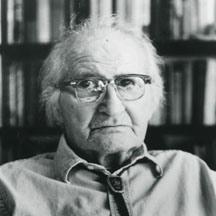
Henry Roth (Image: Wikimedia Commons)
And it goes on and on like that for a few pages.
Now that style probably only encompasses 10% of the book, so if you’re not a fan of stream-of-consciousness, I don’t think it’s enough to make you stay away from Call It Sleep. But I just want to give you a heads up.
Basically, this is a book that I really enjoyed–so much emotion within these 400 pages. But I also wanted it to finish on a stronger note– instead, I thought the story fizzled out.
Henry Roth is a brilliant writer and storyteller, and it’s just a shame we didn’t get more from him over his 80+ years.
But that said, Call It Sleep is–all things considered–a memorable novel that Roth should’ve been proud of and, despite a slow ending, is worth your time.
Other Stuff
The Opening Line: “The small white steamer, Peter Stuyvesant, that delivered the immigrants from the stench and throb of the steerage to the stench and the throb of the New York tenements, rolled slightly on the water beside the stone quay in the lee of the weathered barracks and new brick buildings of Ellis Island.”
The Meaning: The title is taken from the last paragraph of the novel: “He might as well call it sleep.” What’s Roth referring to here? I guess you’ll have to read and find out!
Highlights: Emotional novel. Strong, feeling characters that you both love and hate. Henry Roth is a writer’s writer. All of us who love writing should strive to write like this, except when he presses the “James Joyce button.”
Lowlights: As I mentioned in the review, the last quarter of the book is a slog. If you’re like me, you’ll get a little tired of a bunch of 8-year-olds conversing in a nearly indecipherable language. By the time the book actually ended, I was well ready for it to be over.
Memorable Line: See the above paragraph in the review about David walking down the steps in darkness. That’s just a beautiful passage.
Final Thoughts: Call It Sleep is an outstanding look into the lives of a Jewish immigrant family in the early 1900s. Roth puts you right in the middle of all the emotional drama of their lives. It’s a powerful novel that I thought might end up in my top 10 but didn’t quite turn out that strong. Despite that, it’s worth a read if for Roth’s writing alone.