For most first trips to Ethiopia, I’d start by looking at October to February.
That’s usually the most straightforward window for traveling through much of the country, especially if your route focuses on the highlands.
The weather tends to be easier to work with, and it’s easier to move around without the rainy season complicating everything.
But Ethiopia isn’t a country where one “best month” works for every trip.
January has Timkat, which completely changes the feel of places like Gondar.
The Blue Nile Falls is at its most impressive in the rainy season.
The Danakil Depression has its own timing issues, mostly because of the heat.
The right time to visit depends on what you care about most, festivals, trekking, landscapes, comfort, or access.
Before you plan around any specific month, check the latest travel advice too. Seasonal timing matters, but in parts of Ethiopia, regional access can matter even more.
Need help planning your next trip? Hire me as your Personal Travel Planner!
Quick Answer
Best Time to Visit Ethiopia Overall
For most travellers, October to February is the best all-round window for visiting Ethiopia.
This is the driest and most reliable period in much of the country, especially the highlands.
It makes overland travel easier and works well for the classic northern route through places like Lalibela, Gondar, and Bahir Dar.
It’s also an excellent time for hiking in the Simien Mountains. If you want the simplest answer, this is it.
Best Single Month
If I had to pick just one month, I’d go for January.
You get dry weather across much of the country, plus the chance to experience Timkat.
If festivals don’t matter as much to you and you’d rather have greener scenery, October and November are also excellent months to go.
Your Trip Type
The best time to visit Ethiopia depends on what you want from the trip.
If you’re planning to hike in the Simien Mountains, dry weather matters. But if you want to see the Blue Nile Falls at their strongest, the rainy season is better.
And if you’re going to the Danakil Depression, avoiding the hottest months becomes more important than anything else.
So rather than pretend there’s one perfect answer, I’ve broken it down below by season, month, and trip type.
Ethiopia’s Seasons
Dry Season
The dry season runs roughly from October to February, and this is when I found travel in Ethiopia the easiest.
Roads were generally easier, skies were clearer, and moving between places like Lalibela and Bahir Dar felt more straightforward.

It’s also the best time for hiking in the Simien Mountains. Weather matters more there than almost anywhere else.
Shoulder Months
March to May sits somewhere in the middle.
I wouldn’t rule it out, but it’s less predictable than the dry season and not the simplest choice if you want an easy, smooth trip.
It works better if you’ve got some flexibility and you’re not building the whole trip around one specific event or region.
Main Rainy Season
June to September is the main rainy season in much of Ethiopia, including the highlands.
Travel gets slower and more frustrating, with rougher roads and delays that start to build over longer distances.
It does have one big upside, though.

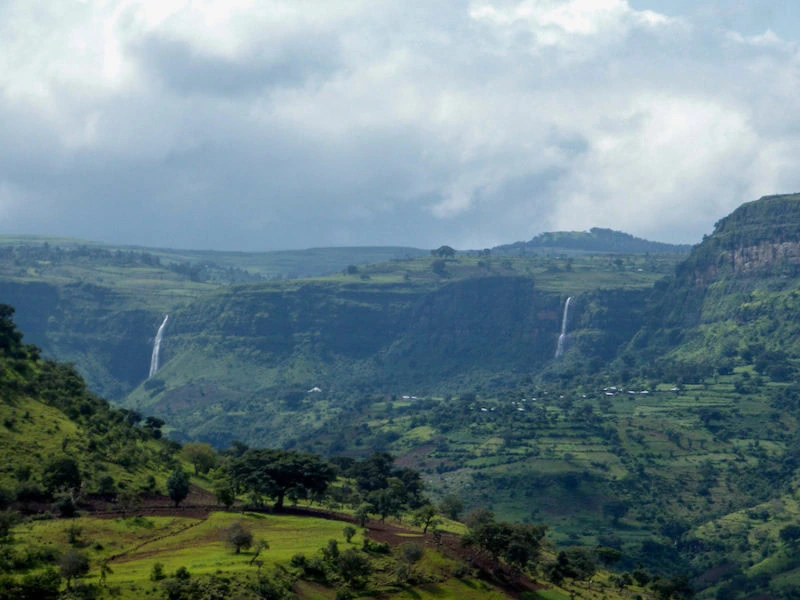
I visited the Blue Nile Falls in June and they were already impressive. Later in the rainy season they become even more dramatic.
Month by Month
January and February
January and February are two of the most reliable months for a classic Ethiopia trip.
Weather is dry in much of the country, which makes it much easier to move around and keep things running roughly to plan.
January stands out because of Timkat. It’s intense, loud, and unforgettable.
March to May
March to May is more mixed.
You can still travel comfortably in many areas. But it’s not as straightforward as the dry season and not the period I’d choose for a first visit if I had a choice.
That said, it can still work well if you’re flexible and not trying to line your trip up with trekking, festivals, or waterfalls.
June to September
June to September is the hardest window for a classic trip through the northern highlands.
Travel can be slower, roads can be rougher, and longer overland journeys become more of a chore.

At the same time, the scenery is greener and the Blue Nile Falls are far more impressive. If your priority is landscapes rather than ease, this period has real advantages.
October and November
October and November are some of the best months to visit Ethiopia.
The rains have usually eased, the countryside is still green, and getting around becomes much easier again.
If you want a strong mix of lush scenery and smoother travel, this is a very good window.
December
December is another good month to go.
It’s similar to January, with dry weather in much of the country, but without the Timkat crowds.
If you’re traveling over Christmas or New Year, it’s a very good time to be there.
By Travel Goal
First Trip
If you’re visiting Ethiopia for the first time, I’d usually stick to October to February.
It’s the easiest window for getting around, with fewer delays and fewer weather-related headaches on the main northern route.
March can still work well in many parts of the country, but October to February is the safer all-round choice.
Festivals
If festivals matter to you, January is the month I’d pick.
Timkat is the Ethiopian Orthodox celebration of Epiphany and one of the most important cultural and religious festivals in the country.
It takes place over several days and commemorates the baptism of Jesus.
There are parades, singing, dancing, and huge crowds performing communal rituals.
If that kind of atmosphere appeals, it might be worth planning your trip around.
Trekking
For hiking, especially in the Simien Mountains, dry weather makes a big difference.
This was one of my favorite places to hike in Ethiopia, but altitude, cold nights, and visibility are even more important to consider here than in lower parts of the country.
The main trekking season runs broadly from October to April. If you’re combining trekking with a wider trip around Ethiopia, October to February is often best.
Blue Nile Falls
The Blue Nile Falls are one of the few places in Ethiopia where the rainy season is the right answer.
I visited in June and they were already impressive, but later in the rainy season they become much stronger.
If seeing the falls properly matters to you, aim for the rainy season or just after it. The fullest flow is usually in August and September.

Danakil Depression and the Lowlands
The Danakil Depression is extreme at any time of year.
The main practical window is roughly October to March, and even then you should expect serious heat.
Outside that period, the temperatures become much harder to handle.
Green Landscapes
If you care more about green scenery than perfectly dry weather, the period just after the rains is ideal.
October and November are especially good for this. The country still looks lush but travel becomes easier again.
By Region
Northern Highlands
For places like Lalibela, Gondar, and Bahir Dar, October to February is usually the most reliable period.
Travel tends to be easier and the weather better for sightseeing.

The main exception is the Blue Nile Falls, which are far more impressive during and just after the rains.
Simien Mountains
The Simien Mountains are best in the dry season.
I found the scenery there incredible, but weather and visibility make a huge difference once you’re at altitude.
Dry months give you a better chance of clear views and more comfortable trekking. In practice, the main hiking window runs from October to April.
Harar and the East
Harar felt very different from the rest of Ethiopia, culturally, in character and in climate.
If your trip is focused more on the east than the northern highlands, remember that the weather doesn’t follow the same patterns as places like Gondar or Lalibela.
Harar and most of eastern Ethiopia have a warmer, much drier climate. Here the wet seasons are shorter and less intense.

Danakil and the Lowlands
For places like the Danakil Depression, the cooler months from October to March are the most practical option.
Even then, you’re still dealing with extreme heat.
When Not to Go
Avoiding the Rains
I wouldn’t plan a trip around the main rainy season from June to September unless you’ve got a specific reason for going then.
Travel gets slower, roads can be rough, and small delays start stacking up once you’re covering longer distances.
Danakil in Peak Heat
The Danakil Depression is not somewhere I’d want to visit in the hottest part of the year.
Even in the cooler months it’s intense, so outside October to March it becomes much harder to handle.