Splints provide support and protection to soft tissue and injured bones. If you break your bone, a doctor will use a splint to piece them back together and in the correct position. Splints will hold your bones in place during the healing process while reducing swelling, muscle spasms, and pain. Splints can also be applied after surgery.
Also called "half-casts," splints offer less support than conventional casts . They're much more accessible to adjust than casts to accommodate any swelling you may have easily. Your doctor will decide which one is best for your condition.
Types of Splints
Splints or half-casts can be custom-made to your specific injury needs. This is especially the case if it needs to be an exact fit. In other cases, a ready-made splint will work perfectly. Off-the-shelf splints come in a variety of sizes and shapes.
They are much easier and faster to apply and use. Some come with Velcro straps making them easier to adjust, take off and put on. There are also 3D printed splints made from plastic.

Splints can have a supportive layer made from either plaster material or fiberglass . Fiberglass is lighter than plaster but much more substantial. Additionally, fiberglass is much easier to see through x-rays compared to plaster.
And that's a good thing because your doctor will want to schedule an x-ray after your splint has been applied. They need to see whether your bones are healing correctly or have misaligned.
How Splints Are Applied
Both types of splints materials, fiberglass, and plaster are applied under padding, usually cotton. This is the protective layer that's next to the skin. Both fiberglass and plaster come in strips or rolls, dipped in water, then applied over the padding to cover the injured area.
There are some cases where special waterproof padding and splint material will be used. To provide the best possible support, splints must be the exact shape of the injured leg or arm.
Generally, the splint should cover the area above the joint and below the broken bone. In most cases, a splint is first applied to a fresh injury, and after the swelling goes down, an entire cast replaces the splint. Casts may also be superseded by splints to allow physical therapy exercises .
How to Remove A Splint At Home
Splints are generally easy to remove, especially if they have Velcro straps. You detach them all together and remove the splint. However, in the case of fiberglass or plaster, you don't need a splinter extractor.
You can just as easily remove it at home. You require a few extra steps and tools. Here is how to take out splints at home.
If your splint is strengthened by plaster material, it's pretty easy to remove it using water and vinegar. Fill a bucket with warm water, and ensure the bucket is deep enough to fit the splint. Fully submerge the cast, then add one tablespoon of vinegar to the water to break down the plaster material.
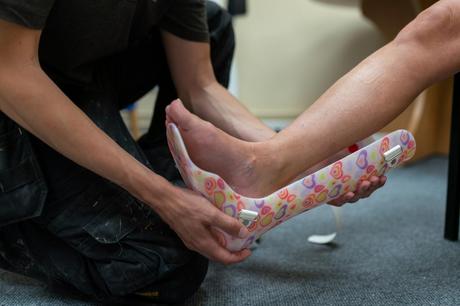
Soak the splint until the plaster begins to loosen, then unwrap the layers. This process will take about one to two hours to complete. After removing the splint, wash your skin with soap and water, then dump the water outside.
Splints made from fiberglass or plaster can also be removed by sawing. This technique is somewhat dangerous, but it gets the job done if you're careful. First, put on some goggles and a breathing mask because, during sawing, the dust can get in your nose, mouth, and eyes.
Begin by sawing at the top of the limb (arm or leg) going down. Saw along the arm on one side, then switched to the opposite side. To stop the sawing tool from jamming or getting stuck, saw in an up and down motion. After the splint is cut, spread them apart, and it will come off easily. Clean the area with rubbing alcohol, soap, and water to wash away the dirt build-up and dead skin.
- Removing the Splint with Common Household Items
Place a folded towel at the opening of the cast, then try to stuff as much material as possible between the splint and your skin. Adjust the position of your towel through the splint and begin cutting with the towel as a guard.
Ensure you have a face mask on to reduce your chances of inhaling the particles of fiberglass or plaster.
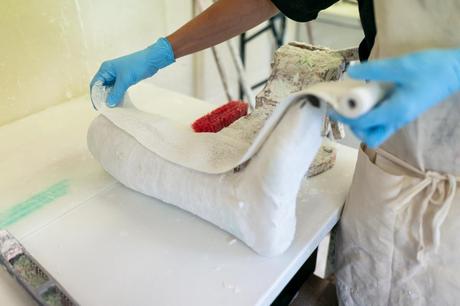
Use a hand-held rotary cutter with a small cutting wheel, and lightly cut the surface of the splint. You want to remove the supporting material without reaching the padding of the splint underneath.
You want to weaken the plaster or fiberglass, so ensure your cut either side. After you're down with the rotary cutter, you can remove the towel. Using kitchen shears, slide it under the cotton material and begin cutting. Ensure your cuts are the premise and slow to reduce the risk of injury.
Conclusion
Taking care of your splints is essential. You don't want it to start smelling after a while though it's inevitable. The odors come from swearing underneath the cast, as well as failing to keep it dry. When taking out your splint at home, ask someone with a steady hand to help out because doing it yourself may increase your chances of injury.