 Last Friday, ABC 891 here in Adelaide asked me to comment on a conservation paper doing the news rounds last week. While it has been covered extensively in the media (e.g., The Guardian, CNN, and Science), I think it’s probably going to be one of those things that people unfortunately start to forget right away. But this is decidedly something that no one should be forgetting.
While you can listen to me chat about this with the lovely Sonya Feldhoff on the ABC (I start chin-wagging around the 14:30 mark), I thought it prudent to remind CB.com readers just how devastatingly important this study is.
While anyone with a modicum of conservation science under her belt will know that the Earth’s biodiversity is not doing well, the true extent of the ecological tragedy unfolding before our very eyes really came home to us back in 2014 with the publication of WWF’s Living Planet Report. According to a meta-analysis of 10,380 population trends from over 3000 species of birds, reptiles, amphibians, mammals, and fish, the report concluded that the Earth has lost over 50% of the individuals in vertebrate populations since 1970. Subsequent revisions (and more population trends from more species) place the decline at over 60% by 2020 (that’s only a little over two years away). You can also listen to me speak about this on another radio show.
If that little bit of pleasant news didn’t make the pit of your stomach gurgle and a cold sweat break out on the back of your neck, you’re probably not human. But hang on, boys and girls — it gets so much worse! The publication in PLoS One on 18 October about Germany’s insect declines might be enough to tip you over the edge and into the crevasse of mental instability.
It has been long suspected that in Europe in particular, and in parts of North America, Australia and elsewhere, that insects weren’t doing too well either (e.g., bumblebee declines, colony collapse disorder, dwindling monarch butterfly populations, etc.) . The problem was that there were few reliable time series of sufficient duration for us to be able to say one way or the other. Most invertebrates get a second glance if anything at all (and even from scientists), and they can be challenging to census reliably.
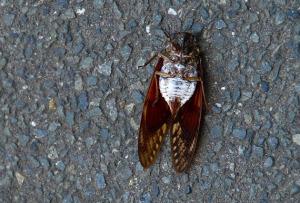
This is why the German study is so important — it demonstrates empirically that flying insect declines are happening; well, they’re not just happening, they are catastrophic in nature (> 75% in 27 years in German reserves). And these losses should not be viewed as merely another group of taxa that are declining, for insects generally have rapid generation times and high fertility. If any group of animals should be the most resilient to environmental change, it should be flying insects. Yet, they seem to be dying off faster than the vertebrates!
We know the value of insects for pollination (i.e., 1 in every 3 mouthfuls of your food is thanks to an animal pollinator, and about half of that is down to one species — the honey bee Apis mellifera), for soil health, for decomposition, and for general ecosystem stability. When the insects go, you pretty much guarantee that it is signalling a full-on, ecosystem-wide collapse that does not bode well for humanity. What are the causes? Well, we know that pesticides contribute, and in some cases are the likely main drivers, but habitat losses, invasive species, disease, and other corollaries of human endeavour synergise to preclude easy solutions.
I really do despair, because this one study is probably just the tip of the extinction iceberg we will soon be able to observe in many more regions and taxa. Perhaps our ecological Armageddon is closer at hand than even pessimists like me think it is.
CJA Bradshaw