 After his research,
it is now a well-documented fact that there are four
main blood groups (types of blood): A, B, AB and O. Your blood group is
determined by the genes you inherit from your parents. Each group can be either
RhD positive or RhD negative.. .. .. and today is World Blood Donation day
too.More than 100 million blood
donations are collected globally every year.Giving blood is essential for healthcare resources – and more than 60
countries around the world rely on voluntary, unpaid donors who make up 100% of
their blood supply. Every year on 14 June, countries around the world celebrate
World Blood Donor Day (WBDD). The event, established in 2004, serves to raise
awareness of the need for safe blood and blood products, and to thank blood
donors for their voluntary, life-saving gifts of blood. World Blood Donor Day
is one of eight official global public health campaigns marked by the World
Health Organization (WHO).
Your body
carries around four to six litres of blood. Blood is made up of red blood
cells, white blood cells and platelets in a liquid called plasma. Plasma is
about 90% water, but also contains proteins, nutrients, hormones and waste
products. Blood is made up of about 60% plasma and 40% blood cells. Each type
of blood cell has a specific role to play.
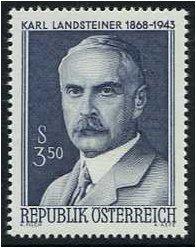
The man, Karl Landsteiner was born in Vienna on June 14,
1868. His father, Leopold Landsteiner, a doctor of law, was a well-known
journalist and newspaper publisher, who died when Karl was six years old. Karl
was brought up by his mother, Fanny Hess, to whom he was so devoted that a
death mask of her hung on his wall until he died. After leaving school,
Landsteiner studied medicine at the University of Vienna, graduating in 1891.
Even while he was a student he had begun to do biochemical research and in 1891
he published a paper on the influence of diet on the composition of blood ash.
To gain further knowledge of chemistry he spent the next five years in the
laboratories of Hantzsch at Zurich, Emil Fischer at Wurzburg, and E. Bamberger
at Munich. Returning to Vienna, Landsteiner resumed his medical studies at the
Vienna General Hospital. In 1911 he became Professor of Pathological
Anatomy in the University of Vienna, but without the corresponding salary.
His suggestions,
however, received little attention until, in 1909, he classified the bloods of
human beings into the now well-known A, B, AB, and O groups and showed that
transfusions between individuals of groups A or B do not result in the
destruction of new blood cells and that this catastrophe occurs only when a
person is transfused with the blood of a person belonging to a different group.
To the end of his life, Landsteiner continued to investigate blood groups and
the chemistry of antigens, antibodies and other immunological factors that
occur in the blood. It was one of his great merits that he introduced chemistry
into the service of serology. In 1939 he became Emeritus Professor at the
Rockefeller Institute, but continued to work as energetically as before,
keeping eagerly in touch with the progress of science. It is characteristic of
him that he died pipette in hand. On June 24, 1943, he had a heart attack in
his laboratory and died two days later in the hospital of the Institute in
which he had done such distinguished work.
The first
successful blood transfusion occurred in 1907 as a direct result of his work,
which led to advances in medicine, therapies, and surgery. Landsteiner is also
credited with laying the groundwork, together with fellow scientist Erwin
Popper, that led to the discovery of the polio virus. This was the first step
towards developing a treatment for the disease which affected millions of children
worldwide. The Nobel Prize in Physiology or Medicine 1930 was
awarded to Karl Landsteiner "for his discovery of human blood
groups".
The
Aronson Prize is a prize awarded for achievements in microbiology and
immunology. It was established by the will of the pediatrician and
bacteriologist Hans Aronson and has been awarded since 1921. Aronson bequeathed
a large part of his estate to the establishment of the prize. The prize is
awarded biannually on 8 March, the date of Aronson's death. In 1969, the
foundation that awarded the prize was dissolved on the initiative of its last
chairman Georg Henneberg, and the responsibility for the prize and the
remaining capital was transferred to the (West) Berlin government, in order to
safeguard the existence of the prize. Since 1970, the prize has been awarded by
the Senate of Berlin.
After his research,
it is now a well-documented fact that there are four
main blood groups (types of blood): A, B, AB and O. Your blood group is
determined by the genes you inherit from your parents. Each group can be either
RhD positive or RhD negative.. .. .. and today is World Blood Donation day
too.More than 100 million blood
donations are collected globally every year.Giving blood is essential for healthcare resources – and more than 60
countries around the world rely on voluntary, unpaid donors who make up 100% of
their blood supply. Every year on 14 June, countries around the world celebrate
World Blood Donor Day (WBDD). The event, established in 2004, serves to raise
awareness of the need for safe blood and blood products, and to thank blood
donors for their voluntary, life-saving gifts of blood. World Blood Donor Day
is one of eight official global public health campaigns marked by the World
Health Organization (WHO).
Your body
carries around four to six litres of blood. Blood is made up of red blood
cells, white blood cells and platelets in a liquid called plasma. Plasma is
about 90% water, but also contains proteins, nutrients, hormones and waste
products. Blood is made up of about 60% plasma and 40% blood cells. Each type
of blood cell has a specific role to play.
The man, Karl Landsteiner was born in Vienna on June 14,
1868. His father, Leopold Landsteiner, a doctor of law, was a well-known
journalist and newspaper publisher, who died when Karl was six years old. Karl
was brought up by his mother, Fanny Hess, to whom he was so devoted that a
death mask of her hung on his wall until he died. After leaving school,
Landsteiner studied medicine at the University of Vienna, graduating in 1891.
Even while he was a student he had begun to do biochemical research and in 1891
he published a paper on the influence of diet on the composition of blood ash.
To gain further knowledge of chemistry he spent the next five years in the
laboratories of Hantzsch at Zurich, Emil Fischer at Wurzburg, and E. Bamberger
at Munich. Returning to Vienna, Landsteiner resumed his medical studies at the
Vienna General Hospital. In 1911 he became Professor of Pathological
Anatomy in the University of Vienna, but without the corresponding salary.
His suggestions,
however, received little attention until, in 1909, he classified the bloods of
human beings into the now well-known A, B, AB, and O groups and showed that
transfusions between individuals of groups A or B do not result in the
destruction of new blood cells and that this catastrophe occurs only when a
person is transfused with the blood of a person belonging to a different group.
To the end of his life, Landsteiner continued to investigate blood groups and
the chemistry of antigens, antibodies and other immunological factors that
occur in the blood. It was one of his great merits that he introduced chemistry
into the service of serology. In 1939 he became Emeritus Professor at the
Rockefeller Institute, but continued to work as energetically as before,
keeping eagerly in touch with the progress of science. It is characteristic of
him that he died pipette in hand. On June 24, 1943, he had a heart attack in
his laboratory and died two days later in the hospital of the Institute in
which he had done such distinguished work.
The first
successful blood transfusion occurred in 1907 as a direct result of his work,
which led to advances in medicine, therapies, and surgery. Landsteiner is also
credited with laying the groundwork, together with fellow scientist Erwin
Popper, that led to the discovery of the polio virus. This was the first step
towards developing a treatment for the disease which affected millions of children
worldwide. The Nobel Prize in Physiology or Medicine 1930 was
awarded to Karl Landsteiner "for his discovery of human blood
groups".
The
Aronson Prize is a prize awarded for achievements in microbiology and
immunology. It was established by the will of the pediatrician and
bacteriologist Hans Aronson and has been awarded since 1921. Aronson bequeathed
a large part of his estate to the establishment of the prize. The prize is
awarded biannually on 8 March, the date of Aronson's death. In 1969, the
foundation that awarded the prize was dissolved on the initiative of its last
chairman Georg Henneberg, and the responsibility for the prize and the
remaining capital was transferred to the (West) Berlin government, in order to
safeguard the existence of the prize. Since 1970, the prize has been awarded by
the Senate of Berlin.
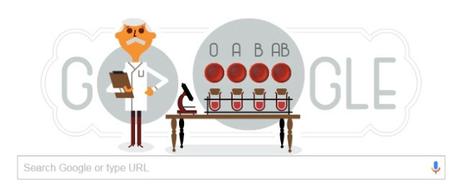
On what would be his 148th birthday, we thank you, Karl Landsteiner, for helping us lead longer, healthier lives. With regards – S. Sampathkumar
14th June 2016.