


Winter is coming for Iceland
Winter is coming! A phrase adopted by Game of Thrones many years ago, but also something often whispered by locals when the first snow falls in the fall. For the locals, this means the end of the harvest season and the start of a difficult winter. For tourists, it's the start of a winter wonderland.
This month's post will focus on some of the reasons winter in Iceland is revered by so many people, despite the cold. If things improve before the winter snow disappears in March, maybe heading to Iceland could be an option for you. But for now, let's consider this ambitious and educational project. Sadly, that's all most of us can hope for at this time.
Autumn is goingThis fall, the Icelanders were very lucky. The weather was quite warm, calm and many nights with the Northern Lights. Very little snow fell in the lower parts of the country, which means that some crops were very successful, although there were of course many other factors. On a personal note, I managed to hang out with a few friends last week to plant trees (much needed in Iceland).
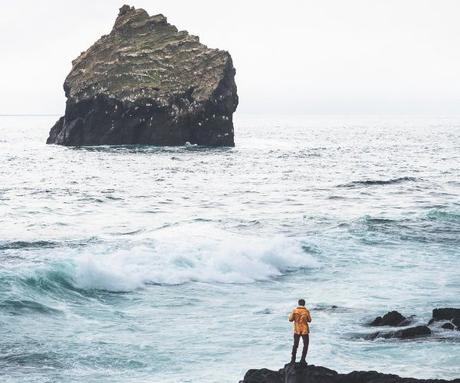
These last weeks of fall, before the ground freezes, are ideal for planting. Mainly because the weather is nice and humid, the free-range sheep have returned to their shelters for the winter, and the gluttonous birds have migrated south for the winter. In our efforts, we planted around 10,000 native birches in less than a week. Not bad for beginners. The Icelandic government has actually set a target of planting 4,000,000 new trees per year through 2100, so I feel like I've done my part this year at least.
By the time fall really leaves us (pardon the pun), there are few animals left in the countryside. 90% of the birds migrate south, leaving behind a few solitary geese, swans and fulmars. All the whales and killer whales are also extinct, except for a few dolphins and a family of killer whales which stay near the Snaefellsnes Peninsula all year round. All the backyard animals that have roamed freely during the summer, or in the vast fields, are now comfortably hidden in their warm barns for protection. The only new arrivals in winter are the reindeer. New in that they tend to hide in the mountains to escape the summer heat (you heard that right), but travel to sea level in the winter when it is cooler.
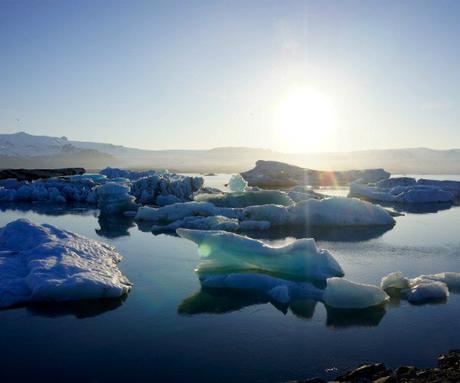
Winter is blueThe first snow rarely means late fall, given Iceland's turbulent weather conditions. In fact, I had the pleasure of being snowed in August of last year, followed by 2 weeks of weather t-shirt. So I would say the first real day of winter is actually when local ice cave experts report that winter blue ice caves are safe to enter. Basically, Blue Ice Caves can only be safely explored when the average temperature is low enough to keep them from melting and collapsing. On a schedule basis, it is often the first week of November, but it can sometimes be earlier or later.
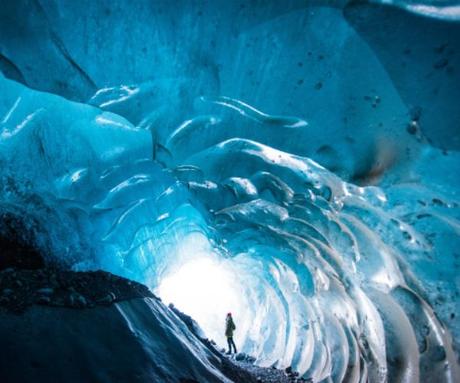
Glaciers are safe to walk all year round. In fact, it is from the movement and melting of ice in summer that creates these beautiful sculptures of blue ice in winter. But entering "into" a glacier is a winter activity only when they are temporarily frozen in time. Locked in place if you will. But this is only possible for a few months until the spring heat melts them away. Every winter is unique and every ice cave is different. So even if you've visited an ice cave before, that doesn't mean it will be the same experience next time around.
Winter is whiteIt seems like a pretty obvious title, although it is quite misleading. Yes, snow falls on the mountains in late fall and stays there until spring. You are therefore technically assured of a winter view of Wonderland. However, Iceland, despite its location close to the Arctic, enjoys an exceptionally warm winter. This is due to the warming effects of the Gulf. The average temperature is around zero Celsius (32 ° F) in January, the coldest month of the year. Surprisingly, it's pretty much the same as New York.
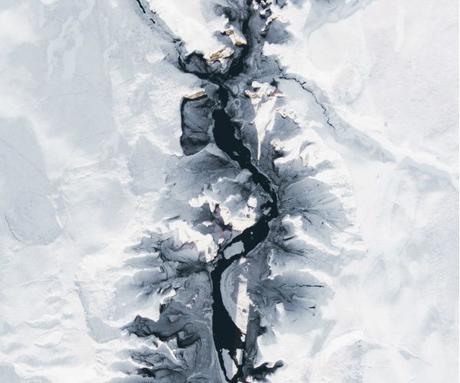
So, if you stay in Iceland for at least a week in winter, you might encounter snow on the ground, but this is by no means guaranteed. Fingers crossed, you come when the sun is shining and the ground is white with fresh snow.
Winter is eventfulThis is of course linked to the weather. After all, you can't have a winter wonderland without a little snow. In Iceland, this snow can sometimes be accompanied by very strong and cold winds. Fortunately, the weather in Iceland is turbulent in both directions. For every storm accompanied by winds of 100 mph, you are often treated to blue skies and warm air. In fact, parts of Iceland can see temperature fluctuations in the winter that allow a few days of t-shirt weather. Honestly! A few years ago, thanks to a strange warm front, there were places that reported temperatures close to 20 degrees Celsius. It's hard to find even in summer in Iceland. A few days later it was minus 10 Celsius. I told you it was turbulent!
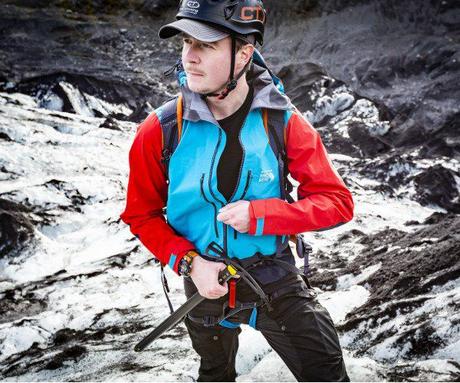
My recommendation is that in winter you should try to take things slowly and not overdo activities. Travel can be naturally slow on some days and activities may need to be moved. If you stay long enough you will likely encounter all 4 seasons. On days when the clouds are gone and the sun is barely rising in the sky, you will have the best photographic light of your life.
Winter is goldenFor the avid photographer, I'm sure you've heard of the "golden hour". One hour at the end of the day before sunset when the light is atmospheric and golden. Perfect for photography. What if I told you that Iceland had a "golden day" as opposed to a golden hour. It is very true. True because the sun, even at noon, barely rises above the horizon all day. It's also true that you only get 4-5 hours of direct sunlight during the darker winter months. But for me, if those 4-5 hours are filled with golden light and an amazing sunrise and sunset, I'm happy to enjoy the extra darkness at night. Especially if this darkness brings the Northern Lights.
 Winter is green
 You will correctly assume that I am referring to the green tint of the Northern Lights when I say winter is green in Iceland. And yes, on nights when the Northern Lights are shining, this is the dominant color.
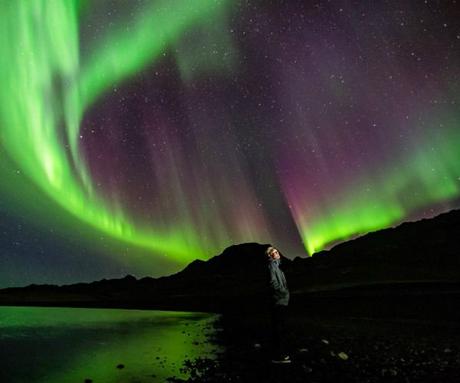
If you've never seen the dancing aurora before, Iceland should be at the top of your list. But be sure to plan plenty of nights to search for them, as weather and strength can play a big part in whether or not you are successful.
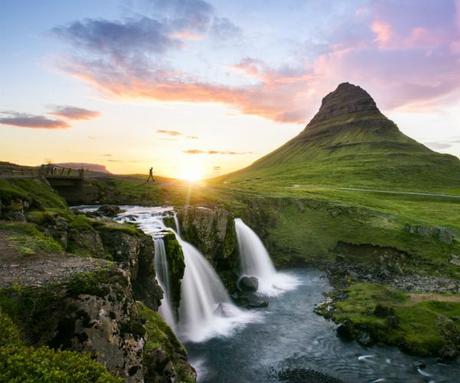
However, Iceland stays green in winter for another reason as well. The foam! Foam protected at national level. Don't even think about stepping on it. The lack of trees in Iceland is more than made up for with their lava fields covered in bright green moss. The moss keeps its green color all year round, as long as there is humidity... and believe me, this is rarely a problem in Iceland. So, if the snow hasn't enveloped the ground, the moss will surely be the focal point of the landscape. Despite the ability of moss to reduce resistant volcanic rock in the ground within decades, it is rather brittle. So fragile in fact that if you step on it, you risk stopping all real growth that year. If you walk in the same place over and over again, it can take up to 70 years to recover. It's a lot of degradation if you add a few million tourists every year. Fortunately, tourists who frequent the Icelandic coasts for the most part abide by the rules, and Iceland's fragile ecosystem remains intact in many places.
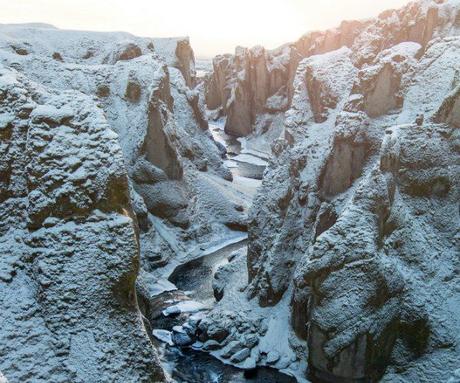
Winter is comingSo that's my brief summary of winter as we approach the weeks to come. In short, the winter experience tends to start in November and end at the end of March. During this time, temperatures can drop to minus 20 ° C. Daylight hours are only 4 hours. The northern lights whiten the sky. And snow covers the surroundings. Sounds delicious to me. Just be sure to wrap yourself up warm.
See you soon!
Ryan Connolly is the co-founder of Hidden Iceland. Hidden Iceland specializes in private tours, taking you to some of Iceland's hidden gems with a passionate and experienced guide. If you would like to be a guest blogger on A Luxury Travel Blog in order to enhance your profile, please contact us.





