If you live in turbulent
times, only way open to keep the
existential dread at bay is to seek out the proper perspective. When it feels
like your life is hanging by a thread, when you feel locked into a collision
course with unavoidable calamity, you may find it helpful to locate something
whose fate is similarly dim, but worse by a matter of degrees, and take pity on
it — often ~ this could well be the ‘fish’.
Fish is chased all the time, gets eaten by its own ilk or by another
predator, caught by humans and ends up in their plates. Pet fish life is even more miserable.
Notwithstanding the romantic picturisaion
of "Finding Nemo," the life of the
average pet fish is unrelentingly grim: individually imprisoned in a small
glass; shaken
almost to death by its sudden, cotton-candy drunk adolescent caretaker;
transplanted into a grimy bowl and promptly overfed, before being unceremonious
dumped into an even grimier bowl and flushed to oblivion.
Keep in mind that the worst day
of your life will be significantly better than the best day of your fish's
life. Your homicidal negligence when failing to properly calibrate the
temperature of the tank water is ultimately an act of mercy. On the scale of
living things, fish are just barely sentient enough to deserve more empathy
than a pet rock, but the distinction may be hard to spot.
This is story of another variety of fish, dating back to ancient Egypt, a symbol of rebirth in Egyptian art, stated to accompany and protect the sun god on his daily journey across the sky. This variety was among the three main types of fish caught centuries ago from the Sea of Galilee. It is commonly known as ‘tilapia’ named so by Scottish zoologist Andrew Smith.
If you live in turbulent
times, only way open to keep the
existential dread at bay is to seek out the proper perspective. When it feels
like your life is hanging by a thread, when you feel locked into a collision
course with unavoidable calamity, you may find it helpful to locate something
whose fate is similarly dim, but worse by a matter of degrees, and take pity on
it — often ~ this could well be the ‘fish’.
Fish is chased all the time, gets eaten by its own ilk or by another
predator, caught by humans and ends up in their plates. Pet fish life is even more miserable.
Notwithstanding the romantic picturisaion
of "Finding Nemo," the life of the
average pet fish is unrelentingly grim: individually imprisoned in a small
glass; shaken
almost to death by its sudden, cotton-candy drunk adolescent caretaker;
transplanted into a grimy bowl and promptly overfed, before being unceremonious
dumped into an even grimier bowl and flushed to oblivion.
Keep in mind that the worst day
of your life will be significantly better than the best day of your fish's
life. Your homicidal negligence when failing to properly calibrate the
temperature of the tank water is ultimately an act of mercy. On the scale of
living things, fish are just barely sentient enough to deserve more empathy
than a pet rock, but the distinction may be hard to spot.
This is story of another variety of fish, dating back to ancient Egypt, a symbol of rebirth in Egyptian art, stated to accompany and protect the sun god on his daily journey across the sky. This variety was among the three main types of fish caught centuries ago from the Sea of Galilee. It is commonly known as ‘tilapia’ named so by Scottish zoologist Andrew Smith.
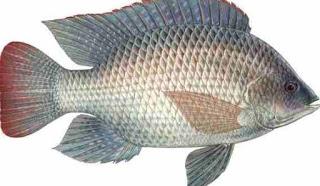
Tilapia is the common name for nearly a hundred species of cichlid fish from the tilapiine cichlid tribe. Tilapia are mainly freshwater fish inhabiting shallow streams, ponds, rivers and lakes and less commonly found living in brackish water. Historically, they have been of major importance in artisan fishing in Africa and the Middle East, and they are of increasing importance in aquaculture and aquaponics. Tilapia can become problematic invasive species in new warm-water habitats such as Australia, whether deliberately or accidentally introduced, but generally not in temperate climates due to their inability to survive in cold water. Tilapia is the fourth most consumed fish in the United States dating back to 2002. This certainly is no pet fish and is in news for an altogether different reason. Researchers in Brazil are experimenting with a new treatment for severe burns using the skin of tilapia fish, an unorthodox procedure they say can ease the pain of victims and cut medical costs. Frozen animal skin and even human tissue have long been placed on burns to keep them moist and allow the transfer of collagen, a protein that promotes healing. Brazil’s public hospitals, however, lack human and animal skin supplies. Instead, gauze bandage, which needs regular changing – often painfully – is the norm. Tilapia is abundant in Brazil’s rivers and fish farms, which are expanding rapidly as demand grows for the mildly flavoured freshwater fish. Scientists at the Federal University of Ceara in northern Brazil have found that tilapia skin has moisture, collagen and disease resistance at levels comparable to human skin, and can aid in healing.
 In China, researchers have
tested tilapia skin on rodents to study its healing properties, but scientists
in Brazil say their trials are the first on humans. It is stated that the tilapia treatment can speed up healing by
several days and reduces the need for pain medication, the Brazilian
researchers say. University lab technicians treated the fish skin with various
sterilising agents, and sent it to São Paulo for irradiation to kill viruses
before packaging and refrigeration. Once cleaned and treated, it can last for
up to two years, researchers say. The treatment removes any fish smell. In
medical trials, the alternative therapy has been used on at least 56 patients
to treat second- and third-degree burns. Patients, with limbs covered by fish
skin, resemble creatures from a science fiction movie.
Interesting
! ~ a few years ago, in a wedding of a
friend’s sister – in the kitchen, an assistant Chef suffered severe burn
injuries with boiling rice. Immediately,
they peeled out the banana leaf sheath (வாழை
மரப்பட்டை )
and tied it tight around the wound – it repeatedly would act not only as
a coolant but also as a healer.
With
regards – S. Sampathkumar
In China, researchers have
tested tilapia skin on rodents to study its healing properties, but scientists
in Brazil say their trials are the first on humans. It is stated that the tilapia treatment can speed up healing by
several days and reduces the need for pain medication, the Brazilian
researchers say. University lab technicians treated the fish skin with various
sterilising agents, and sent it to São Paulo for irradiation to kill viruses
before packaging and refrigeration. Once cleaned and treated, it can last for
up to two years, researchers say. The treatment removes any fish smell. In
medical trials, the alternative therapy has been used on at least 56 patients
to treat second- and third-degree burns. Patients, with limbs covered by fish
skin, resemble creatures from a science fiction movie.
Interesting
! ~ a few years ago, in a wedding of a
friend’s sister – in the kitchen, an assistant Chef suffered severe burn
injuries with boiling rice. Immediately,
they peeled out the banana leaf sheath (வாழை
மரப்பட்டை )
and tied it tight around the wound – it repeatedly would act not only as
a coolant but also as a healer.
With
regards – S. Sampathkumar
30th May 2017.