


The best kitchen utensils are glass, clay, iron, glazed ceramic, polypropylene (as the only stable plastic), silicone, and wood. On the contrary, do not use Teflon-coated containers, non-anodized aluminum pots, copper pots, and plastics other than polypropylene.
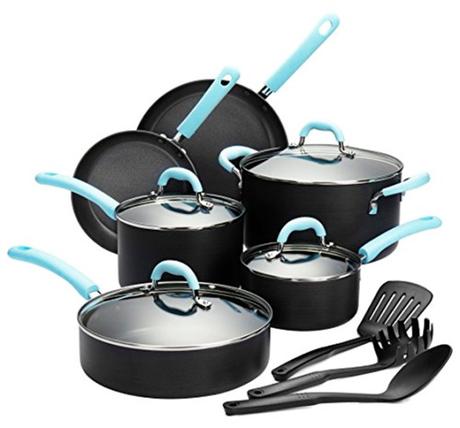
Kitchen utensils that should not be used: Teflon-lined containers, non-anodized aluminum pots, copper pots, and non-polypropylene plastics.
CLAY: Clay utensils are sustainable, ecological, fully recyclable, and do not alter the nutritional properties of food. They are ideal for cooking long-cooking dishes at low temperatures since the thermal inertia of clay is low and it transmits heat little by little. Clay utensils must not be varnished and if they have enamel they must certify that they do not contain lead.
GLASS: It is more sustainable and ecological than clay. Glass does not affect food so it is ideal for cooking, and for preserving food, unlike plastics. It is perfect for heating food in the microwave, as it prevents the formation of toxic substances such as bisphenol-A (carcinogenic), which is released when plastics are heated.
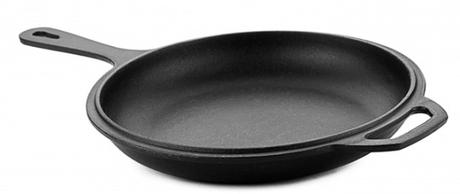
CAST IRON: As iron pots or pans do not usually have non-stick coatings, the food will not stick as long as the container is treated with oil before its first use, and is applied periodically. They are very heavy, they rust easily if they are not dried after washing and they are covered with oil. They are suitable for sautéing, frying, but not for sour soups or sauces.
PORCELAIN: Resists scratches, does not stain or retain odors, is inert and safe. Its drawback is that the enamel layer flakes with the blows and they have to be discarded so that the bits of enamel do not get into the food.
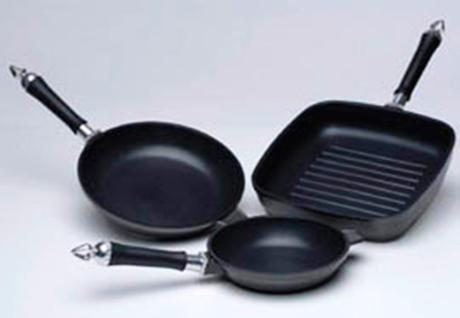
TEFLON (PTFE): It is the best known of the non-stick coatings and is easy to clean, allowing you to cook with very little oil. It is carried in frying pans, saucepans, pastry molds, oven trays, sandwich makers… Teflon is not an ecological product and can affect our health.
The article “ Teflon: as useful as it is dangerous ”, published in Research and Science (2010) collects its serious effects on health. Teflon at more than 230 ºC cracks and releases toxic fumes that can cause damage to the kidneys, liver, prostate, and even the brain.
CERAMIC NANOCOMPOUNDS: They are a good alternative to Teflon. This ceramic coating perfectly withstands temperatures of up to 450ºC and does not emit toxic gases, as occurs with Teflon at high temperatures. They should not be cleaned in the dishwasher, but simply rinsed with warm soapy water. There are also titanium nonstick coatings on high-density aluminum pans. One of the most well-known manufacturers is the German company Woll, which also has pans with a non-stick coating of diamond crystal powder.
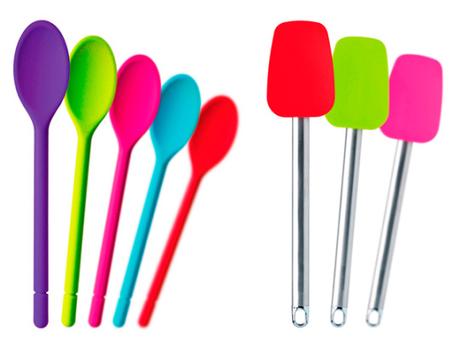
SILICONE: It is a stable and inert material, non-stick, easy to clean, light, and recyclable, which is used in pastry molds, spatulas… It resists temperatures from -50 °C to 220 °C. At higher temperatures, the silicone melts but does not emit toxic fumes.
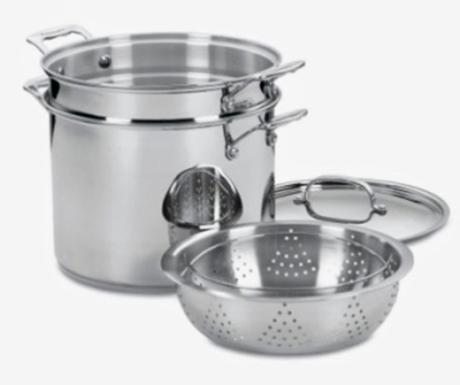
STAINLESS STEEL: Cookware or cutlery made of this material contain nickel and chrome. They are very stable at high temperatures but release small amounts of these heavy metals into food, so they should not be used by people with allergies to these metals.
The Japanese steel used, for example, in knives, is an alloy of extraordinary quality, lighter and harder, and does not contain chrome or nickel. It is practical, resistant, does not rust, nonstick, and scratch-resistant.
ALUMINUM: Aluminum containers have the problem of releasing aluminum salts to food that is cooked, especially if they are acidic. For this reason, the sale of aluminum cookware is prohibited in Germany, France, Belgium, Great Britain, or Brazil. However, anodized aluminum has a layer that covers and seals the piece and prevents the migration of aluminum into the food, allowing its conduction and uniform heat distribution properties to be used, as well as the non-stick properties of the food.
Uncoated aluminum is very dangerous, as it can cause Alzheimer’s and other dementias, as it accumulates mainly in the brain, and also in the lungs, bones… causing muscle dysfunction and memory loss.
COPPER: Copper utensils are very aesthetic and have excellent heat-conducting properties, although those that are not covered in stainless steel should never be used for cooking since copper is a powerful carcinogen. Copper and aluminum are usually part of the diffuser bottoms of pots and pans, but they should not be in contact with the food.
PLASTICS: They are highly polluting in their production, very few are biodegradable and recyclable. They contain hormonal disruptors that cause health alterations, especially in fetuses and children. The worst are phthalates, styrene, and bisphenol A (they have a triangle with the numbers 3, 6, and 7. See image). In contact with food, a part passes into them, since no plastic is inert. In the kitchen, we should cancel them, or at least never heat them or put hot food, fats, liquids, or acids. The most unstable of all is cooking film. Polypropylene is the only plastic recommended by the WHO to be in contact with food for its stability, both in contact with acids and alkalis and for its heat resistance.






