


It is unlikely that a dramatic target of 100,000 Covid-19 tests by the end of April will be met, the government said only 52,429 tests were carried out on Tuesday, two days before the deadline. Capacity is available for about 73,000 people, according to Downing Street. Government sources argue, with some justification, that the target - up from around 10,000 a day at the start of the month - was still incredibly ambitious, and the fact that capacity has been increased so quickly is a huge achievement.
But, critics say, this only serves to illustrate the shortcomings of the British test regime in the first place.
And, despite the ministers' repeated insistence that they are "guided by science" in their response to coronaviruses, secrecy still masks the nature of these scientific opinions. The current membership of the Scientific Emergency Advisory Group (SAGE), the government's main scientific advisory body, which changes with the crisis, has not been publicly listed. The group has not published any of its advice for more than a month. There is not yet a published framework to break the lock that has put the fifth economy in the world in neutral.
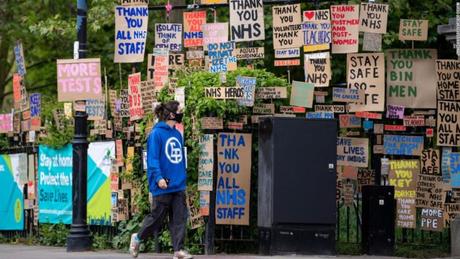
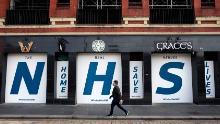
So far, the government seems to have succeeded in rejecting suggestions that its strategy against coronaviruses has failed by indicating a crucial measure of success: the country's beloved National Health Service (NHS) has so far overcome the crisis without being overwhelmed. The desperate scenes in northern Italy, where a world-class healthcare system was brought to its knees, have not been repeated in the United Kingdom.
"This is an unprecedented global pandemic and we have taken the right steps at the right time to fight it, guided by the best scientific advice," a government spokesperson told CNN in response to a request to respond to the criticisms raised in this article. Ministers and officials "worked day and night to fight coronaviruses, implementing a strategy designed to protect our NHS and save lives," said the spokesman. "We have provided the NHS with all the support it needs, [and] makes sure everyone who needs treatment gets it. "
But could more have been done to prevent the extent of loss of life? Should the ministers have acted sooner? And could there be more transparency in the overall strategy?
A crucial date
Historians may regard March 12 as the most important date for the response of the British coronavirus. It was the day the UK officially abandoned the contain phase - an attempt to stop the virus in its tracks by tracking each outbreak and going back to its origins; and moved on to the "delay" phase - an effort to "flatten the curve" and prevent the health service from being overloaded.
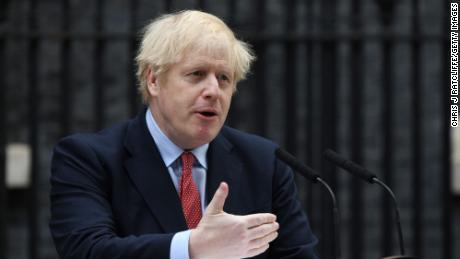
Johnson stood in front of reporters that day, flanked by his scientific and medical advisers, and admitted that "many more families will lose loved ones." But he didn't go so far as to order a foreclosure - it would happen a week later.
While he was speaking, tens of thousands of people gathered at Cheltenham Racecourse for its annual festival, one of the first events on the English social calendar. Was it wise, was he asked? "It is very important that we are guided by science," said Johnson, using a phrase that was to become a favorite of government ministers. "There are very few epidemiological or medical reasons at the moment to ban such events."
Johnson's chief medical officer, Professor Chris Whitty, admitted that even people with "really mild symptoms" can be contagious. Despite this, chief scientific adviser Patrick Vallance agreed with Johnson that the cancellation of major events was "not a major means of fighting this epidemic".
In fact, the next day, Vallance said on BBC Radio 4's flagship morning show, in an now infamous interview, that a "key" objective would be to "strengthen a kind of collective immunity so that more people be immune to this disease and reduce transmission. "Government sources told CNN that collective immunity has never been official policy.
On May 23, in a televised address to the nation, Johnson changed course, announcing the most extensive set of social restrictions in the United Kingdom since the end of the Second World War. At that time, 335 people had died from Covid-19 in the UK. Given the several-week gap between initial infection and death, it is now clear that by the time Johnson spoke, the coronavirus had settled in Britain.
Three key questions
Critics focus on three key areas as they seek to find out what hasn't worked in the UK.
First, there was the abandonment of mass testing.
At the start of the epidemic in the UK, public health officials tracked and traced all known cases. The ministers never made it clear why this policy was abandoned. Is it because the testing capacity has been reached? Is it because the system could not cope with the expected recovery in demand? Was it structural, since the public health system in England has gradually become centralized over the years?
"The dropout tests gave the virus the green light to spread uncontrollably," says Gabriel Scally of the Royal Society of Medicine. "If you don't have access to the tests, you won't know you have an epidemic until a lot of people are sick."
Some members of the scientific community say that the obsession with central control has led officials to set up the testing regime initially in a few laboratories, rather than letting local hospitals do it themselves.
"Unfortunately, it seems likely to me that once government models have shown how severe the crisis will be, our testing capacity will no longer be able to cope with the next surge," a microbiologist told CNN. renowned on condition of anonymity. confidential discussions. "God only knows what their thoughts didn't tell the hospitals to prepare. It was a mistake." Downing Street refused to provide an official explanation to CNN on this issue.
The second crucial question is whether the government did not order a foreclosure early enough.
Even though the government did not know at the March 12 briefing how many people were infected, Whitty said it was still too early to close because "if people go there too soon, they get very tired". If severe restrictions were to arrive too early, it was theorized, the British public would begin to tire of them as soon as they began to become effective, and requests for lifting would become impossible to resist.
Government sources have defended this course of action with CNN, noting that certain mitigation measures had been put in place between March 12 and the complete lockdown on March 23, such as advising vulnerable groups to stay at home and forcing children to stay home. people with certain symptoms to self-quarantine.
The third major issue is the pursuit of the so-called "collective immunity".
"It is not possible to prevent everyone from obtaining it," Vallance said during the March 12 briefing. However, the experience of countries like South Korea and Germany, where testing and monitoring systems have been much more rigorous, and in New Zealand, where lock-out measures have been taken at a much more early, suggest that it has been possible to stop quite a few people from getting it.
Medical experts inside and outside the circle of trusted government advisers admitted to CNN that they believed the government had waited too long to lock out. "Many decisions made by the government ignore the basic sciences of public health," says Dr. Bharat Pankhania, clinical lecturer at the University of Exeter. "From the abandonment of tracking and traceability, at the time of locking, to the provision of appropriate protective equipment, ignoring the basic public health sciences may have resulted in more deaths than necessary."
Pankhania believes that despite government claims that he was guided by science at every step, the decision to delay the foreclosure was likely "governed by economic considerations rather than by public health science".
This conflict between the government's claim that it has followed science from day one and some in the scientific community's skepticism about the quality of this evidence has become a key battleground between those inside and outside. outside the British government.
Follow science
One of the most controversial decisions of this crisis has been to keep SAGE members private and not to publish the minutes of its meetings, in departure from the standard operating procedures of almost all other British advisory groups. "I don't personally understand why," said Peter Openshaw, an immunologist who is part of the New and Emerging Respiratory Virus Threats Advisory Group (NERVTAG), a committee that advises SAGE.
This secrecy has led to speculation from prominent members of the public health community about the quality and extent of the evidence that reaches the highest levels of government. "Government decisions show no characteristic of the contribution of public health. I would not be surprised if the voice of public health were marginalized both within SAGE and within government, "said Scally of the Royal Society of Medicine.
It's "driving the public health guys crazy," said another scientist who contributed to the UK National Risk Register, a snapshot of the potential threats the UK faces.
Another criticism of the process is that the government has sometimes even bypassed normal groups of scientific advisers. "Things are moving so fast that they're going straight to the modelers," said Openshaw. "Epidemiological modellers have a very direct link with the government."
As trivial as it may seem, disagreements between public health experts and scientific modelers are an important part of the story. "We are witnessing a fight that has lasted for about 20 years between modellers and epidemiologists," said a scientist who advises SAGE to CNN on condition of anonymity to discuss confidential government business.
It's no secret that Dominic Cummings, Johnson's best advisor, has a personal interest in scientific modeling. It is therefore not surprising that public health experts were enraged when the government was forced to admit last week that Cummings had attended SAGE meetings, which are supposed to be independent advisory forums. The government has stated that it is present to understand the scientific debate surrounding the virus and its behavior.
Several members of SAGE and groups that advise it have defended their impartiality towards CNN. "The debate is strong, and everyone is setting out his case clearly and clearly," said one member, requesting anonymity to discuss sensitive issues. "There are a lot of people who criticize from the side, but I think it is possible that these people are angry that they were left out."
A source who advises SAGE said: "Frankly, I find it hard to see that the presence of Cummings makes a lot of difference. We're not talking about shrinking the violets."
However, the source expressed concern about the way the scientific evidence is presented. "Science is not homogeneous ... The best thing that SAGE can do is to present imperfect material. The government has been able to take advantage of public opinion of science as a voice of certainty, and to present some of its decisions as being taken with more concrete. more certainty than them. "
This raised fears that at some point in the future the government would try to hide behind science for the decisions it had made - or worse, throw SAGE members under a practical bus. "This certainly seems to worry some of my colleagues, but I am less worried. Many politicians are not exceptional thinkers. If a public inquiry were to occur, I would be surprised if it was the scientists who did a bad job of doing theirs, "said a member of SAGE.
And then?
This public inquiry seems inevitable once the worst of the crisis is over.
And when that happens, the government will stick to its position that the decision to prioritize the protection of the NHS was the right course of action and that it was successful. While it is true that the NHS did not fall during what appears to be the worst weeks of the crisis, a cynic might argue that focusing on hospitals ignored what was going on in the wider community.
"People may well respond that it protects the NHS at the expense of displacing deaths elsewhere. Not to mention the physical and mental suffering experienced across the country," said one of the scientists advising SAGE.
In the short term, the government is under pressure to inform the public of the end of the foreclosure. It will not simply be a question of relaxing social distancing measures.
Pankhania says the government must not be influenced too much by economic pressures to restore normalcy. "It is important to note that the economy can be rebalanced, but the lives lost cannot be made up for." He stresses that even if the lock is lifted, the government must be ready to "close it again".
Robert Dingwall, Professor of Social Sciences at the University of Nottingham Trent and member of NERVTAG, says: "The biggest challenge for government is the level of fear and anxiety in the general population, which can make people reluctant accept the release of the lock. "
The history of coronavirus in the UK has been dramatic, even by international standards. While Johnson was not sick, legitimate questions regarding his government's management of the pandemic were asked with few satisfactory answers from those who intervened to fill his shoes.
The inner circle of Johnson hopes his return to work will generate renewed energy and urgency. But many key irreversible decisions have already been made. When, how and why will determine the next phase in this story - and how well the Johnson government has weathered the country's worst crisis in decades.






