


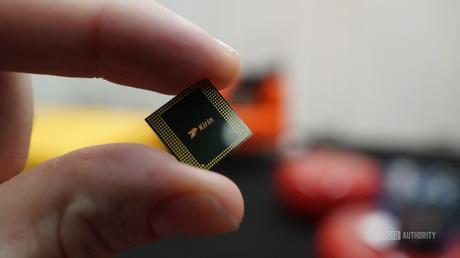

After a few years, Huawei has grown into a household smartphone brand. There's a good chance you're reading this on one of their phones, as the company is the world's largest phone maker at the time of writing. If you're using a Huawei phone, you can also run all of your apps on a Kirin System-on-a-Chip (SoC) developed by HiSilicon, the Huawei-operated fabless semiconductor company based in Shenzhen, China . Although that's expected to change in 2021 and beyond, which we will get into a little later.
What is a SoC? Here is everything you need to know about smartphone chipsets
Just like its big competitors Apple and Samsung, Huawei develops its own processors. This gives the company more control over how hardware and software interact with each other, resulting in products that are above their weight by specification. With this in mind, HiSilicon has become an indispensable part of Huawei's mobile success. The range of HiSilicon processors has expanded over the years and includes not only flagship products, but also the mid-range.
Here's everything you could ever want to know about HiSilicon, Huawei's chip design company.
A brief history of HiSilicon
Huawei is a veteran in the telecommunications business. The company was founded in 1987 by former People's Liberation Army engineer Ren Zhengfei. That fact has weighed heavily on the U.S. government's stance on the company - historically and more recently with the 2020 trade embargo controversy.
Huawei founded its handset division in 2003 and shipped its first phone, the C300, in 2004. In 2009, the Huawei U8820, known as T-Mobile Pulse, was the company's first Android phone. By 2012, Huawei launched its first 4G smartphone, the Ascend P1. Before smartphones, Huawei supplied telecommunication network equipment to customers around the world, which is still a central part of its business to this day.
In 2011, Richard Yu, the current CEO of Huawei, decided that HiSilicon should build in-house SoCs to differentiate its smartphones.
HiSilicon was founded in 2004 to develop various integrated circuits and microprocessors for its consumer electronics and industrial electronics, including router chips and modems for its network devices. It wasn't until Richard Yu became head of Huawei in 2011 - a position he holds to this day - that the company began delving into SoC design for phones. The basic principle was simple; With custom chips, Huawei can differentiate itself from other Chinese manufacturers. The first notable Kirin mobile chip was the K3 series in 2012, but Huawei continued to use chips from other silicon companies in most of its smartphones at the time. It wasn't until 2014 that today's Kirin brand for mobile chips appeared. The Kirin 910 supplied the company with Huawei P6 S, MediaPad and Ascend P7.
Connected: How long will chip manufacturers support their processors for Android updates?
Just like other smartphone chip designers, HiSilicon processors are based on the Arm CPU architecture. Unlike Apple, HiSilicon does not create custom CPU designs based on the Arm architecture. Instead, the company opts for standard parts from Arm - like the Cortex-A76 CPU and Mali GPUs - to incorporate into its solutions alongside other in-house developments such as modems, image signal processors, and machine learning accelerators.
Huawei does not sell HiSilicon smartphone chips to third parties. They are only used in their own smartphones. Even so, the chips are still seen as serious competition by the other major players in the market.
HiSilicon, Huawei and the US trade embargo


Calling 2020 a difficult year for Huawei is an understatement. The US trade embargo left Huawei to sell cell phones without Google services. Impairment of their attractiveness and compulsion for the company to close the gap quickly with its own HMS alternative.
When the screw was tightened, key chip makers like TSMC were banned from making HiSilicon chips for Huawei. The company reportedly has a limited supply of high-end processors. This leaves Huawei with the prospect of securing alternative chips from a rival like MediaTek. However, the real pain is already being felt from the loss of the proprietary features and technologies that HiSilicon has built into Kirin for years. Without Kirin, Huawei's smartphones are unlikely to remain the competitive force they have been for several years.
Without Kirin, Huawei's smartphones could never be the same again.
Continue reading: Can Huawei survive without its custom Kirin chips?
If that wasn't big enough, Huawei is now also banned from buying foreign chips if they are comparable to US technology (see Qualcomm). Losing HiSilicon manufacturing partners was already a huge setback, and increasingly stringent rules leave Huawei with few options.
The HiSilicon-Qualcomm rivalry


Some of the current chip tensions can be traced back to an old rivalry between Huawei and the mobile processor giant Qualcomm.
Huawei used to be a major buyer of Qualcomm's Snapdragon processors and has continued to use its chips in some of its lower-cost Honor smartphones over the past few years. However, the most popular Huawei smartphones are based entirely on Kirin technology. As the company's share of the smartphone market accelerated over the past five years, Qualcomm's partners felt the pressure.
Although Qualcomm's Snapdragon still powers the majority of smartphone makers, Huawei's rise to the top three has spawned a major rival. Have a say in a 2018 interview The information A HiSilicon manager said the company listed Qualcomm as "No. 1 competitor. "
However, the start of hostilities began long before Huawei's mobile boom. It started shortly after HiSilicon announced its first mobile processors. Qualcomm began heavily editing product information even though Huawei is still a customer, and feared the company might share information with HiSilicon. The company's concerns may not have been unfounded as Huawei employees found that working on the Nexus 6P with Google taught them a lot about optimizing both hardware and software.
Huawei and Qualcomm are in closer competition than ever as they battle for patents related to 5G and IoT.
Outside of SoCs, the two giants have battled for patents related to IoT and other related technologies, especially those with 5G. Qualcomm was the dominant holder of patents for the CDMA, 3G, and 4G industry standards which, along with modems built into their chipsets, quickly put Snapdragon processors at the forefront of the Android ecosystem. That position is less secure with the advent of 5G as Huawei built patents on 5G technologies for consumers and industry, putting the two on a different collision course.
HiSilicon Kirin SoC cast


HiSilicon's latest flagship SoC is the 5G-capable Kirin 990. It is included in some high-end smartphones, including the Huawei P40 series and the Honor 30 Pro Plus.
As we would expect from a chip that powers expensive top models, many high-performance components are packed inside. An octa-core Cortex-A76 and A55 configuration in combination with a Mali-G76 MP16 graphics unit make this HiSilicon the most powerful chip to date. Although not quite as innovative as its competitors. The company has also upgraded its in-house image and video processing units to support high-end photo capabilities as well as a very competitive integrated 5G modem package. Another notable feature of the Kirin 990 is the integration of a Dual Neural Processing Unit (NPU) based on Huawei's in-house DaVinci architecture.
The Kirin 990's predecessor, the Kirin 980, is a very similar chip in many ways, with a similar looking CPU configuration, GPU, and NPU. While it lacks some of the latest performance data, 5G, and lacks the latest camera developments from Huawei. Still, it's a powerful chip that can be found in both high-end Huawei models and lower-cost models from the Honor brand.
For medium-sized and cheaper phones, Huawei has its own Kirin 800 range. These chips target lower CPU and GPU performance points, but the Kirin 820 supports 5G below 6 GHz to keep up with its competitors. Previously, 700 and 600 model numbers were the lower end products, but these ranges have been discontinued. Huawei is also keen to use SoCs made by MediaTek in some cheaper phones too, especially given the trade ban.


HiSilicon in 2021
Like Huawei, HiSilicon has evolved rapidly over the past half a decade. It has gone from being a lesser-known player in SoC gaming to being a big company that competes with the biggest names in the business. The chip designer's influence has undoubtedly increased due to the success of the Huawei and Honor cellphone brands. However, the severity of the U.S. trade restrictions for 2020 makes it likely that the Huawei Mate 40 will be the last phone with a Kirin processor.
What's next for HiSilicon is far from certain, especially when it comes to Kirin. China-based flagship chip manufacturing is not profitable in the medium term, and the number of other potential partners is rapidly decreasing. The impact of the anti-Chinese sentiment is likely to impact Huawei's 5G infrastructure plans as well, which in turn has a positive impact on HiSilicon. The two businesses are inextricably linked and it looks like a bumpy road.







