


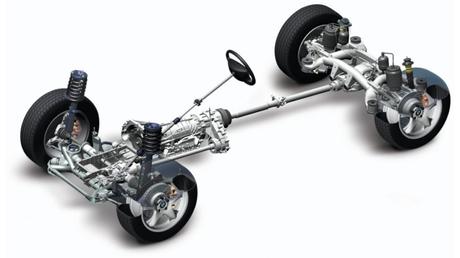
Most people often confuse all-wheel drive (AWD) with 4-wheel drive (4WD). People think it's the same; however, there is a difference between the two. If you also think these two transmissions are the same, keep reading it.
In this article, we'll walk you through what an AWD and 4WD are, and what the difference between the two powertrains is. We will also tell you which one is the best and why?
So, let's start exploring it.
Read also: How does an electric car work?
What is an all-wheel drive (AWD) system?
In an all-wheel drive system, torque is transmitted to all four wheels and the computer monitors how much torque is needed to send. Under normal road conditions, most of the power is sent to the rear wheels with little or no power to the front wheels.
However, as driving conditions change, the computer detects and alters the torque distribution accordingly. This is done in order to get the maximum traction control in different weather conditions and when cornering.
Unlike normal rear-wheel-drive or front-wheel drive cars, all-wheel-drive cars rarely slip under all conditions. All-wheel drive cars are beneficial for people living in snowy or cold areas or where there is heavy rain as they do not easily lose traction.
The AWD system can be integrated into any car, regardless of its body type. Some of the common cars with AWD systems are Dodge Charger, Subaru Outback, Tesla Model S, etc.
What is a 4-wheel drive (4WD) or 4 × 4 system?
Four-wheel drive, also known as 4 × 4, is typically used in trucks and larger SUVs. In the 4WD system, torque is sent to the rear wheels and the front wheels spin freely. Usually, there is a separate lever near the gear lever to activate the four-wheel drive system.
In the case of the 4 × 4, the driver can decide when to engage and disengage the system depending on the driving conditions. In addition, the amount of torque transmitted to the left and right side wheels can be changed via the differential.
The 4WD system is generally designed for SUVs to drive in extreme off-road conditions.
What is the best? 4WD or AWD?
Both transmissions have their own advantages; it mainly depends on the application, which one is best for you. If you are mainly dealing with off-road vehicles like rocks or in the woods, we suggest you go for a 4WD vehicle as it improves grip. The 4WD system is also used in pickup trucks where users sometimes have to tow objects.
On the other hand, all-wheel drive is best when there are bad weather conditions, especially snowy or wet roads. The AWD system generally improves the car's traction and prevents slipping and unsteadiness when cornering.
Although 4WDs and AWDs improve the car's traction and grip on the road, 4WDs are often suitable for extremely bad conditions.
In short, 4WD vehicles are generally designed for off-roading, while all-wheel drive cars are designed for better traction, grip, and handling on normal roads in inclement weather conditions.
Who shouldn't buy 4WD or AWD cars?
In terms of performance and handling, all-wheel drive is still better than conventional FWD or RWD cars. However, if you live in an area where road conditions and weather remain good, we don't think all-wheel drive or 4-wheel drive would be of much benefit.
All-wheel-drive cars are generally more expensive than rear-wheel drive or front-wheel drive cars, and they are also less fuel efficient than the latter. Therefore, if your main goal is to get better mileage, none of them are right for you.
We hope you now have an overview of both types of transmission. Either way, share your opinions in the comments section below.
The post What is the difference between 4WD and AWD? What is the best? first appeared on Fossbytes.






