


There’s no sugar coating it; blocked drains are a sore spot for every homeowner. They’re inconvenient, messy, and can often lead to larger problems if ignored for too long.
Understanding the causes is one of the best ways to defend yourself against a blocked drain, which is why we’ve provided a guide on what to avoid flushing down your pipes.
What are the Warning Signs?
Though seemingly unpredictable, there are a number of warning signs that often arise in the buildup to a blocked drain.
Slow Draining Water
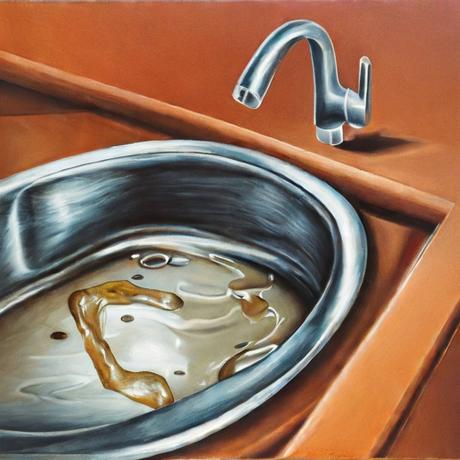
One of the more challenging warning signs to notice is a change in drainage speed. When there is an obstruction in the pipe, the water will begin to drain at a slower rate. At first this might be a minor change but as the obstruction grows the water flow will slow until it eventually stops. If you notice a sink, bath or shower draining slower than usual, it is a good time to call in your local plumber.
Similarly, if the water level in your toilet bowl begins to rise or fails to drain correctly, it is highly likely you aren’t far off having a blocked toilet.
Gurgling Noises
If your drain begins to make gurgling noises, it is likely you have a clogged drain. These noises indicate that the water does not have a clear path to flow through, suggesting that there is something obstructing its passage through the pipe.
Unusual Odours
One of the most noticeable of these warning signs is the smell that can often come from a blocked drain.When food remnants, grease, oil, or other forms of kitchen waste become stuck in a pipe, they slowly start to break down, emitting an unpleasant scent throughout your home.
What Could be Causing the Blocked Drain?
Tree Roots
It’s well known that trees rely on water as their main source of nutrients. Throughout the years they have become well adept at seeking it in any form they can. This makes your water pipes and sewage system a likely target, as even the smallest of cracks in a pipe wall can lead to a root infiltration.
Once in the pipe, tree roots will continue to grow forming a dense mass of thick netting. This then traps any foreign objects or substances being flushed down the drains, inevitably causing quite a severe blocked drain.
Cooking Oils and Grease
It’s become a popular habit to rinse leftover fats and oils down the kitchen sink, but these cooking substances are actually one of the leading causes of blocked drains. Though liquid when hot, the moment fats, greases and oils cool they solidify and form a thick coating along the internal walls of your plumbing system.
Not only can this solidified coating lead to a clogged drain itself, it is also prone to catching other scraps that are washed down the drain.
Hair
If you are someone who usually watches as hair strands escape down the shower drain, you might be surprised to find that they can actually lead to a blocked drain.
When hair strands accumulate, they begin to form much like a root blockage, creating clumps of netting that eventually blocks water flow. However, because hair is so fine, these net clumps can often become so dense they halt the flow of water almost entirely. Though this level of blockage does take quite some time to build to.
Toiletries
You know those flushable wipes they keep advertising? Well, contrary to popular belief, they are not actually as flushable as one might hope. In reality, if it isn’t toilet paper, it shouldn’t be going anywhere near your drains no matter how “drain safe” it might be.
Though some toiletries can be removed with the help of a plunger, it is more likely for them to become lodged deeper in the pipe system, accumulating to form a significant blockage.
Clearing the Blockage
Though you might be considering some DIY remedies to address the immediate issue, it is recommended that you seek the assistance of your local plumber. Often drain cleaning methods only alleviate the issue for a short period of time, but a plumber will be able to create a targeted plan of action based on the specific cause of the blockage.
These methods can include simple fixes such as water jetting, however depending on the extent of the damage, the job may also require a section re-build or a more modern method known as pipe relining. In any case, a qualified plumber is going to be able to get your plumbing system back to a reliable standard, minimising any near future mishaps.






