Qualcomm has agreed to buy Nuvia for around $ 1.4 billion. The message is music for Qualcomm's various partners. Samsung, Sony, OnePlus, LG and others whose products range from smartphones to smart car systems have made supportive statements. This could be one of the biggest tech acquisitions of the year.
But why is Nuvia so important at Qualcomm? In the short version, Qualcomm returns to custom CPU designs based on the Arm architecture. This has far-reaching implications for Qualcomm's silicon portfolio, from high-performance servers to energy-efficient smartphones. There is much more to the story, however.
What is Nuvia and what does it do?
Nuvia designs CPUs based on the Arm architecture. Gerard Williams, former head of CPU design at Apple, founded the company in early 2019. It was also co-founded by John Bruno, who was a systems architect at Google, before spending five years in a similar role at Apple. These two alone have decades of experience in processor design.
It is particularly noteworthy that Williams was Apple's chief CPU architect. He worked on the company's Cyclone, Typhoon, Twister, Hurricane, Monsoon, and Vortex CPU architectures for various Apple A-series SoCs. Prior to joining Cupertino, Williams worked for 12 years as an Arm Fellow on the Cortex-A8 and Cortex-A15 architectures, which powered early smartphones over a decade ago. The two will be joined by Manu Gulati, another former employee of Google and Apple Silicon and lead architect for Apple's mobile SoCs.
Nuvia was founded by former Apple and Google lead CPU designers.
In December 2019, Apple tried to sue Gerard Williams for breach of contract. It was alleged that Williams started working on Nuvia and recruited some of his colleagues while he was still at Apple. However, Williams alleged Apple used anti-competitive practices to prevent him from co-founding with John Bruno. Apple wasn't happy that some of its leading CPU designers had applied their expertise elsewhere.
Since its inception, Nuvia has developed data center processors that are designed for industry-leading performance and energy efficiency. The data center CPUs use a custom version of the Arm CPU architecture. This is not dissimilar to the licensing agreement Apple uses for the CPUs that power the iPhone, iPad, and now the arm-based MacBook lines of products.
Why buy Nuvia now?
In short, Qualcomm relies on Nuvia's custom arm design expertise. The logical starting point will be the data center market, where Nuvia is already developing chips. Arm-based CPUs are gaining traction in the cloud computing space, and Amazon's Graviton Arm Neoverse aims to shake up the market. This deal will therefore have caught the attention of Intel and AMD. Qualcomm has already made it clear that it intends to use Nuvia's custom design approach to cover parts of its chipset portfolio as well.
5G, the convergence of computer and furniture architectures, and the expansion of mobile technologies to other industries are significant opportunities for Qualcomm.
Cristiano Amon, President-elect and CEO of Qualcomm Incorporated
Qualcomm's press release mentions the combination of Nuvia CPUs with the internal GPU, DSP, AI and multimedia accelerators for comprehensive platforms for a variety of markets. Smartphones, driver assistance systems, extended reality, networks and next-generation laptops are on the list. It is this latter option that could turn out to be the driving force behind the whole business. This is because Qualcomm would get the technology to compete in the consumer PC space with Intel, AMD and now Apple.
Qualcomm's newer cryogenic CPUs now use Arm's proprietary Cortex-A standard off-the-shelf CPUs. This approach has proven itself in smartphone processors. The Cortex-A's performance has proven to be more than good enough that Qualcomm can focus on the internal GPU, DSP, ISP, and other components that play a key role in its heterogeneous approach to mobile computing.
Arm versus x86: Instruction sets, architecture and all important differences are explained
However, Apple's custom CPU approach has resulted in superior performance for tablet and laptop products. The latest Apple M1 processor oversees the transition from reliance on Intel's x86 architecture to Arm for its MacBook products. The performance is way above what we've seen from Qualcomm's Snapdragon 8cx Microsoft SQ2 chips with rebranding. Qualcomm's last internal arm CPU design, on the other hand, was the Krait series. It was last released in 2016. However, with former Apple engineers at the helm, Qualcomm may get back into the custom CPU game soon and change its approach to the poor processing power problem.
It's exciting to see NUVIA join the Qualcomm team. Going forward, we have an incredible opportunity to empower our customers across the Windows ecosystem.
Panos Panay, Microsoft's Chief Product Officer.
Qualcomm supports Microsoft with its own support for PCs with Arm and supports Snapdragon platforms for the Windows on Arm initiative. Current generation performance is fine for home and business portable laptops, but not particularly good for more demanding creative applications and business solutions. If the two companies share the vision of a single Arm architecture that spans mobile, PC and server products, Qualcomm will require even more power than Arm's Cortex-A CPUs previously. The solution seems to be to take a sheet of Apple's book and go down the custom architecture path.
Protection against Nvidia when buying Arm
Another thought that could have influenced the Qualcomm purchase is the looming prospect of Nvidia Arm buying pending regulatory approval.
As mentioned earlier, Qualcomm relies on Arm for its CPU requirements. Nvidia's purchase of Arm casts doubt on future business deals. Of course, Nvidia has gone to great lengths to ensure the industry continues as normal for Arm as the acquisition progresses, but prudent companies are hedging their risks. Keep in mind that Nvidia and Qualcomm are direct competitors in a number of markets, including the automotive and data center segments.
Returning to at least a certain degree of custom CPU design gives Qualcomm greater control over its destiny.
It is possible that under the influence of Nvidia, Arm's Cortex-A roadmap could change direction and not align with Qualcomm's ambitions or needs. Access to or pricing for Arm's portfolio is also subject to change as Nvidia keeps the top performing portion for internal use only. Or the business model stays the same.
Returning to at least a certain degree of custom CPU design gives Qualcomm greater control over its destiny. Building an in-house design team would also be invaluable in the unlikely event that Qualcomm wanted to move from Arm to an entirely new instruction set in the future. This is a sensible plan if you want one of your biggest competitors to control a significant business partner. At the same time, Arm may not be very happy that he may lose on-chip royalties from one of his largest customers.
What to expect from future Qualcomm / Nuvia CPUs
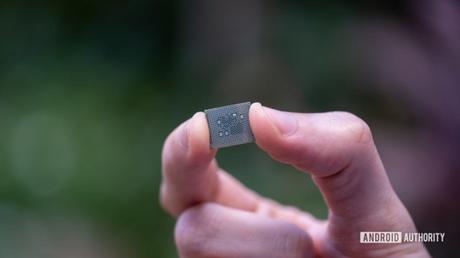
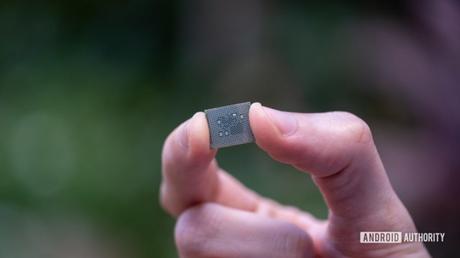
The Nuvia acquisition is an important step that could ultimately shake up Qualcomm's entire silicon portfolio. Given that ex-Apple CPU design is at the forefront, it's clear Qualcomm will be adding custom arm-architecture CPUs back to its roadmap. These designs could range from products for low-power smartphones to cloud computing servers.
In the consumer sector, the link back to Apple cannot be overrated. Investing in the Apple A-Series CPU helps the company unite mobile and PC products under a single architecture. Thanks to its approach to CPUs, Apple is developing a unified computing approach for the years to come, in which performance and battery life are at an advantage. Undoubtedly Qualcomm shares a similar vision for its extensive chipset portfolio.
Ironically, Qualcomm's return to custom CPU space doesn't come long after Samsung stopped developing its custom Mongoose Arm CPU cores. Future Qualcomm Snapdragon chipsets may drop Cortex-A CPUs for internal designs. If Qualcomm can thrive where Samsung has encountered difficulties, Qualcomm smartphones can stay one step ahead of their Android competitors and close the single-core CPU gap with Apple. However, the smartphone's performance is quite good. It's laptop and server chips that could use a new approach.
Such transitions will take many years. In the short term, Qualcomm's roadmap is unlikely to change much, if at all. The first server products from Nuvia should arrive in 2022 at the earliest. The reconfiguration of the smartphone and other chipset roadmaps related to this acquisition could take even longer. We'll be looking for announcements in the months and years ahead.