


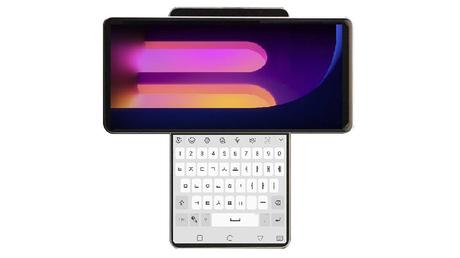
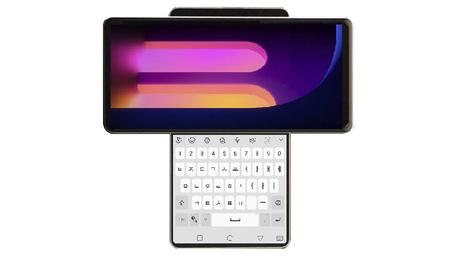


We first heard of a strange LG phone codenamed Wing earlier this year. The phone looks like a normal device from the front, but a pull-out area on the back reveals a smaller secondary screen that can be positioned perpendicular to the main display.
My first thought was that it couldn't possibly be more than a quirky internal prototype. The LG Wing is such an odd concept, and it goes against the foldable under-display selfie camera trends that we expect to be the next phase of innovation in smartphone design.
However, the device has now been spotted in a real video, and guess what? I consent to this phone being launched. After all, this is just the latest example of LG wanting to try something fresh in a fairly homogeneous market. Could this be a sign that the daring LG of years past is back?
While LG has been limiting its experimental side lately, that spirit has never really gone away. Since the LG V50, the bizarre dual-screen accessories have stuck. It also brought the weird with the LG G8 - a gimmick-laden phone exemplified by the biometric hand ID feature that allows you to take your blood to unlock the phone.
As bizarre as these features are, one could definitely argue that the South Korean firm is still playing it a bit safer these days than it has in the past.
Exclusive: First, take a look at the LG Wing with its curvaceous dual display
A success story to be different
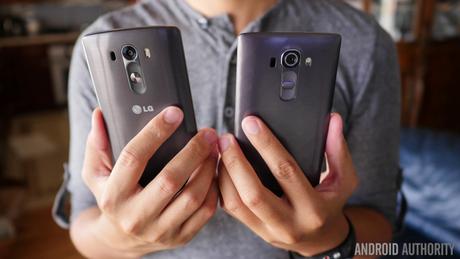
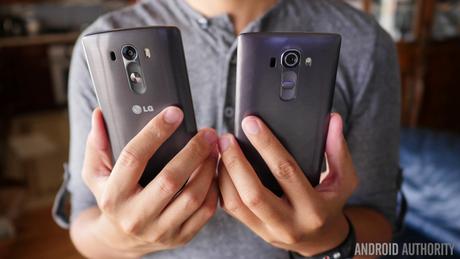
LG is no stranger to trying new things, and the list of gimmicks, innovations, and features that made it popular is pretty long.
Take the now retired G series. These phones had volume and power buttons on the back that made a lot of sense from a purely ergonomic point of view. Your fingers are already wrapped around the back of your phone by the time you hold it - why not put the buttons there too? They couldn't reach the volume and power buttons when the phone was on the table. It is for this reason that Nokia borrows the double gesture to wake you up and the innovative Knock Knock feature so that you can keep unlocking the phone.
While others didn't copy LG's novel rear volume button layout, we found fingerprint readers being moved from the front bezel to the back of many phones - at least until sensors on the display became a reality.
See also: RIP LG G series - farewell to a real innovator
The 2014 LG G3 was the first to offer laser autofocus using technology from research for LG robotic vacuum cleaners. The LG G4 of the following year was one of the first phones to offer a leather-coated back cover - also not artificial leather like the Galaxy Note 3, but real leather. Some Chinese brands later used leather in their phone design, notably the Huawei P20 Pro and the Oppo Find X2 Pro.
The company's two G Flex phones, released in 2013 and 2015, also showed a similar commitment to unconventional features. The flex duo had screens that curved top-down and could actually bend easily. If you thought this was a deviation from the norm, the company even built in self-healing backs to prevent permanent damage from minor scratches.
2015 saw the debut of the LG V10. This included a manual video mode that has since been emulated by a variety of brands. A crazier addition, however, was the use of a secondary ticker display on the main screen, similar to Samsung's edge panel (but above the main display).
Very few of these features and design choices have changed the game, but this innovation-led design approach has influenced or established some now ubiquitous features - most notably the de facto standard triple camera setup we see on most flagship Android phones today.
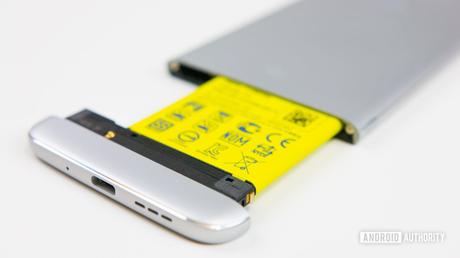

Of course, you can't really talk about LG being unconventional without mentioning the G5 - arguably the height of the company's craziness. For LG as well as for the entire smartphone world, this was a big departure from the conventional design, as a modular form factor was chosen. We had previously seen modular concepts like Google's failed Project Ara, but this was the first modular smartphone designed for the mass market.
Due to the modular design of the LG G5, the battery was pushed in and out of the phone, similar to a gun magazine. In addition, add-ons such as a camera grip and an additional audio module could be installed. It remains one of the weirdest phone designs ever.
LG has a reputation for trying new things, even if they ultimately don't work.
Unfortunately, LG's implementation did not match the concept. The reviewers criticized the build quality, the average battery life, and the fact that the audio module only works with certain variants (what's the point if it's supposed to be modular?).
After the negative reception and poor sales, LG stopped supporting G5 mods almost immediately. Only two were released that were plugged directly into the phone. Motorola later took over the baton with the Moto Z and nearly a dozen Moto Mods, but modular phones failed to contain the mainstream market.
The G5 may be the nadir of LG's mobile division - enough to force the company to take a back-to-basics approach to the LG G6 - but you can't say its willingness to try something different wasn't refreshing .
A return to stupid LG with Wing
Does this list of innovations and gimmicks mentioned above mean that the LG Wing will actually be successful? It's impossible to tell until we figure out what use cases LG has in mind for this crazy new form factor.
We already saw a use case in the video teaser for the phone. This shows the phone in a car phone holder with a map app on the main screen and the dialer on the other. Based on this example, LG seems to appreciate the ability to run two apps at the same time. It's not difficult to imagine other scenarios like this one. For example, use a notepad on one screen and an internet browser on the other.
Welcome back crazy LG.
The Wing form factor also opens the door to using the same app on both screens. This can mean having editing tools on the small screen and the edited photo / video on the main screen, or watching a web video on the main screen and reading comments on the other. It can also mean browsing a social or chat app in landscape mode while typing on the small screen, or filming a video in landscape mode on the main screen while tapping the shutter button and adjusting other settings on the small control panel .
Some of these functions could, in theory, be performed on an LG phone with dual-screen accessories, but this combination is neither an integrated experience nor is it designed for one-handed use, as seems to be the case with the Wing. The company is also grappling with the emerging market for leaflets. Phones with foldable screens and true dual-screen devices like the Surface Duo are looking to reinvent the way mobile design is designed to maximize user productivity.
Even if the LG Wing turns out to be a dud with no practical use cases, I'm still glad to see that the company is exercising caution instead of playing it safe. Newer versions like the LG G8X and Velvet were good all-round phones with very reasonable prices, but they definitely felt safe.
The LG Wing is anything but safe. Welcome back crazy LG.







