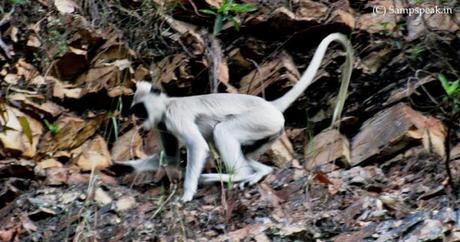
 A
monkey is a long-tailed, medium-sized member of the order of Primates. The
primate order also includes many others. Apes and chimpanzees are not
scientifically classified as monkeys, a common misconception due to their
physical similarities. The facial features of each group of monkeys also differ
substantially; however, there are a number of shared features as well. Most
monkeys survive of a diet of fruit, leaves, nuts, berries, eggs, insects and
they occasionally hunt other smaller animals.
The automobile
market perhaps is celebrating ! ~ Volkswagen India's Pune Plant has now
recorded its highest ever annual production since 2009. The plant produced
1,50,150 cars in 2017 and this has been possible because of a combination of
higher demand from the domestic as well as export markets . Volkswagen's Pune
Plant facility manufactures a range of vehicles including Volkswagen Polo, Ameo,
Vento and Skoda Rapid. In addition to the cars, 1.5-litre and 2.0-litre diesel
engines are also being assembled at the facility. The production for domestic volume for the
year 2017 reached over 57,000 units from Pune Plant for Volkswagen and Skoda combined.
The production of export units which includes Volkswagen Polo and Vento stood
at over 93,100 cars. Over all, the total number of cars rolled out of the plant
has crossed 870,000 units.
Volkswagen
shortened to VW, is a German automaker founded on May 28, 1937 by the German
Labour Front under Adolf Hitler and headquartered in Wolfsburg. Volkswagen is
German for "people's car", and the company's current international
advertising slogan is just "Volkswagen.
A
monkey is a long-tailed, medium-sized member of the order of Primates. The
primate order also includes many others. Apes and chimpanzees are not
scientifically classified as monkeys, a common misconception due to their
physical similarities. The facial features of each group of monkeys also differ
substantially; however, there are a number of shared features as well. Most
monkeys survive of a diet of fruit, leaves, nuts, berries, eggs, insects and
they occasionally hunt other smaller animals.
The automobile
market perhaps is celebrating ! ~ Volkswagen India's Pune Plant has now
recorded its highest ever annual production since 2009. The plant produced
1,50,150 cars in 2017 and this has been possible because of a combination of
higher demand from the domestic as well as export markets . Volkswagen's Pune
Plant facility manufactures a range of vehicles including Volkswagen Polo, Ameo,
Vento and Skoda Rapid. In addition to the cars, 1.5-litre and 2.0-litre diesel
engines are also being assembled at the facility. The production for domestic volume for the
year 2017 reached over 57,000 units from Pune Plant for Volkswagen and Skoda combined.
The production of export units which includes Volkswagen Polo and Vento stood
at over 93,100 cars. Over all, the total number of cars rolled out of the plant
has crossed 870,000 units.
Volkswagen
shortened to VW, is a German automaker founded on May 28, 1937 by the German
Labour Front under Adolf Hitler and headquartered in Wolfsburg. Volkswagen is
German for "people's car", and the company's current international
advertising slogan is just "Volkswagen.
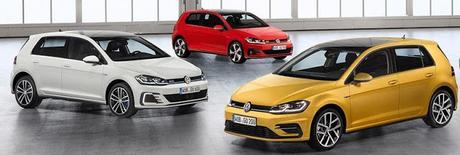 Many papers have
covered the revival story of Volkswagen
(VW) and how it has risen like a phoenix out of the emissions scandal and now
outselling rivals, is more profitable than before the crisis and investing
€20bn in electric cars. In China,
Volkswagen`s largest market, accounting for about half the core brand`s
deliveries, sales rose 5.9 percent last year to 3.18 million cars. In the
United States, they were up 5.2 percent to 339,700 cars. The Volkswagen brand handed over a total of
6.23 million vehicles to customers worldwide in 2017, making last year the most
successful yet in the history of the brand.
Many papers have
covered the revival story of Volkswagen
(VW) and how it has risen like a phoenix out of the emissions scandal and now
outselling rivals, is more profitable than before the crisis and investing
€20bn in electric cars. In China,
Volkswagen`s largest market, accounting for about half the core brand`s
deliveries, sales rose 5.9 percent last year to 3.18 million cars. In the
United States, they were up 5.2 percent to 339,700 cars. The Volkswagen brand handed over a total of
6.23 million vehicles to customers worldwide in 2017, making last year the most
successful yet in the history of the brand.
Volkswagen launched the biggest model offensive in the brand’s history in 2017 under its “Transform 2025+” strategy. Vehicle deliveries already made significant gains during the course of the year. Volkswagen also set a new delivery record for December, handing over 594,100 vehicles, an increase of 5.6 per cent to customers worldwide. At 136,400 new vehicles, deliveries in Europe were 1.6 per cent higher than the previous year. At 42,000 units, deliveries in Germany in December rose by 8.4 per cent. Orders in Germany continue to show a noticeable upward trend, in part attributable to positive momentum from the environmental incentive. Now read this side too ! ~ the carmaker Volkswagen has suspended its head of external relations and sustainability after admitting that he had known about experiments in which monkeys were locked in small chambers and exposed to diesel exhaust. Thomas Steg, a former government spokesman, who worked for German chancellor Angela Merkel and her predecessor Gerhard Schröder, is the first person to be relieved of his duties as VW said it was “drawing the consequences” of the scandal which has rocked both the government and industry. The company initially tried to distance itself from the institute which commissioned the tests, the European Research Group of Environment and Health in the Transport Sector (EUGT), a car lobby group funded by Volkswagen, Daimler and BMW. But it is now known that VW managers were informed about the testing before and after it was carried out. Steg has been pinpointed as a senior manager who knew that the experiments were going on, with internal papers seen by German media suggest he had known about them in 2013. He joined the company in 2012, one of many top managers to have taken a direct route from politics, in what is commonly referred to as a revolving door policy said to highlight the mutual interests of the two worlds. Other top bosses have been trying to distance themselves from the scandal since news of it broke at the weekend. Initially reported in the New York Times, the tests, carried out in May 2015 by the New Mexico-based Lovelace Respiratory Research Institute (LRRI), involved locking 10 Java monkeys in small airtight chambers for four hours at a time. The animals were left to watch cartoons as they breathed in diesel fumes from a VW Beetle. The ultimate aim of the tests was to prove that the pollutant load of nitrogen oxide car emissions from diesel motors had measurably decreased, thanks to modern cleaning technology. VW is already under close scrutiny over “dieselgate”, in which the carmaker manipulated tests on about 11m cars worldwide to make it appear they met emissions tests when in reality they exceeded levels many times over when used on the road. The company said on Monday a small internal group had mistakenly pushed for the animal tests to be carried out and that they did not reflect VW’s ethos. But industry observers said the excuses held little water, as the experiments had been well-documented and the results presented to managers at BMW, Daimler and VW, all of whom belonged to the EUGT, which has since been disbanded. In a second round of tests, the animals were forced to breathe in the fumes of a Ford F-250 used for the purposes of comparison, because the car was an older model with apparently less sophisticated filter technology. Sad ! cruel ways of humans !! With regards – S. Sampathkumar
30th Jan 2018.