


When brides start shopping for a wedding dress, most attention naturally goes to silhouettes, necklines, sleeves, and designer labels. Yet one of the most important factors influencing how a gown looks, feels, photographs, and performs throughout the day is often overlooked: the fabric.
The same dress design can look completely different depending on the fabric used to create it. A ball gown made from satin will have a very different appearance and structure than one made from tulle. Likewise, a fitted silhouette crafted from crepe will feel entirely different from the same shape made with lace or mikado.
Understanding wedding dress fabrics before you visit bridal boutiques can help you make more informed decisions, avoid common mistakes, and find a gown that not only looks beautiful but feels comfortable from the ceremony through to the final dance.
Why Wedding Dress Fabric Matters
Fabric affects far more than appearance.
The fabric determines:
- How the dress moves
- How it photographs
- How comfortable it feels
- How much structure it provides
- Whether it suits your wedding season
- How formal or relaxed it appears
- How easy it is to alter
Many brides fall in love with a dress online without realising that the fabric may feel completely different when worn in person.
For example, a structured satin gown may look stunning in photographs but feel too heavy for a destination wedding in the middle of summer.
The Most Popular Wedding Dress Fabrics
Before attending bridal appointments, it’s helpful to understand the characteristics of the most common wedding dress materials.
If you’d like to compare different wedding dress fabrics in greater detail, it can be useful to familiarise yourself with the differences before trying on gowns.
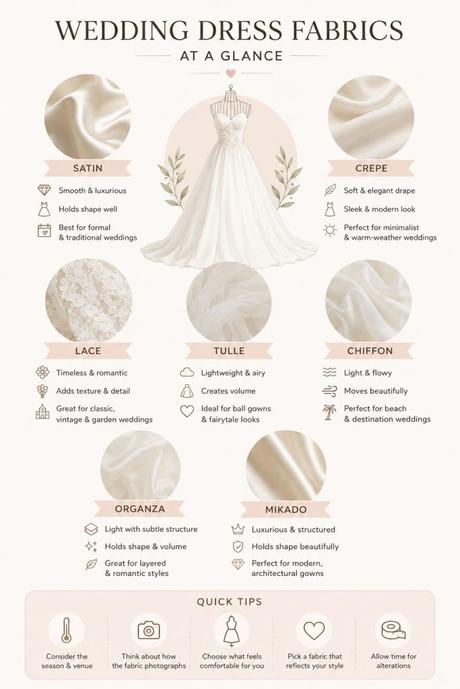
Satin
Satin remains one of the most timeless bridal fabrics.
It’s known for:
- A smooth surface
- Subtle sheen
- Luxurious appearance
- Excellent structure
Best For
- Ball gowns
- A-line dresses
- Formal weddings
- Traditional ceremonies
Things to Consider
Satin can be heavier than other fabrics, making it more suitable for cooler seasons or indoor venues.
Crepe
Crepe has become increasingly popular with modern brides.
This fabric offers:
- A soft drape
- Minimal shine
- Elegant simplicity
- Contemporary appeal
Best For
- Sheath dresses
- Fit-and-flare gowns
- Minimalist bridal styles
- Modern weddings
Why Brides Love It
Crepe creates a clean silhouette and photographs beautifully without feeling overly formal.
Lace
Few fabrics are more associated with weddings than lace.
Modern bridal lace comes in countless styles, from delicate floral patterns to dramatic geometric designs.
Best For
- Romantic weddings
- Garden ceremonies
- Vintage-inspired celebrations
- Traditional venues
Popular Lace Variations
- Chantilly lace
- Alençon lace
- Guipure lace
- Embroidered lace
- Floral appliqué lace
Lace often appears alongside other fabrics rather than being used alone. It can also tie in beautifully with bridal details such as accessories and shoes, especially if you’re planning a handmade or personalised look with details like lace wedding shoes.
Tulle
Tulle is the fabric responsible for many of the dreamy, romantic bridal looks seen in magazines and social media.
This lightweight netting creates volume without excessive weight.
Best For
- Ball gowns
- Princess dresses
- Romantic styles
- Outdoor weddings
Advantages
- Lightweight
- Airy appearance
- Soft movement
- Creates dramatic volume
Tulle is particularly popular among brides seeking a fairytale-inspired look.
Chiffon
Chiffon is one of the lightest bridal fabrics available.
It flows beautifully and creates movement with every step.
Best For
- Beach weddings
- Destination weddings
- Summer weddings
- Bohemian celebrations
Why It Works
Chiffon feels effortless and comfortable, particularly in warmer climates.
Its relaxed nature often appeals to brides planning outdoor ceremonies.
Organza
Organza combines some of the structure of satin with the lightness of chiffon.
The result is a fabric that holds shape while remaining relatively lightweight.
Best For
- A-line dresses
- Layered skirts
- Garden weddings
- Romantic bridal styles
Organza often creates a more ethereal appearance than satin while maintaining volume.
Mikado
Mikado has become one of the most sought-after bridal fabrics in recent years.
This luxurious fabric combines the elegance of silk with added structure.
Best For
- Modern ball gowns
- Architectural designs
- Structured silhouettes
- Contemporary bridal fashion
Why Designers Love It
Mikado holds shape exceptionally well, allowing designers to create dramatic folds and clean lines.
Matching Fabric to Your Wedding Venue
One of the biggest mistakes brides make is choosing fabric without considering the venue.
Beach Weddings
Heavy fabrics can quickly become uncomfortable in warm weather.
Ideal choices include:
- Chiffon
- Lightweight lace
- Soft tulle
- Lightweight crepe
Historic Venues
Formal settings often pair beautifully with:
- Satin
- Mikado
- Structured lace
- Organza
Garden Weddings
Outdoor venues often suit:
- Lace
- Tulle
- Organza
- Chiffon
The goal is to create harmony between the gown and its surroundings. If your venue includes a dedicated dressing space, a calm and practical bridal suite can also make steaming, dressing, and final fabric checks much easier on the morning of the wedding.
Choosing Fabric Based on the Season
Seasonality should always influence fabric selection.
Spring Weddings
Popular options include:
- Lace
- Organza
- Lightweight satin
Summer Weddings
Comfort becomes particularly important.
Many brides choose:
- Chiffon
- Soft crepe
- Lightweight lace
Autumn Weddings
Slightly heavier fabrics often feel appropriate.
Popular choices include:
- Satin
- Mikado
- Structured crepe
Winter Weddings
Rich fabrics create a luxurious seasonal feel.
Common options include:
- Satin
- Heavy crepe
- Mikado
- Layered lace
How Fabric Influences Body Shape
Fabric can significantly affect how a dress flatters your figure.
Structured Fabrics
Materials such as satin and mikado:
- Hold their shape
- Create definition
- Offer support
- Highlight waistlines
These fabrics often work well for brides seeking a more sculpted appearance.
Soft Fabrics
Materials such as chiffon and crepe:
- Follow natural curves
- Create movement
- Feel less restrictive
These fabrics often suit brides wanting a relaxed and effortless look.
Voluminous Fabrics
Tulle and organza add volume and drama.
They can:
- Balance proportions
- Create shape
- Enhance ball gown silhouettes
Comfort Should Never Be Overlooked
It’s easy to become focused on appearance during dress shopping.
However, you’ll likely wear your wedding gown for eight to twelve hours.
Ask yourself:
- Can I sit comfortably?
- Can I dance easily?
- Will I feel too warm?
- Can I move freely?
- Does the fabric irritate my skin?
A stunning gown that feels uncomfortable after an hour may become frustrating by the evening reception.
How Wedding Dress Fabrics Affect Photography
Different fabrics interact with light in different ways.
Satin and Mikado
These fabrics reflect light beautifully and create a luxurious appearance in photographs.
Lace
Lace adds texture and detail, creating visual interest in close-up images.
Chiffon and Tulle
These fabrics create movement, particularly in outdoor settings with natural wind.
Crepe
Crepe often photographs with a clean, editorial appearance that many modern brides love.
Discussing photography considerations with your bridal consultant can sometimes help narrow your options.
Common Fabric Mistakes Brides Make
Choosing Fabric Based Only on Appearance
A fabric may look beautiful online but feel completely different in person.
Ignoring Climate
Heavy fabrics and hot weather rarely make a comfortable combination.
Overlooking Wrinkles
Some fabrics wrinkle more easily than others.
If you’re traveling for a destination wedding, this may be important.
Focusing Only on Trends
Fashion trends change quickly.
Comfort and personal style usually age far better than trend-driven decisions.
Not Moving During Fittings
Always walk, sit, and move around during appointments.
A fabric that feels comfortable standing still may feel very different after several hours.
Fabric and Personal Style Go Hand in Hand
Your wedding dress should feel like an extension of your personality.
If you naturally gravitate toward elegant simplicity, crepe or mikado may appeal to you.
If you love romance and detail, lace and tulle may feel more authentic.
If you prefer relaxed, effortless fashion, chiffon might be the perfect match.
There is no universally “best” fabric.
The best fabric is the one that supports your vision, suits your venue, complements your comfort preferences, and makes you feel confident.
Final Thoughts
Understanding wedding dress fabrics before you start shopping can make the entire bridal experience far less overwhelming.
Each fabric brings its own strengths, whether that’s the structure of satin, the romance of lace, the movement of chiffon, the drama of tulle, or the modern elegance of crepe.
By considering your venue, season, body shape, comfort requirements, and personal style, you’ll be much better equipped to recognize the right gown when you find it.
And when the fabric feels just as perfect as the silhouette, you’re often much closer to finding the dress you’ve been imagining all along.






