Trigeminal neuralgia is characterized by sudden, intense pain that can feel like electric shocks, stabbing, or burning across one side of the face. This pain is caused by irritation, compression, or injury to the trigeminal nerve, a major nerve that carries sensation from the forehead, cheeks, and jaw to the brain. Even simple actions like eating, talking, or touching the face can trigger pain attacks, turning everyday activities into sources of anxiety.
At the Centeno-Schultz Clinic, we look beyond short-term relief for trigeminal neuralgia. Our approach centers on finding the underlying causes of facial pain, such as structural changes or inflammation. By using treatments that support your body’s natural healing processes, we aim to empower you with evidence-based care options that reduce the need for unnecessary medications or surgery.
How The Trigeminal Nerve Normally Works
The trigeminal nerve is the main nerve responsible for providing sensation and some facial muscle control. It acts as a communication highway, carrying information about touch, temperature, and pain from the skin, muscles, and tissues of the face to the brain.
The trigeminal nerve, the fifth cranial nerve, originates in the brainstem. As it exits the cervical spine, it separates into three main branches, each serving a different part of the face:
- Ophthalmic (V1): Forehead, scalp, upper eyelid, and front of the head.
- Maxillary (V2): Cheeks, upper jaw, teeth, lower eyelid, and upper lip.
- Mandibular (V3): Lower jaw, lower teeth, chin, and parts of the ear.

These branches allow you to sense touch, temperature, and pain across your face. They may also send pain signals in response to painful stimuli, such as trauma or extreme temperatures, to protect you from harm.
What Happens When The Nerve Misfires
Trigeminal nerve pain occurs when the trigeminal nerve becomes irritated, compressed, or damaged. This can interfere with the nerve’s function of transmitting sensation and motor signals from the face to the brain. This disruption can cause the nerve to send abnormal pain messages, even in response to stimuli that should normally be painless.
Common causes of trigeminal neuralgia include:
- Compression from nearby blood vessels or tissue
- Physical injury or trauma to the face or jaw
- Inflammation from infections or underlying conditions
- Nerve damage due to illnesses like multiple sclerosis
- Tumors or abnormal growths pressing on the nerve
When the trigeminal nerve is disrupted, it becomes hyperresponsive and can overreact to normal sensations. Everyday activities, such as touching your face, chewing, or even speaking, may cause the nerve to send abnormal pain signals, triggering intense bursts of pain.
What Trigeminal Nerve Pain Feels Like
Trigeminal nerve pain is widely considered one of the most severe forms of nerve pain a person can experience.[1] It is known for causing sudden and extremely intense pain attacks that can disrupt every aspect of daily life.
The impact goes well beyond physical discomfort, often leading to sleep problems, social withdrawal, difficulty eating, and reduced quality of life.
This type of nerve pain can significantly affect mental health and emotional well-being. Pain attacks can be triggered by everyday activities, such as eating, brushing teeth, or even feeling a light breeze. This can cause constant anxiety and fear about when the next pain episode might occur.
Over time, this can have an impact on your psychological and emotional health, increasing the risk of mental health disorders such as depression and suicidal thoughts.[2] It is estimated that trigeminal neuralgia pain accounts for 26% of all attempted suicides in people with chronic headache disorders.[3]
Sudden, Electric Shock Facial Pain
A typical feature of trigeminal neuralgia is recurring intense bursts of pain that can feel sharp and electric shock-like. These episodes appear suddenly and without warning, and are often described as severe stabbing sensations across the face.
Single attacks last only a few seconds to a couple of minutes but can repeat in rapid succession, with some people experiencing hundreds a day. The pain spikes are often impossible to predict or avoid, leading to severe emotional distress.
Lingering Burning Or Aching Between Episodes
While attacks subside after a few minutes, sensations such as persistent burning, throbbing, or dull ache can linger. This background discomfort can last for hours or even days between attacks. Over time, the pain-free periods (periods of remission) become fewer and shorter, while attacks are more frequent and lingering pain more intense.
Triggers That Commonly Set Off Attacks
Certain everyday activities and sensations are known for triggering trigeminal nerve pain attacks. These vary from one person to another, but may include touching the face, chewing, drinking cold or hot liquids, brushing teeth, shaving, or exposure to wind or air conditioning.
For most people, these should be painless stimuli. However, when the trigeminal nerve is hypersensitive, even minimal stimulation can set off nerve misfiring and severe pain attacks.
Pain That Moves Or Spreads Along Nerve Pathways
Nerve pain often spreads beyond its starting point because irritation in one section of the nerve can cause abnormal signals to travel along the entire nerve pathway. This is called referred pain. In trigeminal neuralgia, pain can remain localized in one spot or radiate along the path of the affected trigeminal nerve branch , spreading to different areas of the face.
Where Trigeminal Neuralgia Pain Appears (V1, V2, V3)
As it exits the brainstem, the trigeminal nerve divides into three main branches, each responsible for delivering sensation from a specific region of the face to the brain. When a specific branch becomes affected, the pain can be felt in the area of the face it serves. However, painful sensations can radiate along the pathway of that branch and affect different areas of the forehead, cheek, eyes, and jaw.
Ophthalmic Branch (V1) – Forehead, Eye Area, Scalp
The ophthalmic branch, or V1, supplies sensation to the forehead, top of the scalp, upper eyelid, and the area around the eyes.
When V1 is affected, pain is typically felt in the forehead or around the eyes and may also extend to the scalp. The pain can feel like stabbing, burning, or electric shocks, and may sometimes be mistaken for sinus or eye problems. Triggers include washing the face or exposure to wind.
Maxillary Branch (V2) – Cheeks, Upper Jaw, Teeth
The maxillary branch, or V2, serves the cheekbones, upper jaw, upper teeth, lower eyelids, and the side of the nose. Irritation or compression of this branch causes pain in the cheeks, upper teeth, and sometimes the side of the nose or upper lip.
This branch can be affected by dental procedures, and the pain may be triggered by actions as simple as eating, smiling, or touching the cheeks.
Mandibular Branch (V3) – Lower Jaw, Teeth, Chin
The mandibular branch, or V3, controls sensation in the lower jaw, lower teeth, chin, and parts of the lower lip and ear.
When trigeminal neuralgia affects V3, pain typically occurs in the jaw, chin, and lower teeth. Attack triggers may include talking, chewing, or tooth brushing. The pain is sometimes mistaken for gum or dental problems initially, as symptoms can overlap.
Typical Pain Distribution Patterns
Trigeminal neuralgia most often affects only one side of the face, and the right side is the most commonly involved.[4] Pain on both sides can happen, but it is uncommon.
The location of the pain depends on which branch of the nerve is involved. Pain usually stays within the area served by that branch and rarely spreads to the other side of the face. Sometimes, more than one branch is affected, so pain can move between the upper and lower parts of the face. However, it is rare for trigeminal neuralgia to affect both sides of the face.
Why Pain Affects Certain Parts Of The Face
Pain location in trigeminal neuralgia depends on where the nerve is irritated or disrupted. Common causes include nerve compression by blood vessels or tumors, structural changes, inflammation, or direct injury.
These issues disrupt normal nerve signaling, leading to pain in the specific regions supplied by each branch. Identifying the painful areas and the underlying causes of trigeminal neuralgia is essential to inform treatment decisions.
Anatomical Pathway Vulnerabilities
Originating at the brainstem, the trigeminal nerve travels through narrow canals and bony passages on its way to different areas of the face. Because these pathways are tight, even slight changes, such as swelling, inflammation, or minor injury, can reduce the space available and increase pressure on the nerve.
Nerve Compression From Nearby Structures
Blood vessels or other tissues sometimes press against the trigeminal nerve, especially as it exits the brainstem. This pressure can irritate and damage the nerve’s protective covering, causing it to misfire or become hypersensitive.
Demyelination Or Nerve Fiber Changes
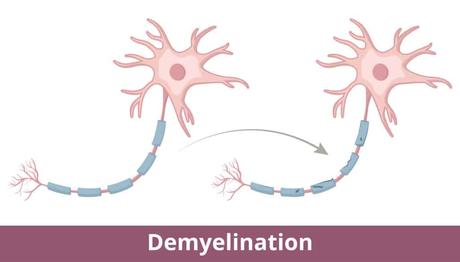
The trigeminal nerve is coated with a layer called myelin, which insulates and protects nerve fibers. It also facilitates the efficient transmission of nerve signals. Conditions such as multiple sclerosis or other diseases can damage this myelin (a process known as demyelination). When the protective layer is lost, signals may leak between nerve fibers, causing abnormal and intense pain sensations.
Central Sensitization And Heightened Pain Response
Over time, continuous pain or repeated nerve irritation can change how the brain and spinal cord process nerve signals. This process, called central sensitization, makes the brain and spinal cord increasingly sensitive to pain signals from the trigeminal nerve. Even gentle or non-painful stimulation may now be interpreted by the brain as severe pain, causing increased sensitivity and more frequent attacks.
Inflammation Near Nerve Pathways
Inflammation from infection, dental problems, sinus conditions, or trauma can also impact the areas surrounding the trigeminal nerve. Swelling can reduce the space around the trigeminal nerve, putting undue pressure on nerve fibers. Ongoing inflammation also affects the nerves’ myelin, leading to dysfunction over time.
How Trigeminal Nerve Pain Progresses Over Time
Trigeminal neuralgia follows a recurring cycle marked by periods of remission and relapse. In the early stages, attacks may be more spaced out and separated by pain-free intervals that can last for weeks or months.
However, if left unaddressed, nerve compression and inflammation can further irritate the trigeminal nerve. Over time, episodes often become more intense and frequent, with shorter periods of relief in between. In many cases, each new flare-up causes pain to last longer and respond less effectively to treatments. A background ache or burning sensation may also sometimes persist between attacks.
Without targeted intervention, ongoing nerve irritation can lead to permanent nerve damage and significantly reduce quality of life. Long-term impacts can include chronic pain, increased anxiety, and difficulty with eating, speaking, or daily activities.
Don’t Let Facial Nerve Pain Control Your Life
Finding relief from trigeminal nerve pain starts with a thorough diagnosis and a clear understanding of what is causing nerve irritation. At the Centeno-Schultz Clinic, our team of board-certified specialists uses advanced, image-guided techniques to pinpoint the source of facial nerve dysfunction.
Innovative regenerative therapies, such as the IGNITE® Procedure, are designed to address the underlying causes of nerve pain by supporting the body’s natural healing ability. These targeted, non-surgical options can help restore nerve function and provide long-term improvement, often reducing the need for ongoing medications or invasive procedures.
Struggling with facial pain or nerve irritation? Learn about non-surgical options that may support trigeminal neuralgia symptom management.
Sources:
- Gambeta E, Chichorro JG, Zamponi GW. Trigeminal neuralgia: An overview from pathophysiology to pharmacological treatments. Mol Pain. 2020 Jan-Dec;16:1744806920901890. doi: 10.1177/1744806920901890. PMID: 31908187; PMCID: PMC6985973.
- Wu TH, Hu LY, Lu T, Chen PM, Chen HJ, Shen CC, Wen CH. Risk of psychiatric disorders following trigeminal neuralgia: a nationwide population-based retrospective cohort study. J Headache Pain. 2015;16:64. doi: 10.1186/s10194-015-0548-y. Epub 2015 Jul 15. PMID: 26174508; PMCID: PMC4501948.
- Trejo-Gabriel-Galan, J. M., Aicua-Rapún, I., Cubo-Delgado, E., & Velasco-Bernal, C. (2017). Suicide in primary headaches in 48 countries: A physician-survey based study. Cephalalgia, 38(4), 798–803. https://doi.org/10.1177/0333102417714477
- Wettervik, T. S., Snel, D., Kristiansson, P., Ericson, H., & Hamdeh, S. A. (2023). Incidence of trigeminal neuralgia: A population‐based study in Central Sweden. European Journal of Pain, 27(5), 580–587. https://doi.org/10.1002/ejp.2081