


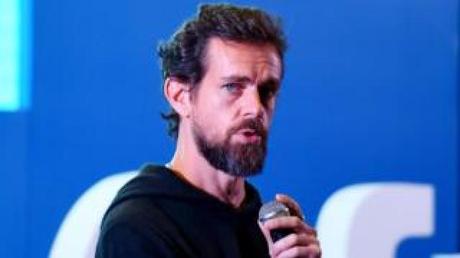
Twitter CEO Jack Dorsey became the first investor in a radical plan to offer people basic income regardless of the state of the job.
He donated $ 3 million (£ 2.4 million) to the program, which is piloted by the mayors of 16 cities in the United States.
He said it was "a tool to bridge the wealth and income gap."
The idea that governments pay basic income to citizens has gained momentum in response to the threat to employment from artificial intelligence.
The premise of universal basic income (UBI) is that every individual in a country will receive a cash payment at regular intervals, with no obligation to work or qualify for it. Payment would be given to all citizens, regardless of wealth or employment status.
The American system, nicknamed Mayors for a Guaranteed Income, is a version of this that would offer a recurring payment, but only for "some" residents.
Who receives the payments is not made explicit on its website, but talks about the need to tackle poverty, particularly in light of the coronavirus pandemic.
"Covid-19 further exposed the economic fragility of most American families and had a disproportionate impact on blacks and browns," he says.
"Mayors will join in this network to support a guaranteed income - direct cash and recovery payments - which raises all our communities, building a resilient America, alone."
There are no firm proposals on how to allocate funds or how long the system would last.
Dorsey tweeted: "This is a tool for bridging the wealth and income gap, smoothing out the systemic race and gender inequalities and creating economic security for families."
The project was founded by Stockton Mayor Michael Tubbs, who wants it to become a national program that extends beyond the current pandemic.
He previously said that raising taxes on people like Mr. Dorsey could be a way to finance it.
The 29-year-old is attempting to reinvent the Californian city in which he grew up and has experimented with the idea of universal income since 2018, paying $ 500 a month to 125 residents.
Unemployment threat
Discussions about universal basic income have been around for decades but have been closely associated with the idea of artificial intelligence - the argument is that when robots take on more jobs in society, humans will need an annual income. guaranteed provided by the government.
But Martin Luther King also suggested the idea in his 1967 book Where Do We Go From Here?
Calum Chace, an artificial intelligence expert, said that a universal basic income could be somewhat distant.
"It is seen by many as a solution to the threat of unemployment, as machines increasingly automate our work over the next few years and decades," he said. "Unfortunately, it is totally unsustainable if it offers more than misery.
"But if, let's say, [in] between a generation and now machines take up most of our jobs, we should all be able to live the lives of leisure time that economists like Maynard Keynes promised long ago - if, that is, we can achieve the economy of abundance, where the cost of an excellent standard of living approaches zero.
"The idea of fully automated luxury capitalism is the next big news, once people understand the limits of UBI."






