


Isaac Asimov’s 1951 Foundation sci-fi trilogy had a character called “The Mule.” Initially a ridiculous figure, he had one special ability — actual mind reading. Soon he ruled the galaxy.
I saw this as showing the absurdity of psychics’ claims. Anyone truly possessing such paranormal abilities would not be hustling for nickels and dimes.
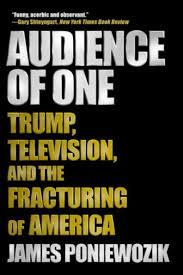
Trump was likened to The Mule, in skewing history’s trajectory, at a program at the New York State Writers Institute’s recent film festival. An interview with author James Poniewozik about his 2019 book, Audience of One: Trump, Television, and the Fracturing of America.
The film festival, like NYSWI’s book ones, is always a great event. Held at the State University’s Campus Center, after several years I’m finally getting the hang of its labyrinthine layout, finding my way from one venue to another. This time I mostly viewed “experimental” short films. One, “All American Ruins,” concerned an ending gay relationship; I was struck by one brief flash, a face full of intense anguish. The animated “Stuck at the Spaceport” depicts an alien world so engagingly vivid, it was too short.
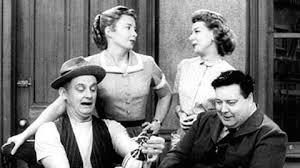
Back to Poniewozik: he basically situates Trump as a phenomenon of the TV age. Which has already sort of passed, superseded by the internet age. But in TV’s heyday it was a unifying force, with everyone watching just a few channels. America’s culture more uniform than ever before or since (leaving apart non-whites). And with simultaneous nightly news broadcasts, people had little choice but to watch them, exposing them to more substantive — and factual — pictures of the global landscape than most get today.
In contrast to that monoculture, today’s society is fragmented among plethoras of divergent eye candies. Not “e pluribus unum” but its opposite — with people at each other’s throats over issues of which they have little genuine grasp. Literally impressionable — forming opinions based on mere shallow impressions.
Also, TV shows in those 1950s and ’60s tended to be homilies, morality plays, with a hopeful ethos, good always prevailing. Think of Andy Griffith’s Mayberry. This too helped shape the culture. Later, shows became more bleak and cynical — think of the Sopranos. Such romanticization of criminality would have been unthinkable previously.
Perhaps priming America for a Soprano-istic presidency. It’s long seemed that Trump attracts many voters not in spite of his transgressiveness but because of it.

Meantime, TV also cemented his image as a highly successful and powerful business personage, with his show The Apprentice. Endowed with all the accoutrements — the plush boardroom settings, the contestants groveling for his approval. Never mind that his actual business career was bankruptcy-laden and shambolic. To this day, his cultists still venerate this “successful businessman.”
Not only did Trump bootstrap into power by exploiting TV, he himself is TV fixated. Filling his regime with people he’s seen on Fox News. Watching it seems to be his principal White House pastime. Lately his acolytes have been giving him a daily briefing on the Iran war — in video format, natch — mainly images of things being blown up, which he dotes on. Probably the true reason he launched this war.
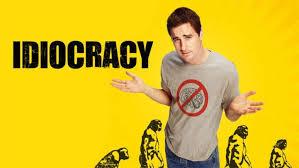
I keep coming back to the 2006 comedy film Idiocracy. How prescient. I don’t see us getting out of this cultural syndrome.







