Transforming a thrifted linen caftan into a shirt (historybounding vibes) | #LRCrafts - DIY Passion: if you can think it, you can make it
Since the moment I received my sewing machine for my birthday, I’ve consistently used it. At first I planned to store it in a pantry and take it out just when I needed. Well, it’s been two years it had a permanent place on my crafting table, ready for weekly projects, big or small.
One day, years ago, a friend handed me over a linen caftan. While it was my size, it was too long for me to wear. I then stored it in a drawer, with the intention of adapting it in the future. At the time I didn’t even have a sewing machine, nor had any idea of how to use one.
Well, after crafting Halloween costumes for my child, pumpkin and mushroom plushies, and handling small repairs, I felt confident enough to bring out the caftan for a meaningful project.
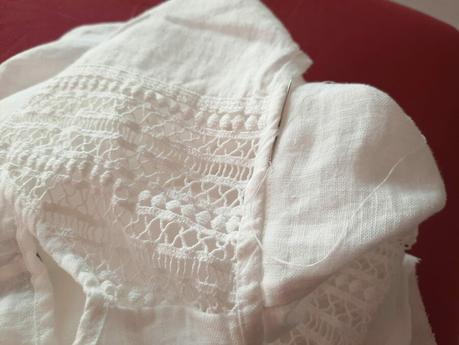
I planned to shorten it, using the fabric and its original lace decoration to create short sleeves, thus transforming the caftan into a shirt.
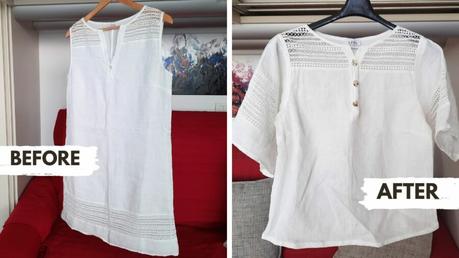
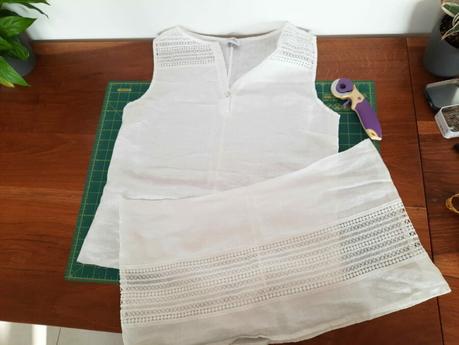
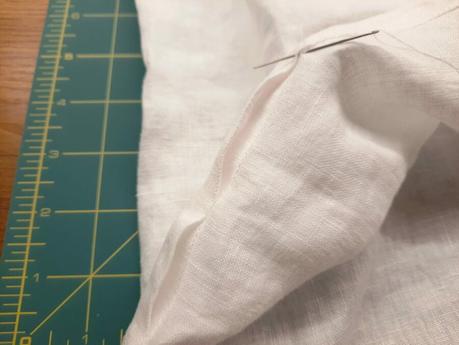
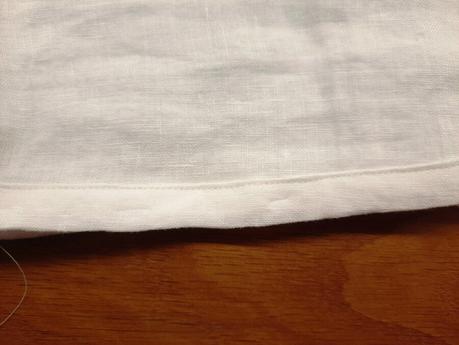
That was the plan, but would it work? I meticulously measured the fabric intended for cutting from the bottom, and it turned out to be enough! While the lace decor was only on the front of the caftan, I had ample material to fashion both sleeves, with the lace on the front and plain white fabric on the back.
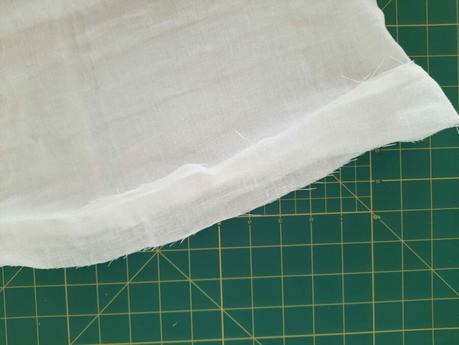
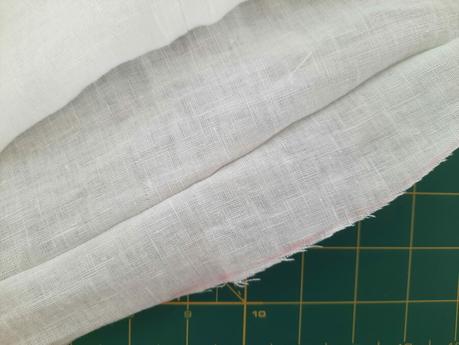
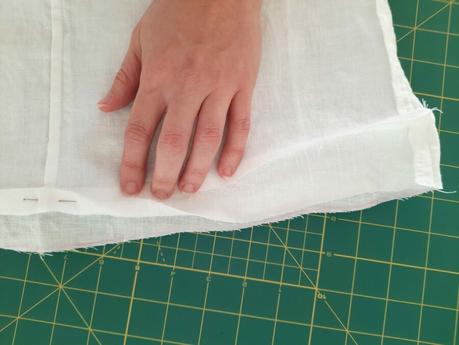
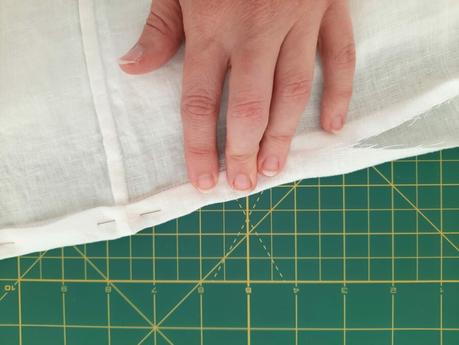
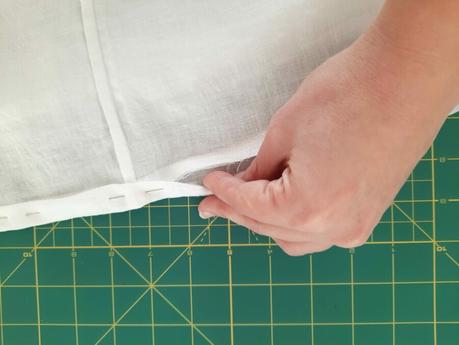
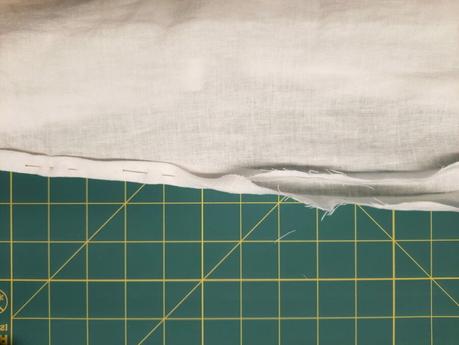
Prior to that, I created the bottom hem, aiming for similarity to the original one I removed, as it would become the sleeves’ hem. So I cut a long strip of fabric 4cm (1.5in) tall to add to the new shirt bottom. Initially machine-sewing it onto the shirt with right sides facing, I then turned the hem onto the back to secure it.
To avoid having two visible seams on the front, I opted for my favorite method: hand sewing. I find creating a long line of carefully placed invisible stitches both relaxing and rewarding.
The next step involved attaching the sleeves to the main body. Opting for loose sleeves, I skipped using a pattern and instead cut the fabric in half, resulting in two pieces, each with half of the original lace.
With care, I pinned the fabric to the armscye, right sides facing, and double-checked to confirm that the lace was on the front of the garment. I learned the importance of double-checking the hard way, when I completed the first T-shirt for my child and discovered the fabric drawings were upside down…
To maintain the original rolled hem on the armscye, I again turned to hand-stitching. Initially, I machine-sewed a tiny hem to the sleeves, thinner than the armscye’s hem. Then, I hand-stitched the sleeves, starting with strong back-stitches along the innermost stitching line of the body’s hem. To complete the front of the garment, I sewed invisible stitches once more, to ensure a smooth and secure connection between the body and sleeves.
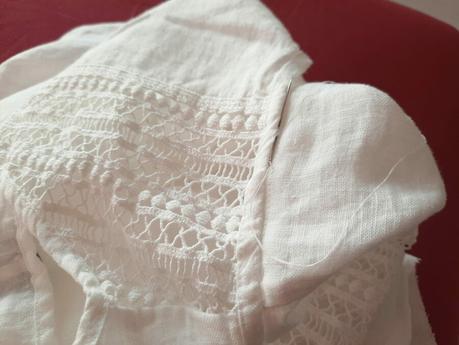
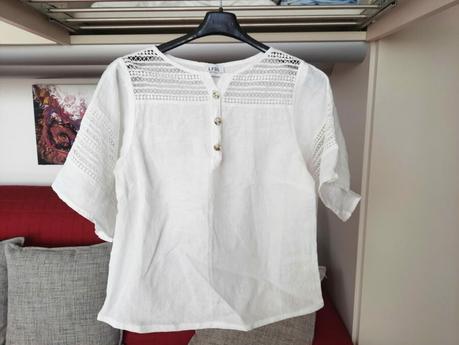
I must say the entire project gave me historybounding vibes from start to finish.
The whole idea came from the beautiful lace inserts I observed in Bernadette Banner’s Victorian shirt sewing videos.
The whole idea came from lovely lace inserts I saw in Bernadette Banner’s Victorian shirts sewing videos. She always chooses historically accurate methods and tools, including frequent hand-stitching, and this influenced my approach.
Although I love hand embroidery and sewing by hand, this marked the first instance of hand-sewing on a modern project for me. Before this, I typically reserved hand-stitching to historical garments, such as my Medieval gown or hood or our family’s Celtic garb.
It was, indeed, thanks to Bernadette Banner that I discovered the world of historybounding. In one of her videos, she explained the concept and recommended a Facebook group of historybounders.
The central concept of historybounding revolves around integrating historical clothing into our everyday wardrobe. It’s a trend that began in the historical costuming community:the term “historybounding” was coined by YouTuber Morgan Donner, drawing inspiration from the concept of “Disney Bounding”.
Unlike the strict adherence of historical reenactment to a specific period, historybounding allows for the freedom to mix and match different periods, incorporating features you like from any time into garments.
While I don’t label myself as a historybounder (not yet, at least…), I like the concept of modern clothing with ancient appeal. Have you ever felt the need for pockets in your garments? That’s one of the favorite additions embraced by historybounders!
I will certainly revisit the topic of historybounding, as it aligns well with my passion for historical reenactment!
In the meantime, please share your thoughts on this project. I look forward to engaging with you in the comments section, discussing the creation of our own wardrobes and our journeys in historybounding!
by Rici86.